
Living Room Decor Ideas
7 Mudroom Ideas: Smart and Stylish Ways to Create an Organized Entryway

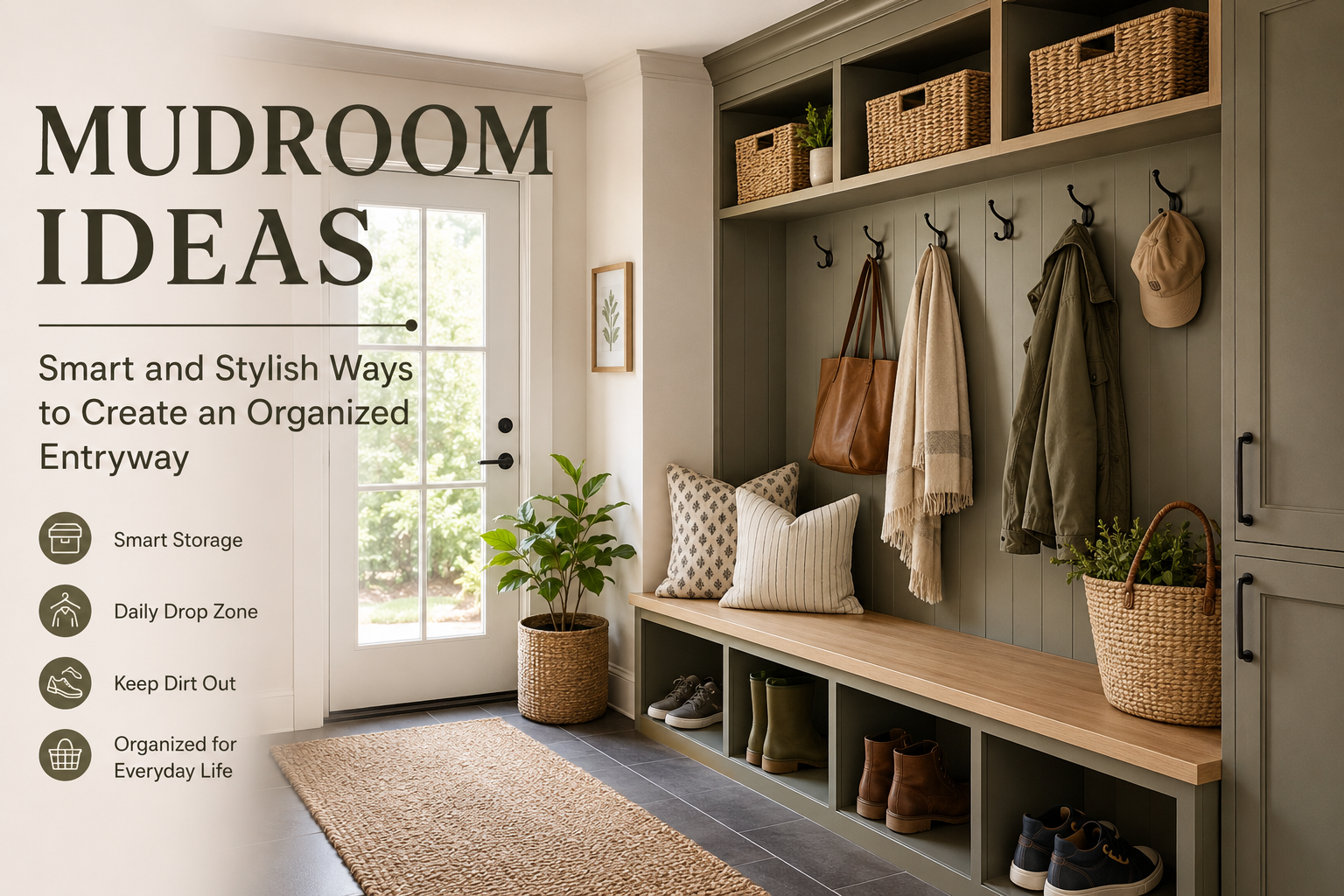
Mudroom ideas have become increasingly popular as homeowners look for practical ways to keep their homes cleaner, more organized, and easier to manage. A mudroom acts as a transition space between the outdoors and the rest of the house, providing a dedicated area to store shoes, coats, bags, umbrellas, and other everyday essentials. Whether it’s a separate room, a section of the entryway, or a converted laundry area, a well-designed mudroom helps reduce clutter while making daily routines more efficient.
Many people think a mudroom requires a large space or custom-built cabinetry. In reality, even a small hallway or unused corner can be transformed into a functional mudroom with thoughtful planning. The best mudroom ideas focus on practical storage, durable materials, and an organized layout rather than simply adding decorative furniture. Every element should make it easier for family members to enter and leave the house while keeping dirt and clutter contained.
This guide explores practical mudroom ideas for different home styles and room sizes. You’ll learn how to create a welcoming entryway, choose storage solutions that fit your lifestyle, and design a mudroom that combines functionality with timeless style.
Why Mudroom Ideas Matter
A mudroom is much more than a storage area. It helps organize everyday essentials, keeps dirt from spreading throughout the house, and creates a smoother routine for every member of the family. Instead of leaving shoes, backpacks, coats, and umbrellas scattered around the home, everything has a designated place.
Whether your home has a large dedicated mudroom or a compact entryway, organizing this space can make your entire house feel cleaner and more efficient.

Some of the biggest benefits of creating a mudroom include:
- Keeps dirt and mud away from living areas
- Organizes shoes, coats, and bags
- Reduces household clutter
- Improves daily routines
- Creates additional storage
- Makes entryways more welcoming
- Helps families stay organized
A thoughtfully designed mudroom combines practicality with attractive design, making it one of the most useful spaces in any home.
Keep Your Home Clean and Organized
One of the primary purposes of a mudroom is to prevent outdoor dirt from entering the rest of the house.
Providing a dedicated place for shoes, jackets, and umbrellas helps reduce the amount of mud, dust, and moisture tracked into living areas.
Include storage for:
- Shoes
- Boots
- Raincoats
- Umbrellas
- Pet supplies
- Sports equipment
Keeping these items together makes cleaning easier while protecting your flooring.
Create a Daily Drop Zone
A mudroom works best when it serves as a convenient stopping point before entering the home.
Encourage family members to:
- Remove shoes immediately.
- Hang coats on hooks.
- Place keys in a tray.
- Store backpacks in assigned cubbies.
- Keep reusable shopping bags nearby.
Small habits like these make the entire home feel more organized.
Create a Functional Entryway
Your home’s entrance should be both attractive and practical.
A well-planned mudroom allows everyone to quickly find what they need before leaving the house.
Useful features in mudroom ideas include:
- Built-in benches
- Wall hooks
- Shoe storage
- Coat cabinets
- Mirror
- Storage baskets
Each feature should make the space easier to use without creating unnecessary clutter.
Maximize Everyday Storage
Storage is the foundation of every successful mudroom.
Instead of relying on one large cabinet, combine several storage solutions that suit different items.
Examples for mudroom ideas include:
- Open cubbies
- Closed cabinets
- Floating shelves
- Woven baskets
- Overhead storage
- Drawer organizers
Grouping similar items helps maintain an organized space.
Improve Family Routines
A mudroom simplifies busy mornings by keeping everyday essentials in one convenient location.
Assign each family member a dedicated storage area for:
- Shoes
- Jackets
- School bags
- Sports gear
- Hats
- Gloves
This system reduces confusion and helps everyone leave the house more efficiently.
Mudroom Ideas for Every Design Style
Your mudroom should complement the rest of your home’s interior rather than feeling like a separate space. Choosing a consistent design style creates a cohesive appearance while making decorating decisions much easier.
Modern Mudroom Ideas
Modern mudrooms focus on clean lines, simple storage, and practical organization.
Common features include:
- Flat-panel cabinets
- Hidden storage
- Matte black hardware
- Neutral colours
- Floating benches
- Integrated lighting
The overall design should feel uncluttered while providing plenty of storage.

Keep Accessories Minimal
Rather than filling shelves with decorations, display only a few carefully chosen items, such as:
- Small indoor plants
- Decorative baskets
- Ceramic trays
- Simple artwork
Minimal accessories help maintain a calm and organized appearance.
Farmhouse Mudroom Ideas
Farmhouse mudrooms create a warm and welcoming atmosphere through natural materials and timeless design.
Popular elements include:
- Wooden benches
- Shiplap walls
- Black iron hooks
- Woven baskets
- Vintage storage crates
- Neutral colour palettes
These materials add character while keeping the room practical for everyday use.
Blend Rustic and Modern Features
Balance traditional wood finishes with modern lighting or simple cabinetry to create a farmhouse mudroom that feels fresh rather than outdated.
Scandinavian Mudroom Ideas
Scandinavian interiors emphasize simplicity, functionality, and natural light.
Typical characteristics include:
- White walls
- Light wood finishes
- Open storage
- Minimal décor
- Neutral textiles
The goal is to create a bright, calming space that remains highly functional.
Introduce Natural Textures
Warm the space with:
- Wooden benches
- Linen storage baskets
- Indoor plants
- Soft rugs
- Ceramic accessories
Natural materials help prevent an all-white mudroom from feeling cold.
Traditional Mudroom Ideas
Traditional mudrooms combine elegance with practical family storage.
Common features include:
- Raised-panel cabinetry
- Decorative moulding
- Built-in benches
- Closed storage cabinets
- Classic wall hooks
This timeless style works particularly well in larger family homes.
Minimalist Mudroom Ideas
Minimalist mudrooms remove unnecessary visual clutter while focusing on organization.
Key features in mudroom ideas include:
- Hidden storage
- Clean surfaces
- Neutral colours
- Built-in cabinets
- Simple lighting
Every item should have a purpose.
Store More Behind Closed Doors
Keeping shoes, bags, and seasonal accessories inside cabinets creates a tidy appearance while making cleaning easier.
Rustic Mudroom Ideas
Rustic mudrooms celebrate natural materials and handcrafted details.
Include:
- Reclaimed wood
- Metal hooks
- Stone flooring
- Wooden storage benches
- Woven baskets
These elements create warmth while standing up to everyday wear and tear.
Mudroom Ideas for Different Spaces
A mudroom can be created in almost any home, regardless of its size. The best mudroom ideas work with the available space rather than trying to copy layouts designed for much larger homes.
Small Mudroom Ideas
Limited space does not mean sacrificing organization.
Helpful ideas include:
- Vertical storage
- Wall-mounted hooks
- Floating shelves
- Narrow storage benches
- Stackable baskets
- Slim cabinets
Using wall space efficiently keeps the floor clear and makes the room feel larger.

Make Small Mudrooms Feel Bigger
Simple design techniques in mudroom ideas include:
- Choosing light wall colours.
- Installing mirrors.
- Use matching storage baskets.
- Keeping decorations minimal.
- Adding good lighting.
These ideas create a brighter and more spacious appearance.
Entryway Mudroom Ideas
Many homes do not have a separate mudroom, but an entryway can easily perform the same function.
Include:
- Storage bench
- Coat hooks
- Shoe cabinet
- Mirror
- Decorative tray for keys
Even a small entryway can become highly organized with the right furniture.
Laundry Mudroom Ideas
Combining the laundry room with a mudroom maximizes functionality.
Consider adding:
- Tall storage cabinets
- Folding counter
- Hanging rail
- Shoe storage
- Cleaning supply organizers
This combination creates a practical utility space while reducing clutter elsewhere in the home.
Garage Mudroom Ideas
The garage entrance is one of the most practical locations for a mudroom.
Include storage for:
- Work boots
- Gardening tools
- Sports equipment
- Pet supplies
- Outdoor clothing
Durable materials are especially important in this high-traffic area.
Hallway Mudroom Ideas
Even a narrow hallway can provide valuable storage.
Useful additions include:
- Floating bench
- Wall hooks
- Slim shoe cabinet
- Overhead shelving
- Decorative mirror
Thoughtful planning transforms unused hallway space into a practical entry area.
Essential Elements of a Functional Mudroom
A beautiful mudroom should do much more than provide a place to remove shoes. It should simplify your daily routine, keep frequently used items organised, and create a welcoming transition between the outdoors and your living space. Whether your mudroom is large or small, careful planning ensures it remains practical, durable, and easy to maintain.
Instead of filling the room with unnecessary furniture, focus on storage, comfort, and materials that can withstand everyday wear in mudroom ideas.

Include Built-In Storage
Storage is the foundation of every successful mudroom. Without enough storage, shoes, bags, coats, and sports equipment can quickly create clutter.
Consider incorporating:
- Floor-to-ceiling cabinets
- Open cubbies
- Overhead shelves
- Storage drawers
- Closed cupboards
- Woven baskets
Using a combination of open and closed storage keeps everyday essentials within reach while hiding seasonal or less frequently used items.
Organise by Category
Keeping similar items together makes the mudroom easier to use.
For example:
- Shoes in the lower cubbies
- Coats on wall hooks
- Bags on upper shelves
- Pet supplies in baskets
- Cleaning products inside cabinets
This simple system helps every family member find and return items quickly.
Add a Comfortable Mudroom Bench
A bench is one of the most practical features of any mudroom.
It provides a comfortable place to:
- Put on shoes
- Remove boots
- Organise bags
- Store baskets underneath
Built-in benches with hidden storage are especially useful because they combine seating with additional organisation.
Choose Durable Materials
Since benches are used daily, select materials that resist wear.
Popular choices of mudroom ideas include:
- Solid wood
- Painted hardwood
- Engineered wood with protective finishes
Adding washable seat cushions improves comfort while making cleaning easier.
Install Wall Hooks
Wall hooks provide quick access to frequently used items without taking up floor space.
Use hooks for:
- Jackets
- Hats
- Scarves
- Umbrellas
- Dog leads
- Backpacks
Install hooks at different heights so both adults and children can reach them easily.
Create Practical Shoe Storage
Shoes are often the biggest source of clutter in entryways.
Choose storage that matches your family’s needs.
Popular options include:
- Open shoe cubbies
- Pull-out drawers
- Shoe cabinets
- Storage benches
- Boot trays
Providing enough space for everyday footwear helps keep floors clean and organised.
Choose Durable Flooring
Mudrooms experience heavy foot traffic, moisture, and dirt every day.
Select flooring that is:
- Water-resistant
- Easy to clean
- Scratch-resistant
- Slip-resistant
- Durable
Popular flooring materials include:
- Porcelain tiles
- Luxury vinyl flooring
- Sealed natural stone
- Ceramic tiles
Adding washable rugs near the entrance also helps trap dirt before it spreads throughout the house.
Use Layered Lighting
Lighting improves both functionality and appearance.
Combine different lighting types, including:
- Ceiling lights
- Wall sconces
- Under-shelf lighting
- Natural daylight
Good lighting makes it easier to find everyday items while creating a welcoming entrance.
Maximise Natural Light
If possible:
- Keep windows free from heavy curtains.
- Use glass doors where appropriate.
- Paint walls in light colours.
- Add mirrors to reflect daylight.
Natural light helps even small mudrooms feel brighter and more spacious.
Budget-Friendly Mudroom Ideas
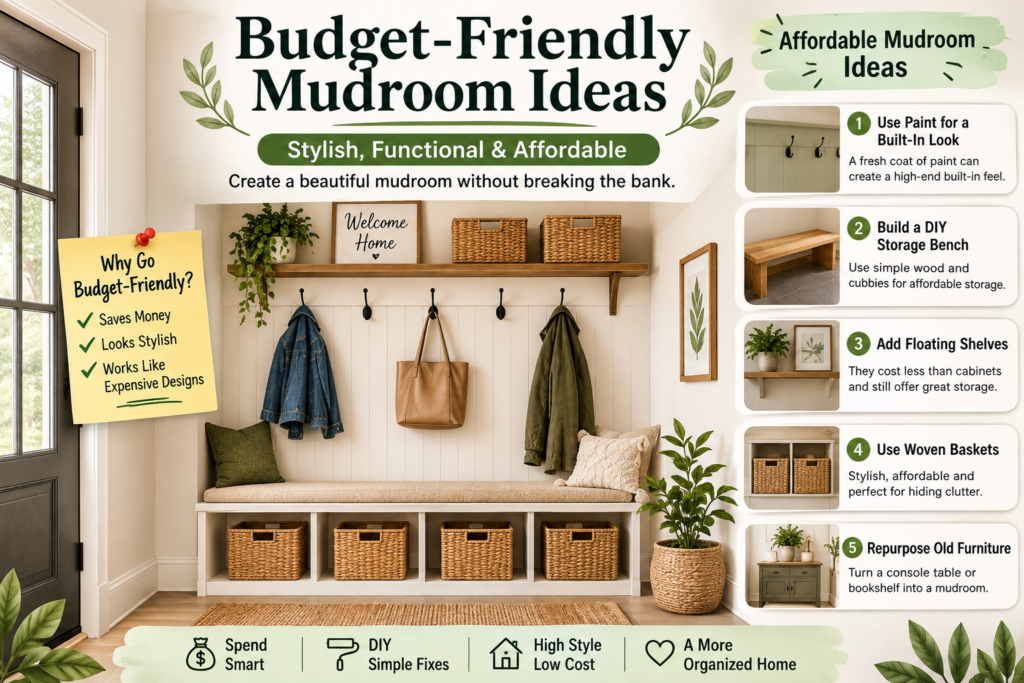
Creating a practical mudroom does not require expensive built-in cabinetry or a complete renovation. Many affordable improvements can dramatically improve an organisation while staying within budget.
DIY Mudroom Projects
DIY upgrades allow you to customise the space while saving money.
Simple ideas include:
- Building floating shelves
- Installing wall hooks
- Painting old furniture
- Creating storage cubbies
- Building a wooden bench
These projects add both functionality and personality to your mudroom.
Repurpose Existing Furniture
Before buying new furniture, consider what you already own.
Items that work well include:
- Console tables
- Bookshelves
- Dressers
- Storage cabinets
- Wooden benches
Repurposing furniture is an affordable way to create additional storage without major expense.
Affordable Storage Solutions
Small storage upgrades can make a significant difference.
Budget-friendly options include:
- Plastic storage bins
- Fabric baskets
- Labelled containers
- Stackable shoe racks
- Hanging organisers
Choose matching storage containers for a cleaner, more organised appearance.
Install Open Shelving
Floating shelves provide valuable storage without making the room feel crowded.
Use them for:
- Decorative baskets
- Seasonal accessories
- Hats
- Gloves
- Small plants
Leave some space between decorations to prevent shelves from looking cluttered.
Add Decorative Organisation
Organisation can also enhance your mudroom’s appearance.
Decorative additions include:
- Woven baskets
- Wooden trays
- Indoor plants
- Framed artwork
- Labelled storage jars
Choose décor that complements the rest of your home’s interior while remaining practical.
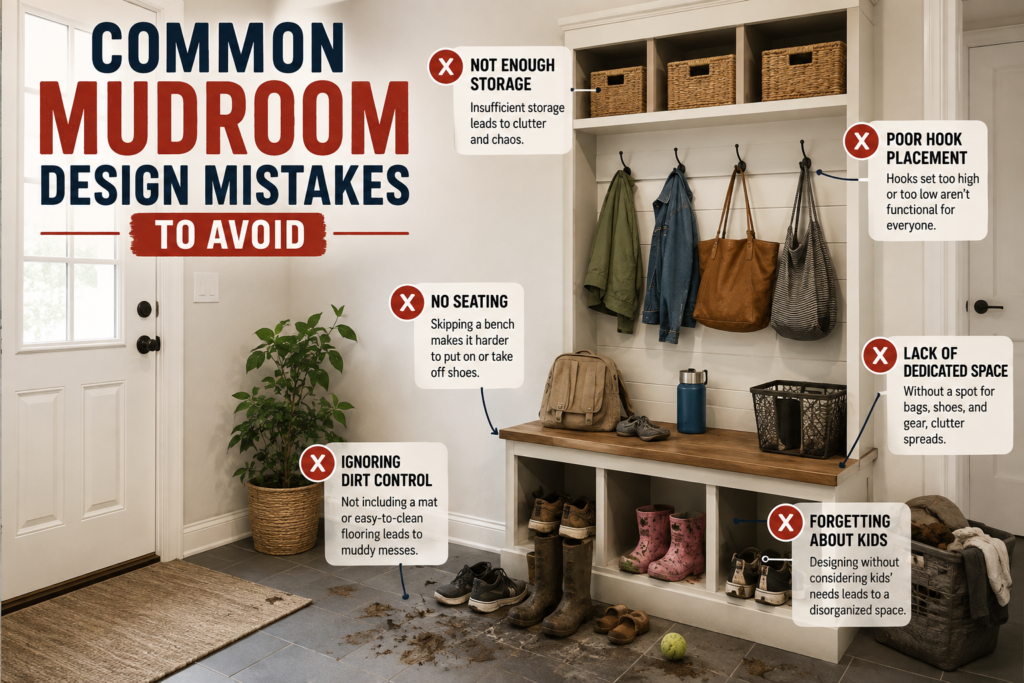
Common Mudroom Design Mistakes to Avoid
Even attractive mudrooms can become frustrating if they are not designed around everyday use.
Ignoring Storage Needs
One small cabinet is rarely enough for a busy household.
Plan storage for:
- Shoes
- Jackets
- Bags
- Sports equipment
- Pet accessories
- Seasonal clothing
Adequate storage keeps the room functional as your family’s needs change.
Choosing the Wrong Flooring
Carpet and delicate flooring materials are not ideal for high-traffic mudrooms.
Instead, choose surfaces that are:
- Durable
- Easy to clean
- Moisture-resistant
Practical flooring reduces long-term maintenance.
Poor Lighting
Dark mudrooms often feel cramped and uninviting.
Improve visibility by combining:
- Ceiling lighting
- Wall lighting
- Natural daylight
- Under-shelf LEDs
Layered lighting improves both safety and appearance.
Overcrowding the Space
Too much furniture reduces movement and creates clutter.
Avoid filling every wall with cabinets or decorations.
Leave enough open floor space for family members to move comfortably, especially during busy mornings.
Forgetting Everyday Functionality
A mudroom should support real daily routines rather than simply looking attractive.
Before adding decorative features, ask yourself:
- Will this improve organisation?
- Is it easy to clean?
- Does it provide useful storage?
- Will every family member use it?
Function should always come before decoration.
Frequently Asked Questions
What should every mudroom have?
Every mudroom should include practical storage, wall hooks, a bench, shoe storage, durable flooring, and good lighting. These features help keep the space organised while making daily routines more efficient.
How do you organise a small mudroom?
Use vertical storage, floating shelves, wall hooks, narrow benches, and matching baskets. Keeping the floor clear and using wall space effectively makes a small mudroom feel larger and more functional.
What flooring is best for a mudroom?
Porcelain tile, ceramic tile, luxury vinyl, and sealed natural stone are all excellent choices because they are durable, water-resistant, and easy to clean.
Can you create a mudroom without a separate room?
Yes. Many homeowners create functional mudrooms in entryways, hallways, garages, or laundry rooms using benches, hooks, shelving, and storage cabinets.
Are mudrooms worth adding to a home?
Yes. A well-designed mudroom improves organisation, reduces clutter, protects the rest of the home from dirt, and creates a more functional entryway. It can also enhance the practicality and appeal of your home.
Conclusion
The best mudroom ideas combine smart organisation, durable materials, and thoughtful design to create an entryway that works for everyday life. Whether you have a spacious, dedicated mudroom or a compact corner near your front door, the right combination of storage, seating, lighting, and flooring can transform the space into one of the hardest-working areas in your home.
Instead of following short-lived trends, focus on solutions that support your family’s daily routine. Built-in storage, comfortable seating, easy-to-clean surfaces, and efficient organisation will help create a mudroom that remains functional, welcoming, and stylish for years to come.

White can make a living room feel bright, fresh, spacious, and calm. It also provides a flexible background that can work with many different furniture styles, materials, textures, and accent colours.
However, an attractive white living room is not simply a matter of painting everything white. Too much of one flat colour can make a space feel cold or unfinished if texture, lighting, and contrast are ignored.
The best white living room ideas combine different shades, materials, and comfortable furnishings to create a room that feels warm and practical.
Whether you prefer modern simplicity, traditional character, Scandinavian calm, or a relaxed farmhouse look, white can be adapted to suit your home.
Why White Living Room Ideas Matter
White is one of the most adaptable colours for interior decorating. It can work as the main wall colour, furniture colour, background shade, or supporting tone.
Because white works with so many colours and materials, it gives you plenty of flexibility when decorating or updating a living room.
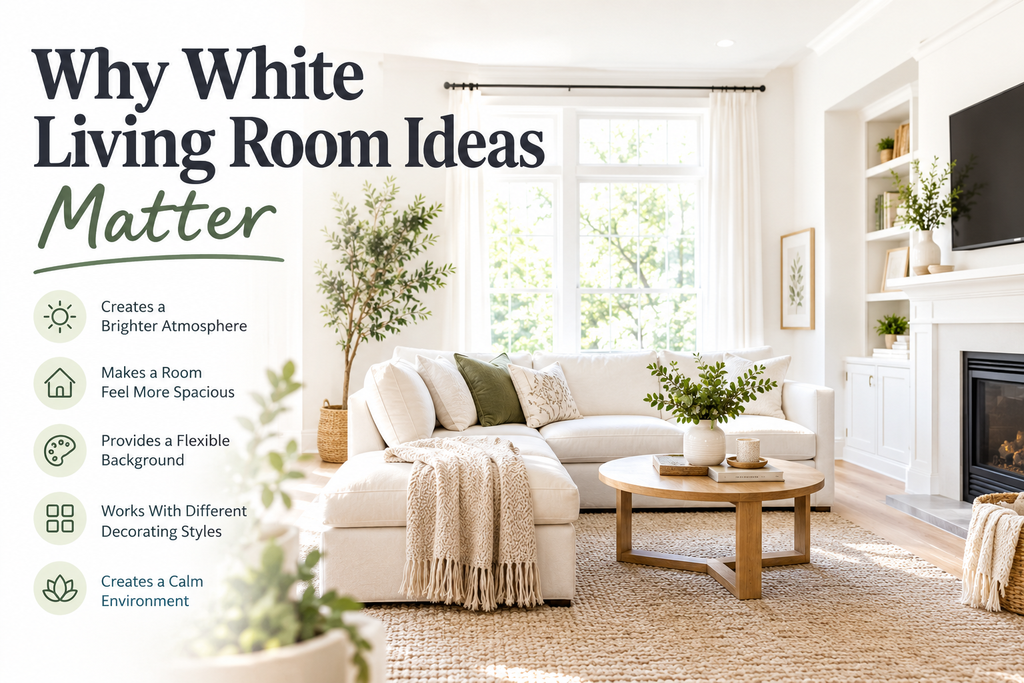
Creates a Brighter Atmosphere
White surfaces can help reflect available natural and artificial light.
This can be particularly useful in rooms with smaller windows or limited daylight.
However, the amount of light a room receives still matters. A warm white may feel more comfortable in a darker room, while a cooler white can work well in a naturally bright space.
Makes a Room Feel More Spacious
White can create a visually open appearance because there is less contrast between walls, ceilings, and other large surfaces.
This can make it particularly useful in compact living rooms.
The effect becomes stronger when white is combined with sensible furniture proportions and clear walking areas.
Provides a Flexible Background
A white living room gives you a neutral foundation for adding colour and texture.
You can introduce stronger shades in white living room ideas through:
- Cushions
- Rugs
- Curtains
- Artwork
- Plants
- Decorative objects
- Accent furniture
This means the room can be updated without repainting everything.
Works With Different Decorating Styles
One of the biggest advantages of white is its versatility.
It can look sleek and modern with simple furniture, warm and traditional with timber details, or relaxed and rustic with natural textures.
This makes white suitable for many different homes rather than one specific decorating style.
Creates a Calm Environment
White is often associated with simplicity and visual calm.
When combined with soft textures and comfortable furniture, it can create a relaxing environment for reading, watching television, entertaining, or spending time with family.
The key is to avoid making the room feel too empty.
White Living Room Ideas for Different Interior Styles
White does not automatically create one particular look. The final appearance depends heavily on the furniture, materials, lighting, and decorative elements used with it.
Choosing a style first can help you decide which version of a white living room is right for your home.
Modern White Living Room
A modern white living room often combines clean lines, simple furniture, and minimal decoration.
White walls can be paired with streamlined sofas, simple coffee tables, contemporary lighting, and a small number of carefully selected accessories.
Black or dark accents can provide contrast, while timber can add warmth.
Avoid making every surface perfectly white and smooth. A textured rug or upholstered furniture can make the room feel more comfortable.

Contemporary White Living Room
Contemporary spaces can use white as a base while introducing different materials and subtle colour variations.
For example, white walls can be combined with beige upholstery, timber furniture, glass tables, and modern lighting.
The result can feel current without depending too heavily on temporary trends.
Minimalist White Living Room
White is naturally suited to minimalist decorating because it can create a clean and uncluttered foundation.
Choose furniture carefully and avoid adding decorative pieces simply to fill empty areas.
Useful minimalist choices for white living room ideas include:
- Simple furniture shapes
- Hidden storage
- Limited accent colours
- Clear surfaces
- Soft natural textures
- Functional accessories
A minimalist white room should still feel comfortable. Add warmth through rugs, cushions, timber, and appropriate lighting.
Scandinavian White Living Room
Scandinavian-inspired interiors often combine white with light wood, natural fabrics, simple furniture, and plenty of soft texture.
A white background can help maximise the feeling of natural light.
Add woollen throws, woven baskets, simple artwork, and indoor plants to create warmth without making the room visually busy.
White Living Room Ideas for Different Room Sizes and Layouts
The size and layout of your living room should influence how you use white.
A large room can handle stronger contrasts and larger furniture, while a compact space may benefit from a simpler palette and lighter visual elements.
Small White Living Room
White can be particularly useful in a small living room because it helps create a brighter and more open appearance.
Choose furniture that fits the room properly rather than selecting oversized pieces simply because they are comfortable.
Consider:
- A compact sofa
- Slim side tables
- Wall-mounted shelving
- Multifunctional furniture
- Light-coloured rugs
- Hidden storage
Keep the floor relatively open to maintain a sense of space.
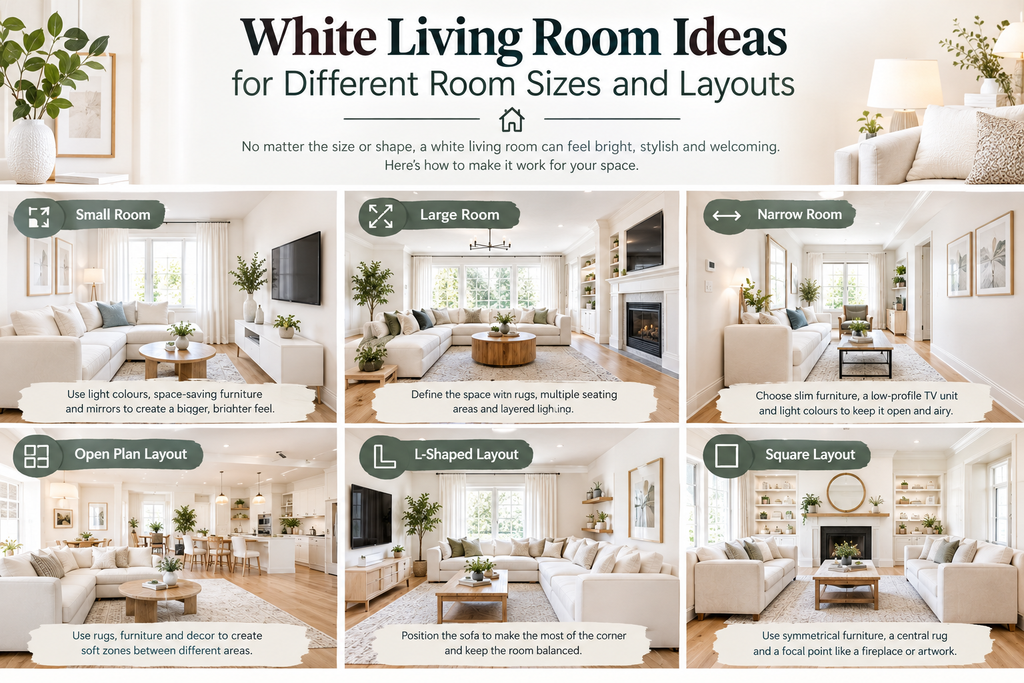
Large White Living Room
A large white room can sometimes feel empty if there is not enough contrast or texture.
Use appropriately scaled furniture to create defined seating areas.
Large rugs, substantial artwork, timber furniture, and textured upholstery can give the room more visual weight.
You can also introduce deeper accent colours through cushions, chairs, curtains, or artwork.
Narrow White Living Room
A narrow living room needs careful furniture placement to maintain comfortable movement.
White walls can help the space feel less enclosed, but furniture should still be selected according to the room’s width.
Use slim furniture where necessary and keep a clear path through the room.
Wall-mounted storage can also reduce pressure on the available floor space.
Open-Plan White Living Room
White can help connect an open-plan living room with nearby dining and kitchen areas.
Using similar white or neutral tones across the connected spaces can create visual continuity.
However, the living area should still have its own identity.
A large rug, sofa arrangement, lighting, or accent furniture can visually define the living zone without creating a physical barrier.
Essential Elements of an Effective White Living Room
A successful white living room needs more than white walls and furniture. The room should include enough contrast, texture, warmth, and practical features to make it comfortable for everyday use.
When these elements work together, white can feel welcoming rather than cold or unfinished.
Choose the Right White
Not every white looks the same. Some whites have warm undertones, while others appear cooler and cleaner.
Warm white can work well with wooden furniture, beige fabrics, and traditional interiors. Cooler whites may suit modern or minimalist spaces.
Before painting the entire room, test your chosen shade on different walls.
Natural daylight, evening lighting, and nearby colours can all change how white appears throughout the day.
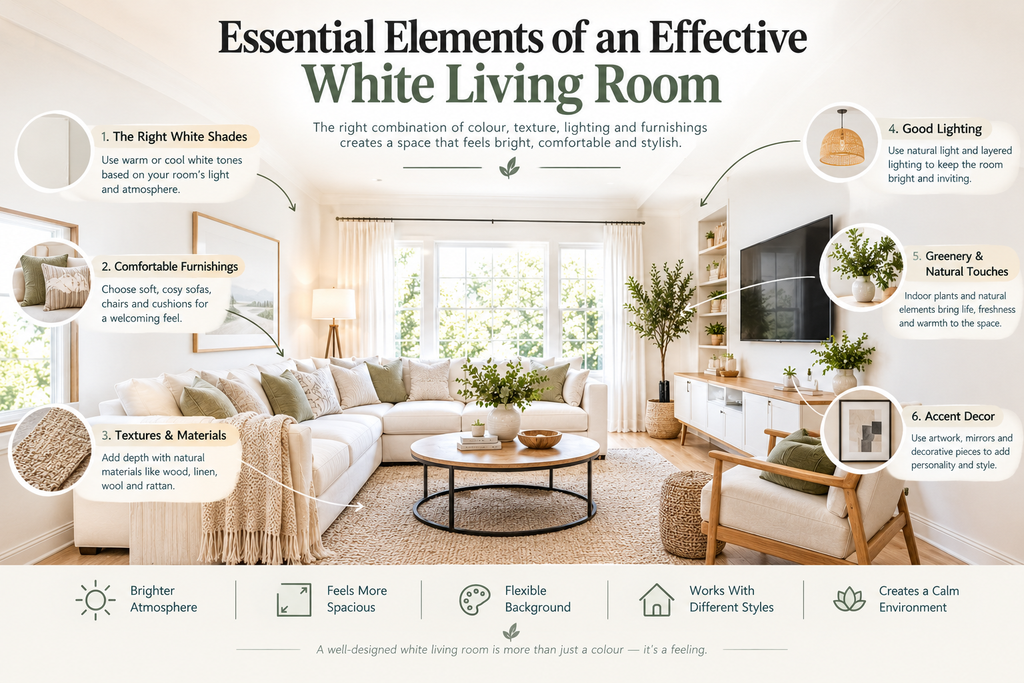
Add Different Textures
Texture is especially important in a white living room because several surfaces may have similar colours.
Use different materials to create visual depth without adding too many colours.
Good options for white living room ideas include:
- Wool or woven rugs
- Linen curtains
- Knitted throws
- Bouclé or textured upholstery
- Woven baskets
- Timber furniture
- Ceramic accessories
- Natural stone
The combination of different textures can make a simple white palette feel much richer.
Layer the Lighting
Lighting can dramatically affect the appearance of white surfaces.
A single ceiling light may make the room feel flat, while several layers of lighting can create a more comfortable atmosphere.
Consider using:
- Ceiling lighting for general illumination
- Floor lamps beside seating
- Table lamps on side tables
- Wall lights for focused areas
- Accent lighting for artwork or architectural details
Warm-toned bulbs can also help prevent a white living room from feeling overly cold at night.
Select Comfortable White Living Room Furniture
White living room furniture can look beautiful, but practicality should always be considered.
If you have children, pets, or a busy household, completely white upholstery may require more maintenance.
Consider washable covers, durable fabrics, or furniture in soft cream and beige tones if pure white is difficult to maintain.
Comfort should also influence the size and shape of sofas and chairs.
Create Contrast
A room made entirely from similar white shades can sometimes lack definition.
Introduce contrast through black frames, dark timber, grey accessories, patterned rugs, or deeper accent colours.
The contrast does not need to dominate the room.
A few carefully selected darker elements can be enough to give the space structure.
Budget-Friendly White Living Room Ideas
Creating a beautiful white living room does not require replacing all your furniture.
Small and affordable changes can have a noticeable effect when the existing space is already reasonably functional.
Refresh the Walls
A fresh coat of paint can make an older living room look cleaner and brighter.
If the existing walls are already white, you may only need to touch up marks or repaint areas that receive the most wear.
Choose washable paint where possible, especially for high-traffic areas.

Change Soft Furnishings
Replacing cushions, throws, and curtains can completely change the appearance of a living room without requiring major renovations.
Look for affordable pieces in white, cream, beige, grey, or natural tones.
Mixing several textures can make inexpensive accessories appear more considered.
Rearrange Existing Furniture
Before buying anything new, experiment with your current furniture arrangement.
Move the sofa away from the wall, change the position of a chair, or reposition the coffee table.
A better layout can improve movement and make the room feel more spacious at no cost.
Update Small Accessories
Small decorative changes can provide an inexpensive refresh.
Consider replacing the white living room ideas outdated:
- Cushion covers
- Lampshades
- Picture frames
- Vases
- Baskets
- Candles
- Decorative trays
You do not need to replace everything at once.
Use Second-Hand Furniture
Second-hand furniture can be useful when you want to introduce timber, storage, or accent pieces without spending heavily.
A simple wooden side table or vintage chair can add character to a white living room.
Check the condition carefully before purchasing and consider whether the item can be cleaned or refurbished easily.
Common White Living Room Mistakes to Avoid
White can be forgiving in some situations in white living room ideas, but using it without planning can create practical and visual problems.
Avoiding a few common mistakes can make your room more comfortable and easier to maintain.
Using Only One Shade of White
Using exactly the same white on every surface can make a room feel flat.
Instead, combine slightly different whites, creams, natural materials, and subtle neutral shades.
This creates depth while maintaining the overall white appearance.
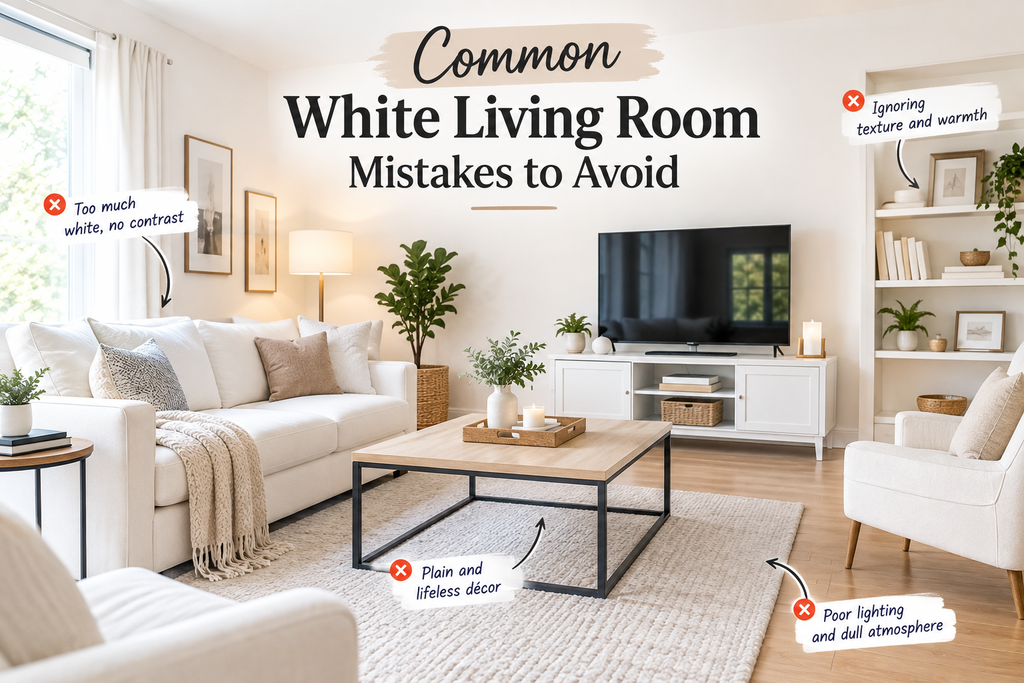
Making Everything White
A completely white room can sometimes look sterile rather than comfortable.
Introduce timber, plants, artwork, metal, stone, or darker accents to give the space more character.
The goal is not to eliminate colour but to control it.
Ignoring Texture
Without texture, a white living room can appear visually empty.
Soft fabrics, woven accessories, rugs, timber, ceramics, and textured walls can make a major difference.
Texture is particularly useful when you want to keep the colour palette very simple.
Choosing Furniture That Is Too Large
White can make a room appear more spacious, but it cannot compensate for furniture that physically overwhelms the space.
Measure your room before purchasing sofas, cabinets, coffee tables, or chairs.
Leave enough space for doors, windows, walkways, and everyday movement.
Ignoring Natural Light
White paint can look very different depending on the amount and direction of natural light.
A cool white in a poorly lit room may feel colder than expected.
Test paint samples at different times of the day before making a final decision.
How to Plan Your White Living Room Successfully
Planning before decorating can help you avoid unnecessary purchases and create a room that works for everyday life.
Start with the way you actually use the space rather than choosing decorative items first.
Assess the Room
Measure the room and note the location of doors, windows, radiators, fireplaces, electrical outlets, and other fixed features.
This gives you a realistic understanding of where furniture can be placed.
Decide on Your Style
Choose the general appearance you want before buying major pieces.
You might prefer:
- Modern
- Minimalist
- Scandinavian
- Farmhouse
- Traditional
- Rustic
- Coastal
- Contemporary
Your chosen style will help guide furniture, materials, lighting, and accessories.
Build a Colour Palette
Start with white as the main foundation and then select two or three supporting colours.
For example, white can be combined with beige and natural wood for warmth.
Alternatively, white, soft grey, and black can create a more contemporary appearance.
Plan the Furniture Layout
Place the largest furniture pieces first.
Make sure there is enough room to walk comfortably between the sofa, coffee table, doors, and other important areas.
A visually attractive layout is not successful if it makes everyday movement difficult.
Add Texture
Once the furniture is positioned, introduce rugs, curtains, cushions, throws, and other soft furnishings.
Use different textures rather than simply adding more decorative objects.
Frequently Asked Questions About White Living Room Ideas
Is white a good colour for a living room?
Yes, white can work very well in living rooms because it creates a bright and flexible background.
The key is to combine it with suitable textures, furniture, lighting, and accent colours so the room does not feel too cold or empty.
How can I make a white living room feel cozy?
Use warm lighting, textured fabrics, rugs, timber, plants, and soft neutral colours.
A combination of white and beige can also create a warmer appearance than using bright white alone.
What colours go well with a white living room?
White works with many colours, including beige, grey, black, green, blue, brown, and natural wood tones.
The best choice depends on the atmosphere and interior style you want to create.
How do I keep a white living room from looking boring?
Add texture and contrast rather than simply adding more colour.
Rugs, artwork, plants, timber furniture, patterned cushions, and layered lighting can give the room plenty of visual interest.
Are white sofas practical?
White sofas can be practical when you choose durable, washable, or removable fabrics.
If your household has heavy daily use, children, or pets, consider easy-clean materials or softer neutral shades such as cream and beige.
Can a small living room use white furniture?
Yes. White furniture can help maintain a light visual appearance in a compact space.
However, the furniture should still be appropriately sized so that the room remains comfortable and easy to move around.
Conclusion
The best white living room ideas balance brightness with warmth, comfort, and practicality.
White can make a room feel open and flexible, but it works best when combined with texture, natural materials, suitable lighting, and carefully selected contrast.
You do not need to make every surface white. Mixing white with beige, grey, timber, greenery, and personal accessories can create a much more inviting result.
Whether you are decorating a small apartment or a large open-plan home in white living room ideas, start with the way you use the room.
Choose furniture that fits the space, build a simple colour palette, improve the lighting, and add decorative details gradually.
With thoughtful planning, a white living room can remain fresh and stylish while still feeling comfortable enough for everyday life.

The living room is often one of the most used spaces in a home. It may be where you relax after a long day, spend time with family, welcome guests, watch television, or simply enjoy a quiet evening.
Finding the right living room inspo can make it easier to decide how to arrange furniture, choose colours, add lighting, and create a comfortable atmosphere.
However, good inspiration should be more than a collection of attractive photographs. A living room needs to work for your actual lifestyle, available space, storage needs, and everyday routines.
Whether you prefer a modern, traditional, minimalist, farmhouse, or contemporary look, thoughtful planning can help you create a room that feels both stylish and practical.
Why Living Room Inspo Matters
The right inspiration can give you a starting point when your living room feels unfinished or lacks direction. It can help you identify colours, furniture arrangements, materials, and decorative details that suit your preferences.
Instead of copying an entire room, use inspiration to understand which individual ideas could work in your own home.

Helps Create a Clear Design Direction
Without a plan, it is easy to purchase furniture and accessories separately and later discover that they do not work well together.
A simple design direction can help connect your choices. You might decide to focus on warm neutrals, natural materials, clean lines, or traditional details.
This gives you a useful framework while still leaving room for personal choices.
Improves Furniture Placement
Furniture arrangement has a major effect on how comfortable a living room feels.
A beautiful sofa can still create problems if it blocks a walkway or makes it difficult for people to communicate with each other.
Before buying furniture, think about how people move through the room and where they naturally sit.
Consider:
- Main walking routes
- Television or focal-point position
- Windows and doors
- Seating capacity
- Coffee table placement
- Access to storage
- Space between furniture pieces
Good furniture placement can make even a simple living room feel much more comfortable.
Makes the Room More Functional
A living room may need to serve several purposes at the same time.
It could be a place for relaxing, entertaining guests, reading, working, or spending time with children.
Your living room inspo should therefore reflect how you actually use the space rather than focusing only on appearance.
For example, a family may need durable upholstery and practical storage, while someone living alone may prefer a smaller seating arrangement and more open floor space.
Helps You Choose Colours
Colour is one of the easiest ways to change the atmosphere of a living room.
Warm neutrals can create a relaxed feeling, while deeper shades can add visual depth. Lighter colours can help a smaller room feel more open.
You do not need to use the same colour throughout the room. A main shade can be supported by complementary colours through cushions, curtains, rugs, artwork, and accessories.
Living Room Inspo for Different Interior Styles
Different interior styles can create completely different atmospheres in the same living room.
The important thing is to choose a style that suits your home and personal preferences while adapting it to your practical needs.
Modern Living Room Inspo
Modern living rooms often focus on clean lines, simple furniture, and an uncluttered appearance.
Neutral colours such as white, beige, grey, and black are common, although timber and warm accent colours can prevent the room from feeling too cold.
Choose furniture with simple shapes and avoid filling every surface with accessories.
Soft rugs, cushions, curtains, and natural materials can add comfort while maintaining the modern character.
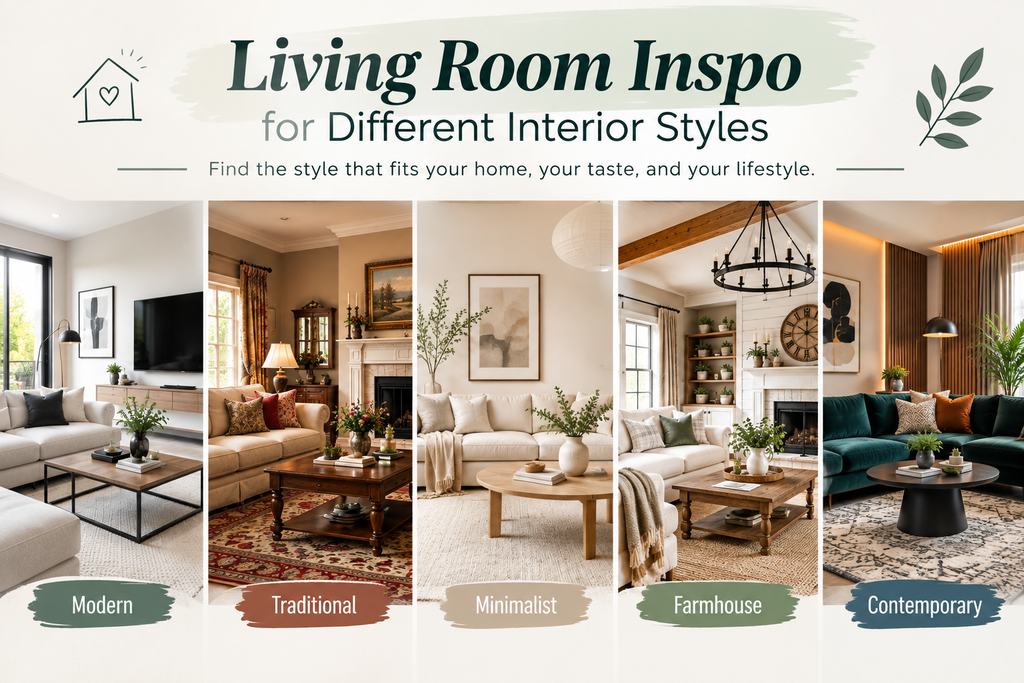
Traditional Living Room Inspo
Traditional living rooms often use classic furniture, warm colours, patterned textiles, and decorative details.
A comfortable sofa, wooden furniture, framed artwork, curtains, and a traditional-style rug can help create this atmosphere.
The room does not need to feel formal. Mixing classic elements with simpler contemporary pieces can make the space feel more relaxed.
Minimalist Living Room Inspo
Minimalist living rooms focus on simplicity and purposeful choices.
Rather than filling the room with decorations, choose a smaller number of furniture and accessories that genuinely contribute to the space.
Useful minimalist principles for living room inspo include:
- Keep furniture practical
- Use a controlled colour palette
- Maintain clear walking areas
- Choose multifunctional storage
- Avoid unnecessary accessories
- Use texture to add warmth
Minimalism should not mean creating an uncomfortable or empty room. Comfortable seating, soft textiles, and warm lighting can still play an important role.
Farmhouse Living Room Inspo
Farmhouse-inspired living rooms often combine practical furniture with natural materials and relaxed decorative details.
Wood, woven textures, neutral colours, simple patterns, and comfortable upholstery can contribute to the look.
You can keep the style modern by using contemporary lighting or streamlined furniture alongside traditional farmhouse details.
Scandinavian Living Room Inspo
Scandinavian-inspired rooms often focus on natural light, simplicity, comfort, and practical furniture.
Light wood, soft neutrals, simple shapes, and warm textiles can create a bright and welcoming environment.
Plants, woven baskets, woollen throws, and textured rugs can introduce warmth without creating visual clutter.
Living Room Inspo for Different Room Sizes and Layouts
The size and shape of your living room should influence how you apply your chosen design.
A layout that works beautifully in a large open-plan space may not be suitable for a compact apartment or narrow room.
Good inspiration should therefore be adapted to the space you actually have.
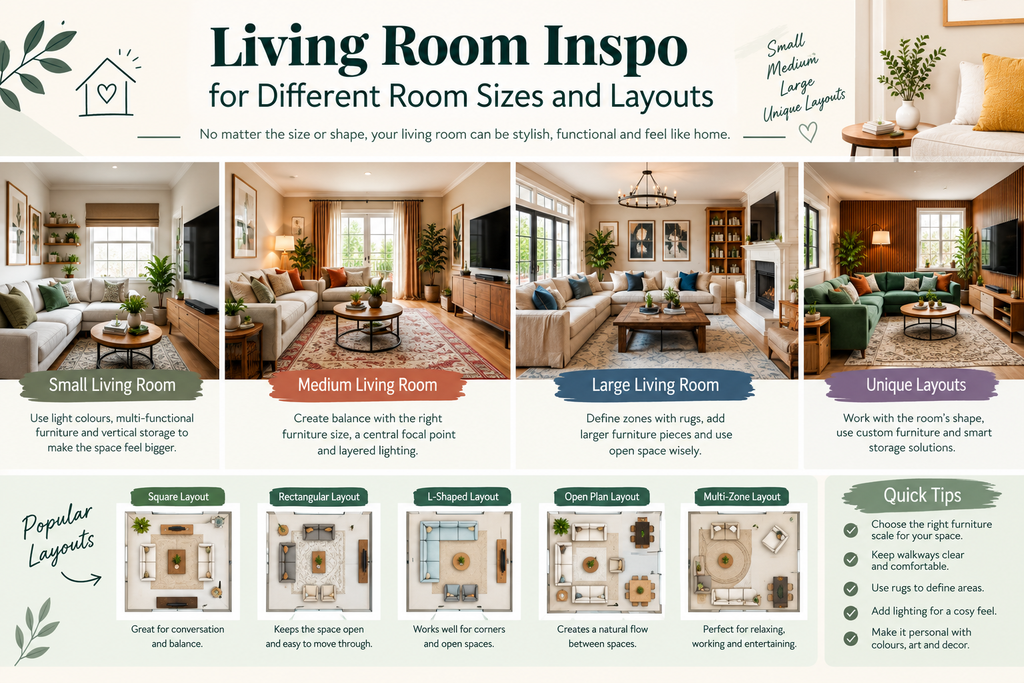
Small Living Room Inspo
Small living rooms need careful furniture selection and efficient layouts.
Choose furniture that provides enough comfort without taking up unnecessary floor space.
A compact sofa, nesting tables, wall-mounted shelves, and furniture with built-in storage can help make better use of limited space.
Useful ideas include:
- Choose appropriately sized furniture
- Keep walking paths clear
- Use vertical storage
- Select multifunctional pieces
- Avoid excessive decoration
- Use mirrors carefully
- Keep the colour palette controlled
A small living room does not need to be completely minimalist. The goal is simply to avoid unnecessary visual and physical clutter.
Large Living Room Inspo
Large living rooms can accommodate more furniture, but too much open space can sometimes make the room feel disconnected.
Create separate functional zones instead of pushing every piece of furniture against the walls.
For example, you could have a main conversation area, reading corner, media zone, or small workspace.
Large rugs and appropriately sized furniture can help visually connect these areas.
Living Room With Multiple Functions
Many modern homes require the living room to perform more than one role.
A section of the room might be used as a home office, reading area, children’s zone, or entertainment space.
Use furniture and storage to define each function without making the room feel divided.
A compact desk behind a sofa, storage ottoman, or flexible side table can provide additional functionality without requiring a major layout change.
Living Room With a Fireplace or Focal Point
A fireplace, large window, artwork, or media unit can become the main focal point of the living room.
Arrange seating so that the focal point feels intentional without making the room difficult to use.
If the room already has a strong architectural feature, avoid adding too many competing focal points.
The most effective living room inspo combines visual appeal with practical planning. Once the style and layout have been established, the next step is to consider the specific elements that make the room comfortable, functional, and cohesive.
Essential Elements of an Effective Living Room
A stylish living room needs more than attractive furniture and decorative accessories. The best designs balance comfort, functionality, storage, lighting, and visual appeal.
Each element should support the way you use the room while also contributing to the overall atmosphere.
Comfortable Seating
Seating is usually the most important furniture choice in a living room.
Choose a sofa and chairs based on how many people regularly use the space. Consider comfort, durability, available floor space, and the overall decorating style.
If your living room is small, a compact sofa with one or two lightweight chairs may provide enough seating without making the room feel crowded.

A Practical Furniture Layout
Furniture should encourage conversation and allow people to move around comfortably.
Avoid automatically pushing every piece against a wall. Depending on the room, bringing furniture slightly inward can create a more defined and welcoming seating area.
Leave enough space around doorways and main walking routes so the room remains easy to navigate.
A Suitable Coffee Table
A coffee table can provide a useful central surface for drinks, books, remotes, and decorative objects.
Its size should relate to the sofa and surrounding furniture. A table that is too large can restrict movement, while one that is too small may feel disconnected from the seating.
Consider rounded or flexible designs if the room has limited space.
Effective Lighting
Good lighting can completely change the atmosphere of a living room.
Instead of depending on a single ceiling fixture, use several light sources at different heights.
Consider:
- Ceiling lights for general illumination
- Floor lamps beside seating
- Table lamps on side tables
- Wall lights for selected areas
- Accent lighting for artwork or shelving
Layered lighting allows you to create brighter conditions when needed and a softer atmosphere during relaxing evenings.
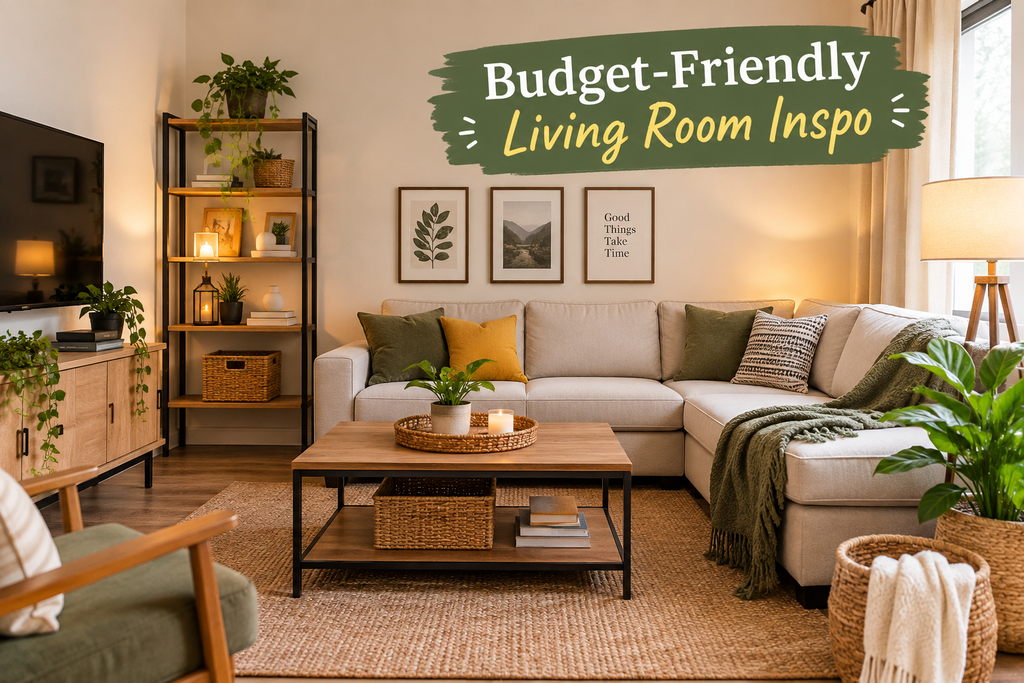
Budget-Friendly Living Room Inspo
A living room makeover does not have to involve replacing all the furniture.
Small improvements can sometimes create a noticeable difference, especially when you focus on the elements that have the greatest visual impact.
Rearrange Your Existing Furniture
One of the easiest ways to refresh a living room is to change the furniture arrangement.
Try different positions for the sofa, chairs, tables, and storage pieces while keeping movement and comfort in mind.
A new layout can make the room feel different without spending anything.
Refresh With Paint
Changing the wall colour can transform the atmosphere of the room.
You could repaint the entire space or create a smaller accent area behind the sofa or another focal point.
Choose a colour that works with your existing furniture if you want to avoid replacing other items.
Update Soft Furnishings
Cushions, curtains, rugs, and throws can change the look of a living room relatively easily.
You can introduce a new accent colour or texture without replacing expensive furniture.
For a more cohesive result, choose pieces that share at least one colour or material.
Change Small Furniture Pieces
You do not always need to replace your main sofa.
Updating a side table, floor lamp, coffee table, or occasional chair can give the room a fresh appearance.
Prioritise pieces that look dated, no longer function well, or do not fit the current layout.
Common Living Room Decorating Mistakes to Avoid
A living room can look attractive while still being uncomfortable or impractical.
Many decorating problems come from focusing too heavily on appearance without considering proportions, movement, lighting, and everyday use.
Buying Furniture Without Measuring
Never assume that a sofa or table will fit because it looks suitable in a showroom or photograph.
Measure the room, doorways, stairways, and furniture carefully before buying.
Also consider how much clearance will remain around the furniture once it is positioned.
Pushing Everything Against the Walls
Placing every piece of furniture against a wall is not always the best solution.
Depending on the room, bringing seating slightly inward can create a stronger conversation area.
The correct arrangement depends on the size and shape of the space.

Using a Rug That Is Too Small
A tiny rug floating in the centre of a large seating area can make the furniture arrangement feel disconnected.
Whenever possible, choose a rug that is large enough to visually connect the main seating pieces.
If a large rug is outside your budget, position a smaller rug carefully so it still relates clearly to the seating area.
How to Plan Your Living Room Inspo Successfully
Once you have explored different styles and layouts, you can turn your favourite ideas into a practical plan.
The following process can help you avoid unnecessary purchases and create a living room that works for everyday life.
1. Understand How You Use the Room
Start by listing the main activities that happen in the living room.
For example, you may use it for:
- Watching television
- Entertaining guests
- Reading
- Family time
- Relaxing
- Working occasionally
- Children’s activities
Your furniture and layout should support these activities.
2. Measure the Space
Measure the room’s length and width, then note the location of doors, windows, radiators, outlets, and other permanent features.
These measurements will help you understand what furniture sizes are realistic.
Keep the measurements available when shopping so you can check potential purchases before ordering them.
3. Choose Your Main Style
Decide on a general design direction before making major purchases.
You might prefer modern, contemporary, traditional, minimalist, farmhouse, Scandinavian, rustic, or eclectic decorating.
You can still introduce small influences from other styles, but having one main direction helps maintain consistency.
4. Select the Main Furniture
Start with the sofa and other major furniture pieces.
Think about comfort, proportions, durability, and how many people need to use the room.
Once the main pieces are selected, smaller furniture and accessories can be chosen around them.
Frequently Asked Questions About Living Room Inspo
What does living room inspo mean?
“Living room inspo” is a casual term for living room inspiration. It refers to ideas that can help with furniture arrangements, colours, decorating, lighting, layouts, and overall room design.
How do I make my living room look stylish?
Start with a practical furniture arrangement and a coordinated colour palette. Then add suitable lighting, textiles, wall decor, storage, and a few personal accessories.
What is the best style for a living room?
There is no single style that suits every home. Modern, traditional, contemporary, minimalist, farmhouse, Scandinavian, rustic, and eclectic approaches can all work when adapted to the room and the people using it.
How can I make a small living room look bigger?
Use appropriately sized furniture, maintain clear walking areas, reduce unnecessary clutter, and use lighting and colours that keep the room feeling open.
Mirrors can also help reflect light and create a greater sense of depth when positioned appropriately.
How can I decorate my living room on a budget?
Start by rearranging existing furniture and using items you already own. Then consider affordable changes such as paint, cushions, throws, lighting, plants, artwork, or second-hand furniture.
How many colours should a living room have?
There is no strict rule, but using a main colour with a few complementary shades can make the room easier to coordinate.
Stronger colours can be introduced through smaller items that are easier to replace later.
How do I make my living room feel more comfortable?
Focus on comfortable seating, appropriate lighting, soft textiles, useful storage, and enough space for movement.
Personal items such as photographs, books, artwork, and plants can also make the room feel more welcoming.
Conclusion
Good living room inspo should do more than show attractive rooms. It should help you understand how to create a space that fits your lifestyle, available space, budget, and personal taste.
Start with the room’s function and layout before choosing decorative details. Select furniture that fits properly, create a practical colour palette, layer your lighting, and provide enough storage for everyday belongings.
Then add rugs, artwork, plants, cushions, and personal objects gradually. These smaller details can give the room character without making it feel overcrowded.
Whether you are working with a small apartment, a large open-plan space, or an unusually shaped living room, thoughtful planning can help you create a comfortable and attractive result.
The best living room is not necessarily the one with the most expensive furniture or the latest trends. It is the one that feels comfortable, works well, and genuinely suits the people who live there.
Living Room Decor Ideas
Decorating Styles: A Practical Guide to Creating a Beautiful and Comfortable Home

Choosing the right decorating style can make a home feel more comfortable, organised, and personal. It gives you a clear direction when selecting furniture, colours, materials, lighting, and decorative accessories.
Without a clear style, it is easy to buy individual pieces that look attractive on their own but do not work well together. A thoughtful approach helps create rooms that feel connected without making everything look exactly the same.
There are many decorating styles to explore, from modern and minimalist designs to traditional, rustic, farmhouse, and Scandinavian-inspired interiors. The right choice depends on your home, lifestyle, preferences, and available space.
A successful decorating style should also work in everyday life. A room may look beautiful, but if it is difficult to maintain, uncomfortable to use, or filled with unnecessary furniture, the design may not be practical.
Why Decorating Styles Matter
A decorating style provides a visual foundation for your home. It helps you make consistent choices instead of selecting colours, furniture, and accessories without considering how they will work together.
This does not mean every room needs to look identical. You can use different variations of a style while maintaining a few common elements that connect the home.

Create a More Cohesive Home
One of the biggest benefits of choosing a style is visual consistency. Similar colours, materials, shapes, or finishes can be repeated throughout different rooms.
For example, natural wood can appear in the living room, bedroom, and dining area without making every room identical. Repeating selected elements creates a subtle connection.
Make Decorating Decisions Easier
Decorating a home involves many decisions. Choosing a general direction can reduce the number of options you need to consider.
Once you know the type of atmosphere you want, it becomes easier to decide whether a particular sofa, rug, light fixture, or decorative piece belongs in the room.
A simple style guide for decorating styles can include:
- Main colour palette
- Preferred furniture shapes
- Flooring and material preferences
- Lighting style
- Decorative accessories
- Wall treatments
This can help you avoid impulse purchases that do not suit your overall design.
Reflect Your Personality
Your home should feel like a place that represents the people living there. Decorating is an opportunity to express your preferences without copying another person’s home exactly.
Someone who enjoys calm surroundings may prefer minimalist or Scandinavian-inspired interiors, while someone who likes warmth and character may prefer rustic or traditional decorating.
The important thing is to choose elements that you genuinely enjoy rather than selecting them simply because they are popular.
Improve Functionality
Decorating is not only about appearance. Furniture placement, storage, lighting, and room organisation all affect how comfortably a space can be used.
A good style should support the activities that happen in each room. A family living room, for example, may need durable furniture and practical storage alongside attractive decorative details.
Create a More Comfortable Atmosphere
Colours, textures, lighting, and materials can influence how a room feels. Warm timber and soft fabrics can make a space feel inviting, while simple surfaces and neutral colours can create a calmer appearance.
The best decorating choices consider both visual character and physical comfort.
Decorating Styles for Different Interior Preferences
There is no universal decorating style that works for every home. Different styles create different atmospheres, and each has its own approach to colour, furniture, materials, and decoration.
Understanding the characteristics of popular styles can help you identify the elements that suit your preferences.
Modern Decorating Style
Modern interiors generally focus on clean lines, simple forms, and uncluttered spaces. Furniture often has straightforward shapes without excessive ornamentation.
Neutral colours such as white, grey, beige, and black are common, although natural wood and carefully chosen accent colours can add warmth.
To keep a modern room comfortable, combine streamlined furniture with soft textures such as rugs, cushions, curtains, or upholstered seating.

Contemporary Decorating Style
Contemporary decorating is flexible and can incorporate current design influences without following one rigid formula.
It often combines simple furniture with interesting textures, modern lighting, and a balanced mixture of neutral and accent colours.
You can create a contemporary atmosphere by combining smooth surfaces with natural materials. For example, a simple sofa can be paired with timber furniture and a textured rug.
Traditional Decorating Style
Traditional interiors often feature classic furniture, balanced arrangements, detailed finishes, and warm colours.
Wooden furniture, patterned fabrics, framed artwork, and classic lighting can contribute to this style.
Traditional decorating does not have to feel formal or outdated. Mixing classic pieces with simpler modern elements can create a comfortable and updated appearance.
Minimalist Decorating Style
Minimalist decorating focuses on simplicity and intentional choices. Instead of filling a room with accessories, each item should have a clear purpose or contribute meaningfully to the space.
A limited colour palette can make the room feel calm and organised. Storage is especially important because visible clutter can quickly undermine a minimalist design.
Useful minimalist principles for decorating styles include:
- Choose fewer but more useful furniture pieces
- Keep surfaces relatively clear
- Use a restrained colour palette
- Prioritise practical storage
- Select simple decorative details
- Leave enough open space
Minimalism should not mean making a room feel empty. Comfort and warmth can still be introduced through texture, lighting, and carefully selected furniture.
Farmhouse Decorating Style
Farmhouse interiors often combine practical furniture with warm materials and relaxed decorative details.
Natural wood, soft neutral colours, woven textures, simple textiles, and traditional-looking accessories can contribute to the style.
You do not need to make every element rustic. Modern appliances and contemporary furniture can be incorporated while maintaining the welcoming character associated with farmhouse interiors.
Rustic Decorating Style
Rustic decorating emphasises natural materials, visible texture, and a comfortable atmosphere.
Wood, stone, leather, woven materials, and earthy colours are commonly associated with this approach.
A rustic room can feel balanced when heavier materials are combined with softer textiles and appropriate lighting.
Scandinavian Decorating Style
Scandinavian-inspired interiors generally focus on simplicity, natural light, practical furniture, and comfortable materials.
Light wood, neutral colours, soft textiles, and simple decorative pieces can create a bright and welcoming atmosphere.
This style can work particularly well in smaller rooms because it avoids unnecessary visual weight.
Industrial Decorating Style
Industrial interiors often use materials such as metal, timber, brick, concrete-effect surfaces, and darker finishes.
The style can work especially well in homes with exposed structural features, high ceilings, or large windows.
If a complete industrial look feels too strong, use selected elements such as metal lighting, timber furniture, or black-framed details instead.
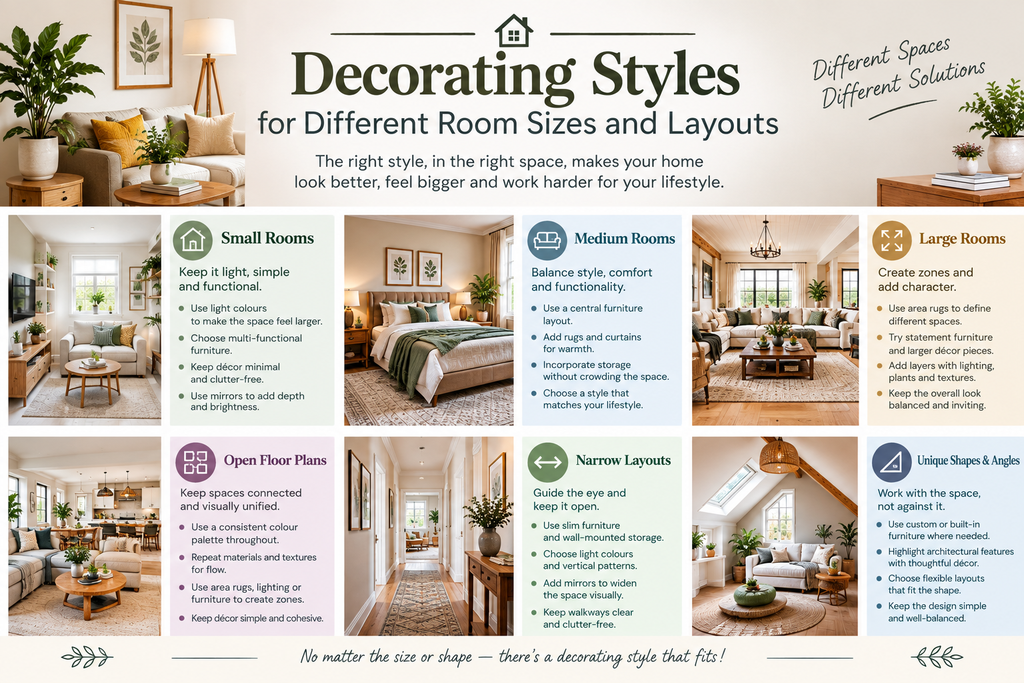
Decorating Styles for Different Room Sizes and Layouts
The size and layout of a room should influence how you apply a decorating style. A design that works beautifully in a large open-plan space may need to be simplified for a small bedroom or narrow hallway.
Instead of trying to reproduce a style exactly, adapt its main principles to your available space.
Decorating a Small Room
Small rooms benefit from careful furniture selection and a controlled visual palette.
Large furniture pieces can quickly consume valuable floor space, so choose items that provide the necessary function without overwhelming the room.
Helpful ideas for decorating styles include:
- Use furniture with suitable proportions
- Keep walkways clear
- Use wall-mounted storage where practical
- Choose lighter visual finishes
- Add mirrors selectively
- Avoid excessive decoration
A small room does not need to be completely white to feel spacious. The important thing is to maintain visual balance and avoid unnecessary clutter.
Decorating a Large Room
Large rooms provide more freedom but can sometimes feel empty or disconnected.
Use furniture groupings to create defined areas. For example, a large living room might include a seating area, reading corner, and storage or display zone.
Large-scale artwork, rugs, lighting fixtures, and furniture can also help fill the space without adding random decorative objects.
The goal is to make the room feel purposeful rather than simply filling every available area.
Open-Plan Spaces
Open-plan homes require decorating styles that work across connected areas.
The kitchen, dining area, and living room do not need identical furniture or colours, but they should share some visual elements.
You can create continuity in decorating styles by repeating:
- Similar wood tones
- Complementary colours
- Consistent flooring
- Related lighting finishes
- Similar textile textures
This allows each zone to have its own purpose while still feeling like part of the same home.
Narrow Rooms
Narrow rooms require careful furniture placement. Oversized pieces can restrict movement and make the room feel even tighter.
Place essential furniture along the walls where appropriate and maintain a clear path through the space.
Use vertical storage and wall-mounted features when possible to reduce pressure on the floor area.
Irregularly Shaped Rooms
Rooms with unusual corners, angled walls, or awkward layouts can still work with almost any decorating style.
Instead of trying to hide every unusual feature, consider whether it can become useful.
An awkward corner might become:
- A reading area
- A compact workspace
- Built-in storage
- A display area
- A small seating zone
The key is to design around the actual shape of the room rather than forcing furniture into an arrangement that does not work.
Multi-Purpose Rooms
Some rooms need to perform several functions. A bedroom might include a workspace, while a living room may also serve as a study or play area.
Choose furniture that supports multiple uses without making the room feel crowded.
Foldable furniture, storage ottomans, modular shelving, and compact desks can be useful when space needs to serve more than one purpose.
Decorating Different Rooms
The same overall style can be adapted differently from room to room.
A living room may need comfortable seating and social areas, while a bedroom should prioritise relaxation. A hallway may need practical storage and a welcoming first impression.
Think about the function of each space before deciding how strongly to apply your chosen style.
The most successful homes do not simply follow one visual formula. They use a consistent design direction while adapting furniture, colours, lighting, and accessories to the needs of each individual room.
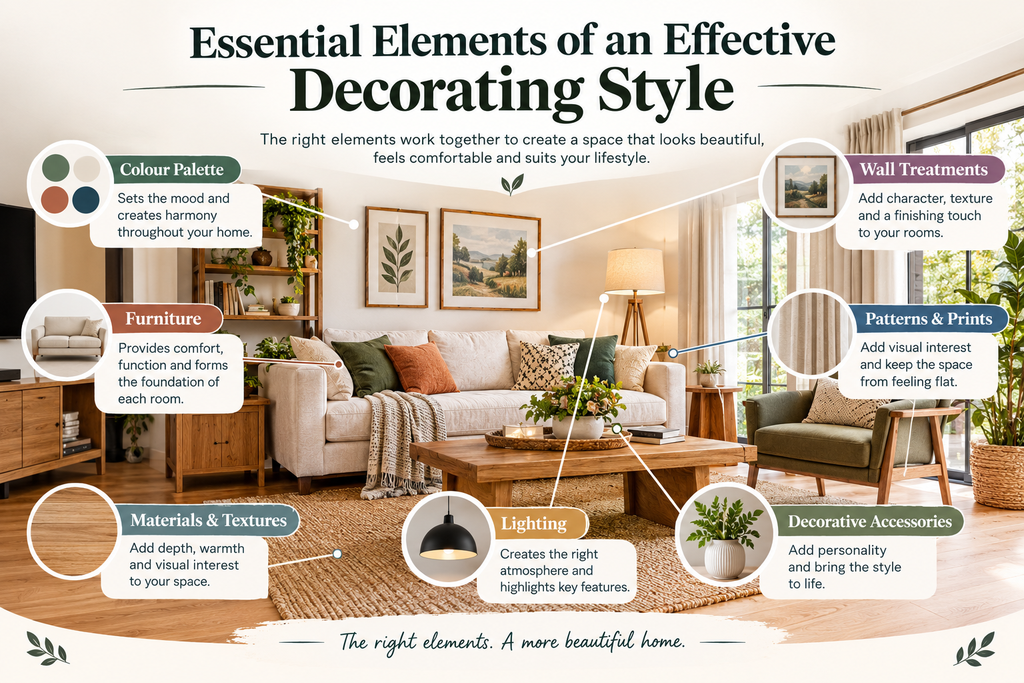
Essential Elements of an Effective Decorating Style
Choosing a decorating style is only the beginning. A successful interior also depends on how furniture, colours, textures, lighting, and accessories work together.
Even a simple decorating style can look polished when these elements are balanced carefully. The aim is to create a room that feels attractive without becoming difficult to use or maintain.
A Balanced Colour Palette
Colour is one of the easiest ways to establish a decorating style. It can influence the atmosphere of a room and connect different elements together.
Start with a main colour and add one or two supporting shades. Accent colours can then be introduced through smaller items such as cushions, artwork, rugs, or accessories.
Before committing to a colour, consider the natural light in the room. The same shade can appear very different in bright daylight and artificial evening lighting.
Furniture With the Right Proportions
Furniture should match the size and layout of the room. A large sofa may look impressive in a spacious living room but can overwhelm a compact space.
Likewise, using very small furniture in a large room can make the space feel unfinished.
Before buying furniture, measure the room in decorating styles and consider:
- Available floor space
- Door and window positions
- Walking routes
- Existing furniture
- Required storage
- The number of people using the room
Good proportions help the room feel comfortable and organised.
Layered Textures
Texture adds depth to a room and prevents a decorating style from feeling flat.
You can combine materials such as timber, cotton, wool, linen, glass, metal, leather, or woven fibres depending on the style you have chosen.
For example, a minimalist room can remain simple while using a textured rug, soft curtains, and upholstered furniture to introduce warmth.
Effective Lighting
Lighting should support both the atmosphere and practical use of the room.
Instead of relying on one central light, consider combining several sources at different levels.
Useful lighting options include:
- Ceiling lighting for general illumination
- Floor or table lamps for softer light
- Wall lights for selected areas
- Task lighting for workspaces
- Accent lighting for artwork or displays
Warm lighting can make living areas feel more comfortable, while brighter task lighting can be useful in kitchens, studies, and other functional spaces.
Practical Storage
Storage plays an important role in almost every decorating style. Even a beautifully decorated room can quickly look untidy when everyday belongings have nowhere to go.
Choose storage that suits both the room and the style.
Built-in cabinets, shelving, baskets, storage benches, sideboards, and multifunctional furniture can help keep items organised.
Keep frequently used belongings accessible and store less-used items in less prominent locations.
Decorative Accessories
Accessories can bring personality into a room, but they should be selected carefully.
Artwork, plants, mirrors, cushions, vases, books, and decorative objects can all contribute to the overall design.
Rather than placing many small objects throughout the room, group a few related pieces together. This creates stronger visual impact while keeping the space easier to maintain.
Natural Elements
Natural materials and plants can work with many different decorating styles.
Timber, stone, woven materials, indoor plants, and natural fabrics can introduce warmth and texture without requiring a complete redesign.
Even a single plant or wooden accent can soften a room dominated by smooth or artificial surfaces.
Connection Between Rooms
A home feels more cohesive when rooms have some visual relationship with one another.
This does not mean using the same furniture or colour everywhere. Instead, repeat selected elements such as a particular wood tone, accent colour, metal finish, or type of textile.
These small connections can make separate rooms feel like part of one thoughtfully designed home.
Budget-Friendly Decorating Styles
Creating a beautiful interior does not necessarily require expensive furniture or a complete renovation.
A thoughtful decorating plan can make affordable items look intentional and coordinated. The key is to focus your budget on changes that have the greatest practical or visual effect.

Rearrange Existing Furniture
Before buying anything new, experiment with the furniture you already own.
Changing the position of a sofa, bed, dining table, or storage unit can alter the way a room feels without costing anything.
Make sure the new arrangement improves movement and leaves important areas accessible.
Refresh Walls With Paint
Painting can be one of the most noticeable low-cost decorating changes.
A new colour can make a room feel warmer, brighter, calmer, or more modern.
You do not necessarily need to repaint every wall. An accent wall or carefully chosen section can sometimes create enough visual change.
Update Soft Furnishings
Cushions, curtains, blankets, rugs, and bedding can strongly influence the atmosphere of a room.
Changing these smaller elements can help you move toward a new decorating style without replacing larger furniture.
Choose a few coordinated patterns or textures rather than buying many unrelated pieces.
Shop Your Own Home
Sometimes you already own useful decorative items but have them in places where they are not being fully appreciated.
Try moving artwork, lamps, mirrors, plants, books, or accessories between rooms.
A familiar object can look completely different when placed in a new setting.
Choose Second-Hand Pieces
Second-hand furniture can provide character without requiring a large budget.
Look for solid pieces that can be cleaned, repaired, painted, or updated with new hardware.
However, inspect furniture carefully before purchasing it. Check its structure, condition, dimensions, and suitability for your room.
Create Simple DIY Decor
Some decorative pieces can be made using inexpensive materials.
Simple projects in decorating styles might include:
- Painted picture frames
- DIY wall art
- Refinished small furniture
- Handmade storage boxes
- Decorative plant holders
- Updated cabinet hardware
DIY decorating works best when the finished item serves a purpose or genuinely suits the room.
Spend More on Important Pieces
A limited budget should be allocated carefully.
Consider spending more on items that receive heavy daily use, such as a sofa, mattress, desk chair, or dining table, while saving money on accessories that can easily be replaced.
This approach can improve long-term value without requiring an expensive decorating project.
Common Decorating Style Mistakes to Avoid
Even good decorating ideas can create problems when they are applied without considering the room’s size, function, and existing features.
Avoiding a few common mistakes can make the final result more comfortable and cohesive.
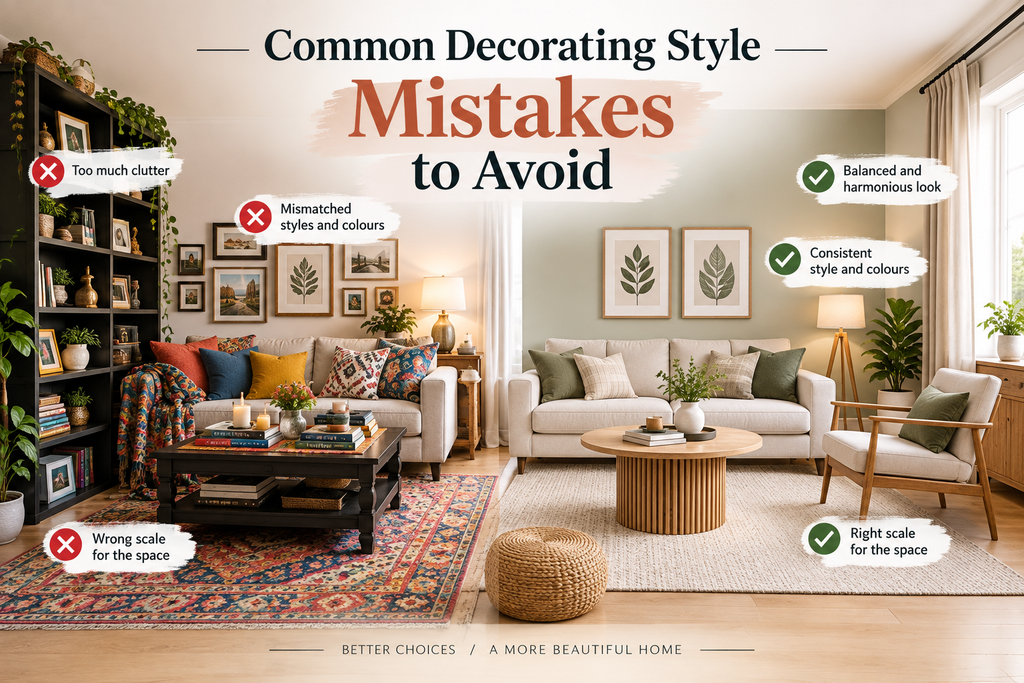
Mixing Too Many Styles
Combining different influences can create an interesting interior, but too many unrelated styles can make a room feel confused.
If you enjoy several styles, choose one as the main direction and use elements from the others as accents.
This provides variety without losing visual control.
Buying Furniture That Is Too Large
Oversized furniture is one of the most common problems in smaller rooms.
Always measure both the furniture and the available space before purchasing.
Remember to check whether the item can actually pass through doors, hallways, and stairways before bringing it home.
Using Too Many Decorative Items
Accessories should enhance a room rather than fill every available surface.
Too many objects can make cleaning more difficult and reduce the visual impact of individual pieces.
Leave some empty space around decorative objects to give the room a more balanced appearance.
Ignoring Lighting
A room can have beautiful furniture and colours but still feel uncomfortable if the lighting is poorly planned.
Think about how the room is used throughout the day and evening.
Add additional lighting where specific activities require better visibility.
Following Trends Too Closely
Trends can provide inspiration, but decorating an entire home around temporary trends may lead to frequent updates.
Use timeless elements for larger and more expensive purchases.
If you enjoy current trends, introduce them through smaller items that can be replaced more easily.
Forgetting Function
A room should work for the people living in it.
Do not place furniture or decorative objects in locations that block movement or make everyday activities difficult simply because they look attractive.
Function should always be considered alongside appearance.
Choosing Colours Without Testing Them
Paint samples can look different depending on natural light, artificial lighting, room size, and surrounding colours.
Test your chosen shades on the actual wall before committing to a large area.
Observe them at different times of the day to see how the colour changes.
Making Every Room Identical
Using exactly the same colours, furniture, and accessories throughout the home can make the interior feel repetitive.
Instead, create a connection between rooms while allowing each space to have its own character.
The living room, bedroom, kitchen, and hallway can all have individual identities while still belonging to the same overall home.
How to Choose and Plan Your Decorating Style Successfully
Once you understand the different decorating styles, the next step is turning your preferences into a practical plan.
You do not need to redesign your entire home at once. A room-by-room approach can make the process easier and more affordable.
1. Consider How You Live
Start by thinking about your daily routines.
Ask yourself how each room is used, who uses it, what activities take place there, and which problems currently make the space uncomfortable.
Your decorating choices should solve real problems rather than simply create a particular appearance.
2. Collect Inspiration
Look at different interiors and identify the elements you repeatedly find appealing.
Instead of copying complete rooms, pay attention to individual features such as:
- Colour combinations
- Furniture shapes
- Materials
- Lighting
- Storage solutions
- Wall treatments
- Decorative details
This will help you discover your own preferences.
3. Select a Main Style
Choose one primary decorating direction for each area.
It could be modern, traditional, minimalist, farmhouse, rustic, Scandinavian, industrial, or a combination of compatible influences.
The main style should act as a guide rather than a strict rule.
4. Create a Simple Colour Scheme
Select your main wall or furniture colour and then identify complementary shades.
Keep larger surfaces relatively consistent and use stronger colours in smaller areas.
This makes future decorating decisions easier because you already have a basic visual framework.
Frequently Asked Questions About Decorating Styles
What are decorating styles?
Decorating styles are general approaches used to create a particular visual and functional character in an interior. They influence choices such as furniture, colours, materials, lighting, textures, and accessories.
How do I find my decorating style?
Start by collecting examples of rooms you like and identify the features they share. Look for repeated preferences in colours, furniture shapes, materials, patterns, and overall atmosphere.
Can I mix different decorating styles?
Yes. Mixing compatible styles can create a more personal interior. The key is to establish one main direction and use other styles selectively so the room still feels cohesive.
What decorating style works best for a small home?
Several styles can work well in small homes. Simple, minimalist, Scandinavian, and contemporary approaches can be particularly adaptable because they often prioritise practical furniture, open space, and controlled decoration.
How can I decorate my home on a small budget?
Start with what you already own and make low-cost changes such as rearranging furniture, painting walls, updating soft furnishings, changing hardware, or creating simple DIY accessories.
Should every room have the same decorating style?
Not necessarily. Rooms can have different personalities while sharing a few colours, materials, or design details that create a connection throughout the home.
How often should I change my decorating style?
There is no fixed schedule. If your current interior remains comfortable and functional, there is no need to change it simply because a new trend appears.
Conclusion
The right decorating styles can help turn a house into a home that feels comfortable, personal, and well organised. The most effective approach is not about following every design trend or buying expensive furniture.
Start by understanding how you live and what each room needs. Then choose a style that supports those requirements and build the design around practical furniture, suitable colours, useful storage, effective lighting, and carefully selected accessories.
Whether you prefer modern simplicity, traditional character, rustic warmth, Scandinavian calm, or a combination of influences, your decorating choices should feel natural to you.
A well-decorated home does not have to be perfect. It simply needs to balance beauty, comfort, functionality, and personality in a way that works for everyday life.

White Living Room Ideas: Stylish and Practical Ways to Create a Bright Home

Living Room Inspo: Stylish and Practical Ideas for a Comfortable Home

Decorating Styles: A Practical Guide to Creating a Beautiful and Comfortable Home

Kitchen Style Ideas: Stylish and Practical Ways to Create Your Perfect Kitchen

Ideas for Bedroom Decor: Stylish and Practical Ways to Create a Comfortable Space

6 Creative Home Office Design Ideas for Remote Workers

Interior Design Ideas That Make Any Home Feel Better

Top Bathroom Mirror Ideas That Make Any Space Feel Luxurious

Best Modern Kitchen Ideas That Feel Warm, Stylish, and Actually Livable

Kitchen Tiles Ideas: Practical Ways to Choose Tiles for a Stylish and Functional Kitchen
-
 Living Room Decor Ideas4 months ago
6 Creative Home Office Design Ideas for Remote Workers
-
 Bedroom Decor Ideas4 months ago
Interior Design Ideas That Make Any Home Feel Better
-
 Bedroom Furniture Ideas4 months ago
Top Bathroom Mirror Ideas That Make Any Space Feel Luxurious
-
 Kitchen Decor Ideas4 months ago
Best Modern Kitchen Ideas That Feel Warm, Stylish, and Actually Livable
-
 Kitchen Decor Ideas2 months ago
Kitchen Tiles Ideas: Practical Ways to Choose Tiles for a Stylish and Functional Kitchen
-

 Bedroom Decor Ideas3 months ago
Wall Panelling Ideas: Stylish Ways to Add Character, Texture, and Elegance to Every Room
-

 Bedroom Decor Ideas2 months ago
Small Bedroom Ideas: Practical Ways to Make a Compact Bedroom Comfortable
-
 Bedroom Decor Ideas2 months ago
Guest Bedroom Ideas: Practical Ways to Create a Comfortable and Welcoming Space