
Small Bedroom Ideas
Bedroom Design: Practical Ways to Create a Comfortable and Functional Space


A bedroom should do more than look attractive. It is one of the most personal rooms in a home and needs to support sleep, relaxation, dressing, reading, and other daily routines. Good bedroom design starts with these practical needs before adding decorative details.
A room can appear beautiful but still feel uncomfortable if the bed is poorly positioned, storage is difficult to access, lighting is too harsh, or there is not enough space to move around. Thoughtful planning helps ensure that the room works naturally every day.
The best approach is to consider the room’s size, natural light, furniture requirements, storage needs, and personal routine. Once those foundations are established, colours, textures, artwork, and accessories can be added to create the desired atmosphere.
You do not need a large bedroom or an expensive renovation to achieve a comfortable result. Even small improvements to the layout, lighting, storage, and textiles can make the room more useful and inviting.
Why Bedroom Design Matters
The bedroom directly affects how comfortable the space feels and how easily it supports everyday routines. Since the room is used regularly, practical decisions can be just as important as visual ones.
A thoughtful bedroom design can help you:
- Create a comfortable sleeping environment
- Improve movement around the room
- Make clothing and personal items easier to organize
- Use natural and artificial light effectively
- Reduce visual clutter
- Make a small room feel more usable
- Create a relaxing atmosphere
- Reflect your personal style
The goal is to create a room that feels good to use, not simply one that looks impressive in photographs.

Start With How the Bedroom Is Used
Before choosing furniture or colours, consider what happens in the room each day.
Ask yourself:
- Is the bedroom only used for sleeping?
- Do you read in bed?
- Do you get dressed and prepare for the day here?
- Do you need a desk or workspace?
- Do you need a dressing area?
- Is additional storage necessary?
- Does another person share the room?
Your answers should influence the layout.
For example, someone who reads before sleeping may benefit from bedside lighting, while someone who needs a workspace may require a compact desk that does not interfere with the sleeping area.
Balance Comfort, Function, and Style
The bedroom should feel comfortable before it feels decorative.
When selecting furniture for bedroom design, consider:
- Bed size
- Mattress access
- Walking space
- Storage capacity
- Furniture proportions
- Ease of cleaning
- Personal comfort
Avoid filling the room simply because there is available floor space.
A smaller number of appropriately sized furniture pieces can make the bedroom easier to use than several unnecessary items.
Style should then be introduced through colour, materials, textiles, lighting, and carefully selected accessories.
Bedroom Design for Different Interior Styles
A bedroom can reflect almost any interior style. The important thing is to adapt the style to the room’s architecture and the atmosphere you want to create.
Modern Bedroom Design
Modern bedrooms often use clean lines, simple furniture, and controlled colour palettes.
Consider:
- Simple bed frames
- Neutral walls
- Minimal bedside tables
- Integrated storage
- Soft textiles
- Simple artwork
- Layered lighting
Modern does not have to mean cold or empty. Wood, textured fabrics, rugs, plants, and warm lighting can make clean-lined furniture feel more inviting.

Traditional and Farmhouse Bedroom Design
Traditional bedrooms can create a comfortable and familiar atmosphere through classic furniture and warm materials.
Useful elements for bedroom design include:
- Wooden furniture
- Upholstered headboards
- Traditional lamps
- Patterned textiles
- Warm neutral colours
- Framed artwork
Farmhouse-inspired bedrooms can use natural wood, simple fabrics, woven textures, and muted colours.
The result should feel comfortable rather than overly coordinated.
Scandinavian Bedroom Design
Scandinavian-inspired bedrooms generally emphasize simplicity, natural materials, and practical functionality.
Consider:
- Light wood
- Soft neutral colours
- Simple furniture
- Natural textiles
- Minimal accessories
- Plenty of useful storage
Natural light is especially valuable in this style.
Avoid filling shelves and surfaces with unnecessary objects. Keeping the room visually calm can reinforce the simple character of the design.
Contemporary and Industrial Bedroom Design
Contemporary bedrooms provide more flexibility with colour, shape, and materials.
You might combine:
- Curved furniture
- Strong artwork
- Rich textiles
- Contemporary lighting
- Natural materials
Industrial-inspired bedrooms can incorporate metal, darker wood, exposed textures, and deeper colours.
Because industrial materials can feel visually hard, soften the room with bedding, rugs, curtains, and warm lighting.
Bedroom Design for Different Room Sizes and Layouts
The room’s dimensions should guide furniture choices and placement.
A layout that works in a large bedroom may leave a small bedroom feeling crowded, while a large room can feel unfinished when furniture is too small.
Bedroom Design for Small Spaces
Small bedrooms benefit from furniture that performs more than one function.
Consider:
- Beds with built-in storage
- Floating bedside tables
- Wall-mounted shelves
- Slim wardrobes
- Under-bed storage
- Compact desks
- Mirrors
Use the available vertical space where practical instead of filling the floor with additional furniture.
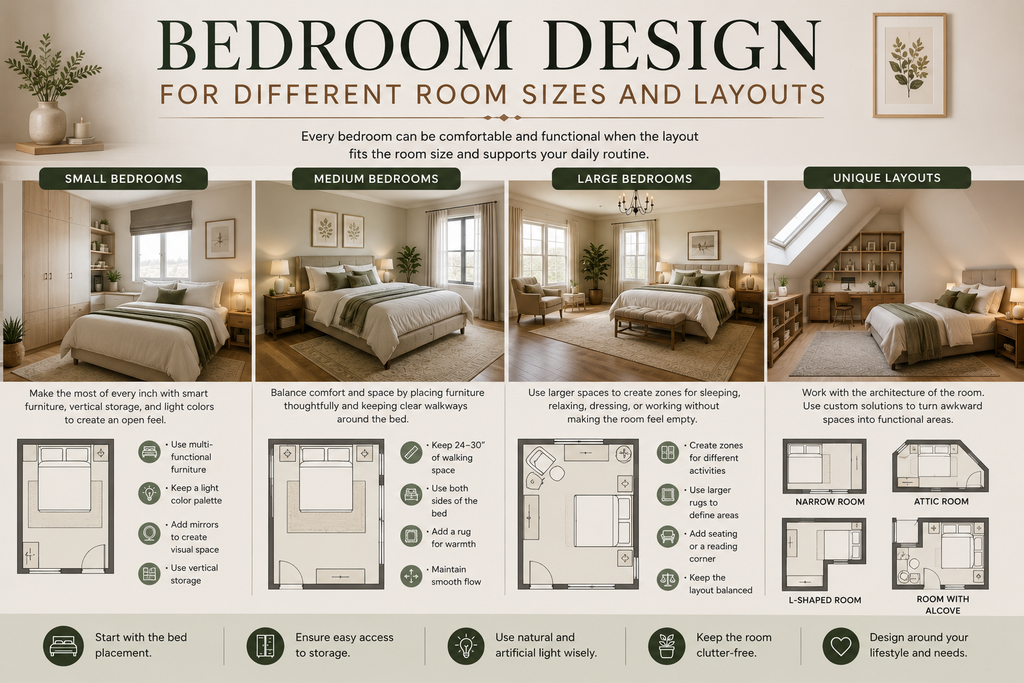
Keep walking paths clear around the bed and toward frequently used storage.
Do not choose extremely small furniture simply because the room is small. Pieces still need to provide enough comfort and storage for the people using them.
Bedroom Design for Large Bedrooms
Large bedrooms provide more flexibility, but excessive empty space can make the room feel disconnected.
Depending on the available area in bedroom design, you might create zones for:
- Sleeping
- Reading
- Dressing
- Working
- Relaxing
A comfortable chair and small side table can establish a reading corner, while a dresser or storage unit can help define a dressing area.
Keep the bed as the primary anchor rather than allowing several competing focal points to dominate the room.
Choosing a Practical Bedroom Layout
Start with the bed because it is normally the largest and most important piece of furniture.
Position it where:
- The room’s main circulation remains clear
- Doors can open comfortably
- Windows are not unnecessarily blocked
- Bedside lighting can be reached easily
- Wardrobes and drawers can open fully
Measure furniture before purchasing it.
Pay attention not only to whether an item technically fits but also to whether there is enough space to walk around it and use its doors, drawers, and other features comfortably.
A practical layout should make daily routines feel effortless.
Essential Elements of an Effective Bedroom
A comfortable bedroom in bedroom design depends on several elements working together. The bed, furniture, storage, lighting, colours, textiles, and accessories should support relaxation and everyday routines without making the room feel crowded.
The most effective bedroom design begins with function and then uses decorative details to create personality.

Choosing the Right Bed and Furniture
The bed is usually the largest piece of furniture, so it should be chosen according to both comfort and available space.
Consider:
- Bed size
- Mattress access
- Headboard dimensions
- Bed height
- Available walking space
- Storage requirements
- Room proportions
Bedside tables should be large enough for essential items without taking up unnecessary floor space.
Other furniture should serve a clear purpose. A dresser, wardrobe, chair, or desk can be useful, but adding pieces simply to fill empty areas can make movement more difficult.
Choose furniture that fits the scale of the room and supports your daily routine.
Planning Bedroom Storage
Good storage can make a significant difference to how calm and organized a bedroom feels.
Consider:
- Built-in wardrobes
- Freestanding wardrobes
- Dressers
- Under-bed storage
- Bedside drawers
- Floating shelves
- Storage benches
- Baskets
Keep frequently used belongings within easy reach.
Less frequently used items can be stored in less accessible areas.
If the bedroom is small, use vertical space where possible. Tall wardrobes and wall-mounted storage can provide additional capacity without taking up as much floor space.
Avoid relying entirely on open shelving because too many visible items can make the room feel cluttered.
Using Comfortable and Flexible Lighting
Bedroom lighting should accommodate different activities.
A useful lighting plan for bedroom design can include:
- General ceiling lighting
- Bedside lamps
- Wall sconces
- Reading lights
- Accent lighting
Bedside lighting is especially useful because it allows you to read or relax without relying on a bright overhead fixture.
Use different levels of lighting rather than treating the entire room as one illuminated area.
Natural light also matters. Use curtains or blinds that allow you to control daylight while maintaining privacy.
Choosing Colours and Textures
Colour has a strong influence on the atmosphere of a bedroom.
Soft neutrals, muted greens, warm beige, gentle blues, and other restrained tones can create a calm foundation.
However, there is no single correct bedroom colour.
Choose colours that suit:
- Natural lighting
- Furniture
- Flooring
- Personal preference
- Desired atmosphere
Texture can add depth without requiring dramatic colours.
Layer the room with:
- Bedding
- Curtains
- Rugs
- Cushions
- Throws
- Upholstered furniture
Combining different textures can make a simple colour palette feel warmer and more interesting.
Creating a Relaxing Sleep Environment
A bedroom should support rest rather than encourage unnecessary stimulation.
Keep the room organized and avoid allowing work-related items, excessive decorations, or clutter to dominate the sleeping area.
Consider:
- Comfortable bedding
- Appropriate lighting
- Useful bedside storage
- Good room organization
- Curtains or blinds for light control
- A comfortable temperature
- Minimal visual clutter
If you use the bedroom for work, try to visually separate the workspace from the sleeping area where possible.
The objective is to make the room feel restful when you enter it at the end of the day.
Budget-Friendly Bedroom Design Ideas
A bedroom does not need a complete makeover to feel noticeably different.
Small improvements can often have a greater impact than replacing every piece of furniture.
Refresh Existing Furniture
Before purchasing new furniture, look at what you already own.
You could:
- Rearrange the furniture
- Change drawer hardware
- Refinish suitable furniture
- Replace lampshades
- Update bedside accessories
- Reorganize the wardrobe
- Move artwork
Changing the layout can improve the room without costing anything.
If the bed and storage are still comfortable and functional, focus your budget on smaller elements that need improvement.

Add Affordable Comfort and Character
Textiles are one of the easiest ways to refresh a bedroom.
Consider:
- New bedding
- Cushion covers
- Throws
- Curtains
- A rug
- Simple artwork
- Indoor plants
- Decorative baskets
Choose items that complement the existing room rather than adding several unrelated colours and patterns.
A few carefully selected changes can make the room feel more cohesive without requiring a major renovation.
Common Bedroom Design Mistakes to Avoid
Bedrooms can become uncomfortable when decorative decisions take priority over practical needs.
Don’t Prioritize Appearance Over Comfort
A bedroom is primarily a place in bedroom design for rest.
Avoid choosing furniture or accessories that look attractive but interfere with:
- Sleeping
- Walking
- Storage
- Dressing
- Reading
- Everyday routines
For example, an oversized bed may look impressive but leave too little space for movement.
Comfort should remain the foundation of the room.
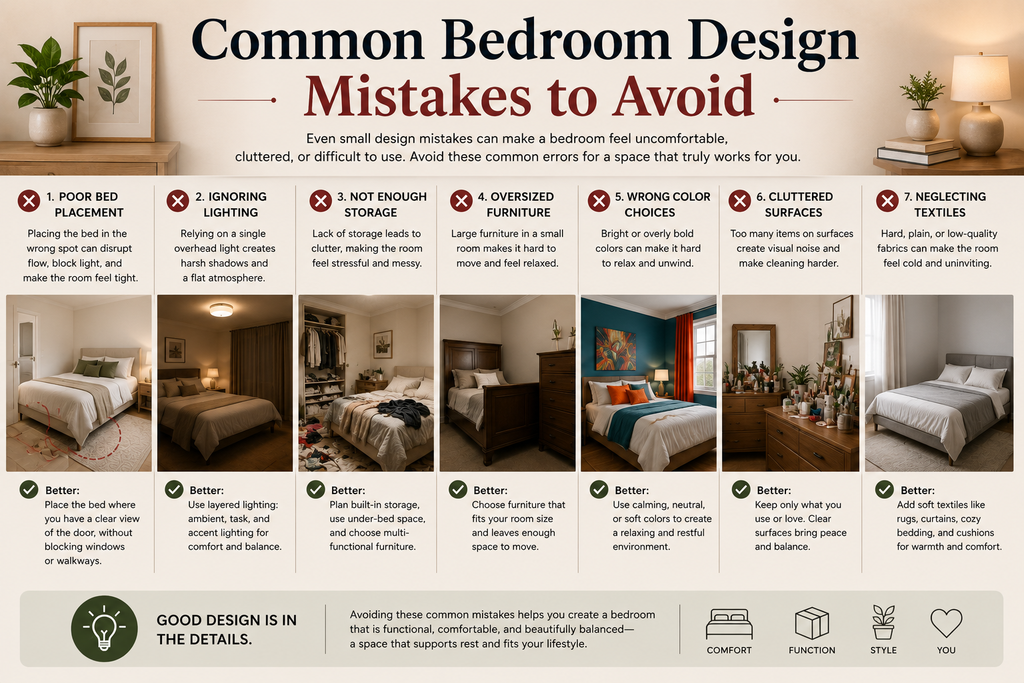
Avoid Clutter and Poor Furniture Placement
Too much furniture can make even a large bedroom feel cramped.
Avoid blocking:
- Doors
- Windows
- Wardrobes
- Drawers
- Walkways
- Heating or cooling vents
Also avoid placing too many decorative objects on bedside tables and dressers.
Other common mistakes include choosing furniture without measuring, using insufficient storage, relying on a single light source, and selecting colours without considering natural light.
A simple and organized room is often easier to relax in.
How to Plan Your Bedroom Design Successfully
Planning the room in stages can help you avoid unnecessary purchases and layout problems.
Bedroom Design Planning Checklist
Before making major changes, work through these steps:
- Measure the room. Record wall dimensions, windows, doors, and fixed features.
- Identify daily activities. Decide whether the room is only for sleeping or also needs to support reading, dressing, or working.
- Choose the bed first. Make sure its size leaves sufficient circulation space.
- Plan storage. Determine where clothing, bedding, accessories, and personal belongings will be kept.
- Arrange major furniture. Position wardrobes, dressers, desks, and chairs without blocking movement.
- Plan lighting. Provide general illumination and focused bedside or reading light.
- Choose a colour palette. Consider natural light and existing furniture.
- Add comfortable textiles. Use bedding, rugs, curtains, and cushions to introduce softness.
- Control visual clutter. Give everyday items designated storage locations.
- Personalize the room. Finish with artwork, photographs, plants, books, or meaningful objects.
Frequently Asked Questions
What makes a good bedroom design?
A good bedroom is comfortable, practical, organized, and visually calming. The bed should be properly positioned, storage should be accessible, lighting should suit different activities, and there should be enough room to move around comfortably.
How can I make a small bedroom feel larger?
Choose appropriately sized furniture, maintain clear walking paths, use practical storage, and take advantage of vertical space. Mirrors and lighter colours may also help create a greater sense of openness.
What colours are best for a bedroom?
There is no universal best colour. Soft neutrals, muted greens, gentle blues, beige, cream, and warm earthy tones can create calm environments, but the right choice depends on lighting and personal preference.
How can I make my bedroom feel cozy?
Layer bedding, rugs, curtains, cushions, and throws. Warm lighting and natural materials can also add comfort and depth without requiring a complete redesign.
How can I design a bedroom on a budget?
Start with the existing furniture and improve the layout. Then focus on affordable changes such as new bedding, lighting, curtains, artwork, rugs, or storage accessories.
Should bedroom furniture match?
It does not have to match exactly. Furniture can share complementary colours, materials, shapes, or finishes while still having individual character. A coordinated mix often feels more natural than a completely identical set.
Conclusion
The best bedroom design starts with the way the room is actually used. A beautiful bedroom should also provide comfortable sleeping conditions, convenient storage, practical lighting, clear movement, and enough flexibility for everyday routines.
Begin with the bed and overall layout, then organize storage and lighting before adding decorative elements. This approach helps prevent the common problem of creating a room that looks finished but does not function well.
You also do not need a large budget. Rearranging furniture, improving organization, changing bedding, adding better lighting, or introducing a few carefully selected accessories can transform the atmosphere.
Most importantly, keep the room comfortable and personal. Trends can influence colours and furniture styles, but a successful bedroom should ultimately support the people who use it and provide a relaxing place to return to every day.
Bedroom Decor Ideas
Ideas for Bedroom Decor: Stylish and Practical Ways to Create a Comfortable Space

Ideas for bedroom decor can completely change how a room feels without requiring an expensive renovation. The right combination of furniture, colours, lighting, textures, and personal details can make a bedroom more comfortable and inviting.
A well-decorated bedroom should do more than look attractive. It should support sleep, relaxation, storage, dressing, and everyday routines while still reflecting the personality of the person using the space.
Whether you are refreshing a small bedroom or planning a larger makeover, the best approach is to start with function. Once the practical needs are clear, decorative choices become much easier to organize.
Why Ideas for Bedroom Decor Matter
Bedroom decor has a direct effect on how comfortable and usable the space feels. A thoughtfully planned room can feel calm and organized, while poorly chosen furniture or excessive decoration can make it feel crowded.
Good bedroom decorating ideas also help you make better use of the available space. Even simple changes to furniture placement, lighting, or storage can make a noticeable difference.

Creating a Comfortable and Personal Space
A bedroom should feel personal rather than looking like a copy of a room seen online. Your choice of colours, artwork, bedding, accessories, and furniture can help create a space that feels connected to your preferences.
Comfort should remain a priority throughout the decorating process. A beautiful room is less successful if the bed is uncomfortable, the lighting is harsh, or there is nowhere convenient to keep everyday belongings.
Consider including:
- Comfortable bedding
- Soft and layered lighting
- Personal artwork or photographs
- Practical bedside storage
- Textiles that add warmth
- A small selection of meaningful accessories
Personal details do not need to fill every surface. A few carefully selected pieces can make the room feel more individual without creating clutter.
Balancing Style, Comfort, and Function
The strongest ideas for bedroom decor balance appearance with everyday needs. Your bedroom needs enough space for movement, clothing storage, dressing, relaxing, and maintaining a comfortable sleeping environment.
Start by identifying the activities that happen in the room. This can include sleeping, getting dressed, reading, working, relaxing, or storing personal belongings.
A functional bedroom should provide:
- A comfortable and appropriately sized bed.
- Convenient clothing and personal storage.
- Clear walking paths.
- Suitable lighting for different activities.
- Enough open space to prevent the room feeling crowded.
Once these basics are handled, decorative elements can be added without interfering with the room’s functionality.
Ideas for Bedroom Decor for Different Interior Styles
Bedroom decor can be adapted to almost any interior style. The important thing is to choose a consistent combination of colours, furniture, materials, and accessories.
You do not have to follow one style perfectly. Combining elements from different styles can work well when the colours and proportions remain balanced.
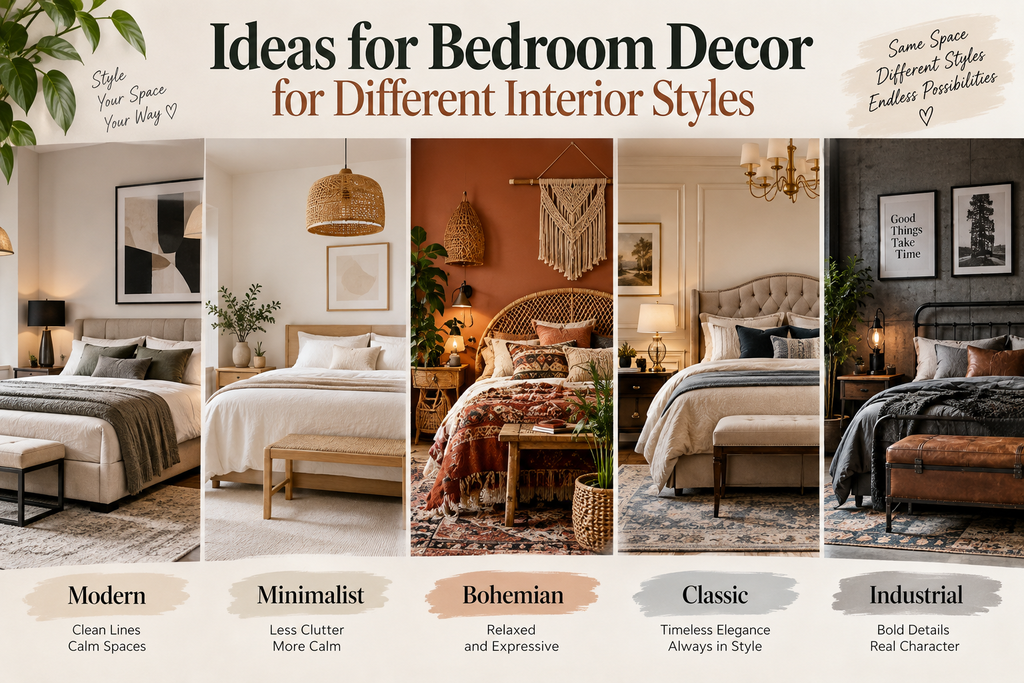
Modern Bedroom Decor Ideas
Modern bedroom decor usually focuses on clean lines, simple furniture, and a controlled colour palette. Neutral shades such as white, beige, grey, and charcoal can create a calm foundation.
A modern bedroom does not need to feel cold. Natural wood, soft textiles, warm lighting, and subtle artwork can introduce comfort without making the room visually busy.
Try combining:
- Simple upholstered furniture
- Neutral bedding
- Minimal bedside tables
- Contemporary lighting
- Natural wood accents
- One or two statement accessories
Keep decorative items purposeful. A clear visual arrangement often creates the strongest modern appearance.
Minimalist Bedroom Decor Ideas
Minimalist bedrooms focus on simplicity and reducing unnecessary belongings. This approach can be particularly helpful when you want the room to feel calm and easy to maintain.
Choose furniture that provides useful functions and avoid adding pieces simply to fill empty areas. Storage should help keep everyday items out of sight when possible.
Minimalist ideas for bedroom decor can include:
- A simple bed frame
- Neutral bedding
- Built-in or concealed storage
- Limited wall artwork
- Soft lighting
- A restrained colour palette
The goal is not to make the bedroom completely empty. Instead, every visible item should have a reason for being there.
Scandinavian Bedroom Decor Ideas
Scandinavian bedroom decor often combines light colours, natural materials, simple furniture, and comfortable textures. White, cream, pale grey, and soft beige can help create an airy atmosphere.
Wooden details can add warmth to the lighter palette. Wool, cotton, linen, and other soft textiles can also make the room feel comfortable without adding visual clutter.
Natural daylight is especially useful with this style. Keep windows relatively clear and use simple curtains that provide privacy without unnecessarily blocking light.
Boho Bedroom Decor Ideas
Boho bedroom decor allows more freedom with colour, pattern, and texture. Natural materials, layered textiles, plants, woven accessories, and artwork can create a relaxed and personal atmosphere.
The challenge is keeping the room comfortable rather than overcrowded. Use a few repeated colours to connect different patterns and textures.
Consider the ideas for bedroom decor adding:
- Woven baskets
- Patterned cushions
- Layered rugs
- Natural wood
- Indoor plants
- Textured blankets
- Handmade-style accessories
Boho style works particularly well when the room feels collected over time rather than decorated with matching items from one set.
Traditional and Classic Bedroom Decor
Traditional bedrooms often use balanced furniture arrangements, timeless colours, upholstered pieces, and classic decorative details. Cream, beige, muted blue, soft green, and warm neutral shades can work well.
A classic bedroom can still feel fresh when traditional furniture is combined with simple modern lighting or contemporary artwork.
Focus on proportion and symmetry where appropriate. Matching bedside tables or balanced lighting can create a calm and organized appearance.
Ideas for Bedroom Decor for Different Room Sizes and Layouts
The size and shape of your bedroom should influence your decorating decisions. Furniture that works comfortably in a large room may make a smaller bedroom difficult to move around.
Measure the room before purchasing anything new. Consider doors, windows, wardrobes, radiators, and other fixed features when planning furniture placement.
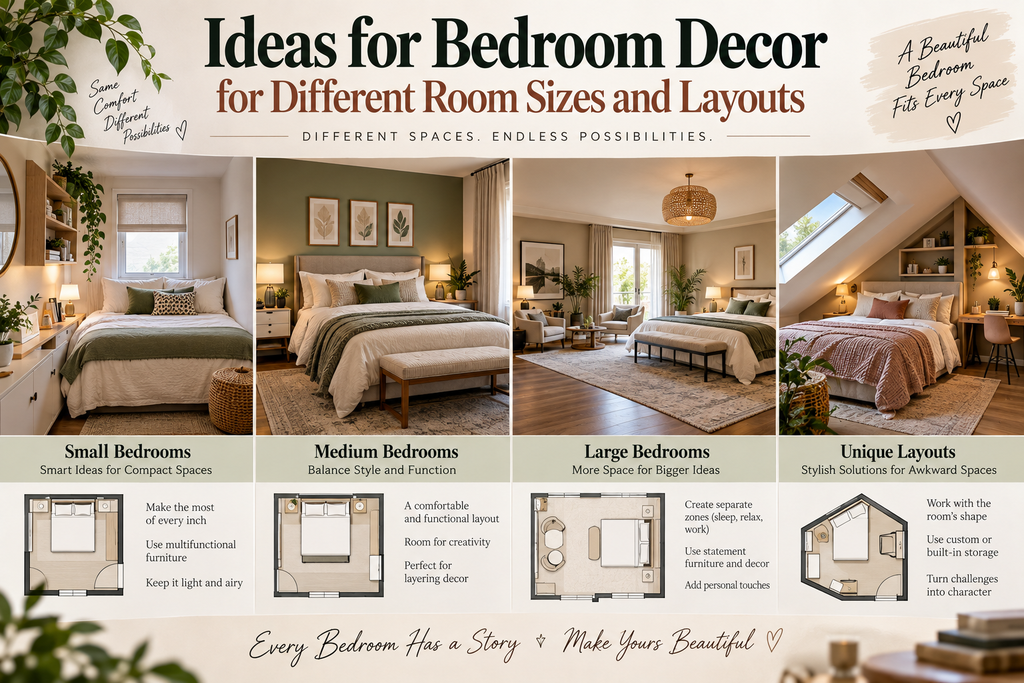
Small Bedroom Decor Ideas
Small bedrooms benefit from furniture that provides more than one function. A bed with drawers, wall-mounted shelves, or a compact bedside table can provide useful storage without consuming too much floor space.
Light colours can make the room feel more open, although small bedrooms do not have to be completely white. Soft beige, pale green, muted blue, or light grey can also work well.
For a small bedroom, consider:
- Under-bed storage
- Wall-mounted shelves
- Slim bedside tables
- Mirrors placed strategically
- Light-coloured bedding
- Multi-purpose furniture
Keep the floor as open as possible. Too many freestanding pieces can quickly make a compact room feel uncomfortable.
Large Bedroom Decor Ideas
Large bedrooms provide more flexibility, but excessive empty space can sometimes make the room feel unfinished. Use furniture and textiles to create comfortable zones rather than filling the room with random pieces.
A reading chair, small bench, dressing area, or compact seating arrangement can add useful functionality.
Large ideas for bedroom decor can include:
- A comfortable seating area
- A larger bedside arrangement
- An accent chair
- A bedroom bench
- A dedicated reading corner
- A small dressing area
Use rugs, lighting, and furniture placement to visually connect these areas with the main sleeping zone.
Narrow Bedroom Decor Ideas
Narrow bedrooms require careful furniture placement. Position the bed where it leaves enough space for comfortable movement and avoid oversized furniture that blocks important pathways.
Use vertical storage when floor space is limited. Tall wardrobes, wall shelves, and mounted lighting can provide useful functions without making the room feel even narrower.
Keep the colour palette relatively simple. Too many contrasting colours can visually divide the room and make the narrow proportions more noticeable.
Bedroom Decor for Awkward Layouts
Bedrooms with sloped ceilings, unusual corners, windows in unexpected locations, or limited wall space require flexible planning. Instead of trying to hide every unusual feature, work with the existing structure.
Low furniture can work well beneath sloped ceilings, while awkward corners may become useful areas for shelving, seating, or storage.
Before buying furniture, create a simple floor plan. This helps you understand how different pieces will fit and prevents expensive purchases that do not suit the space.
The best ideas for bedroom decor are not about adding as many attractive items as possible. They are about creating a room where furniture, storage, lighting, colours, and personal details work together.
A successful bedroom should feel comfortable when you wake up, practical when you are getting ready, and relaxing when you are preparing for sleep.
Essential Elements of Effective Bedroom Decor
Effective bedroom decor should combine comfort, organization, and visual appeal. Every major element should have a purpose while contributing to the overall atmosphere of the room.
Instead of decorating everything at once, focus first on the features that have the biggest effect. The bed, storage, lighting, colours, and textiles usually provide the strongest foundation.
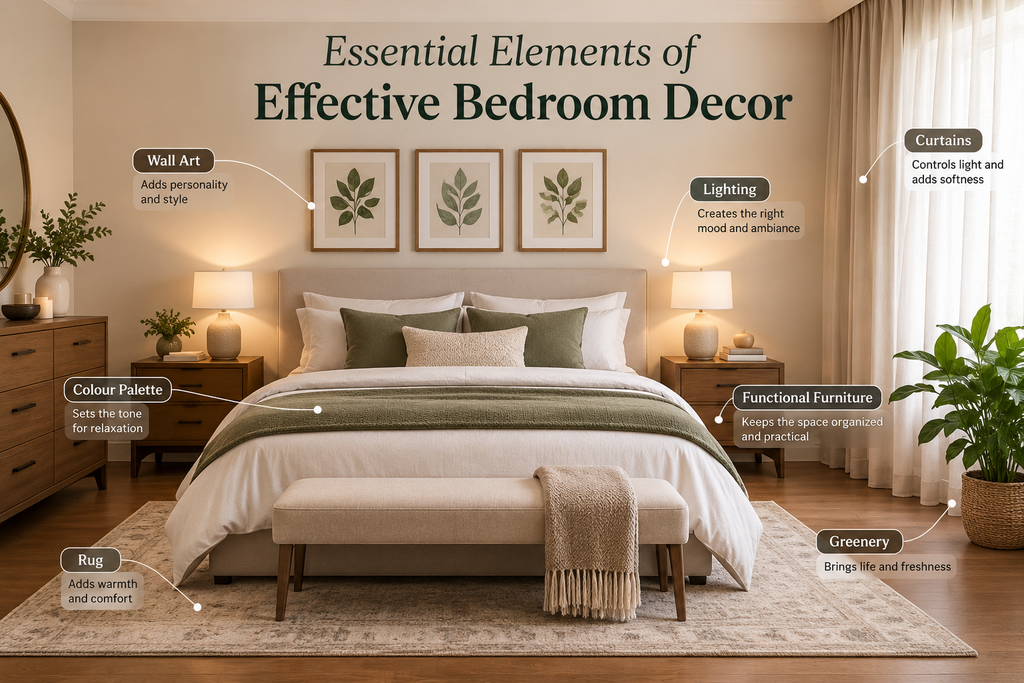
Choosing the Right Bed and Bedding
The bed is the main feature of most bedrooms, so its size and position should be carefully considered. It should provide comfortable sleeping space without making movement around the room difficult.
Bedding can also change the appearance of the entire room. Choose colours and textures that complement the walls, flooring, curtains, and other major furniture.
Layering can add comfort without requiring many decorative pieces. A duvet, blanket, pillows, and a suitable bedspread can create a finished appearance.
Creating Practical Bedroom Storage
Good storage is essential for keeping bedroom decor organized. Clothing, shoes, accessories, books, and personal belongings can quickly make a room feel cluttered when they do not have dedicated storage.
Use a combination of wardrobes, drawers, bedside storage, shelves, and under-bed solutions. Choose storage according to the amount and type of belongings you actually have.
Useful ideas for bedroom decor include:
- Under-bed drawers
- Tall wardrobes
- Bedside cabinets
- Wall-mounted shelves
- Storage benches
- Baskets for smaller belongings
- Built-in wardrobes
Keep frequently used items within easy reach. Less frequently used belongings can be stored in higher or less accessible areas.
Using Lighting Effectively
Lighting can have a major influence on the comfort of a bedroom. A single bright ceiling light may provide enough visibility but can feel too harsh for relaxing before bedtime.
Use several types of lighting for different purposes. General lighting can illuminate the room, while bedside lamps or wall lights can provide softer light for reading.
Consider using:
- Ceiling lighting for general illumination
- Bedside lamps for reading
- Wall lights where space is limited
- Accent lighting for decorative areas
- Dimmable lights for a softer evening atmosphere
Natural light should also be considered. Curtains or blinds should provide privacy while still allowing you to control the amount of daylight entering the room.
Adding Wall Decor and Artwork
Bedroom wall decor can add personality without taking up valuable floor space. Artwork, framed photographs, mirrors, shelves, and subtle decorative panels can all contribute to the room.
Choose wall pieces that complement the existing colour palette. A large statement piece can work better than several unrelated small decorations.
Avoid covering every wall. Leaving some areas relatively simple can help the bedroom feel calmer and prevent visual clutter.
Choosing Colours, Textures, and Accessories
Colour sets the foundation for the bedroom’s atmosphere. Soft neutrals can create a calm appearance, while muted greens, blues, warm beige, and other gentle colours can introduce personality.
Texture is equally important. Bedding, rugs, curtains, cushions, wood, and upholstered furniture can create depth even when the colour palette is simple.
A balanced bedroom may combine:
- Soft bedding
- A comfortable rug
- Natural wood
- Coordinated curtains
- Textured cushions
- Simple decorative accessories
Try to repeat colours and materials throughout the room. This creates visual connection without requiring every item to match.
Budget-Friendly Ideas for Bedroom Decor
Refreshing a bedroom does not always require new furniture or a complete makeover. Small, affordable changes can make the space feel different while allowing you to keep useful items you already own.
Start by removing things that no longer serve a purpose. Decluttering is free and can immediately make the room feel more spacious and organized.
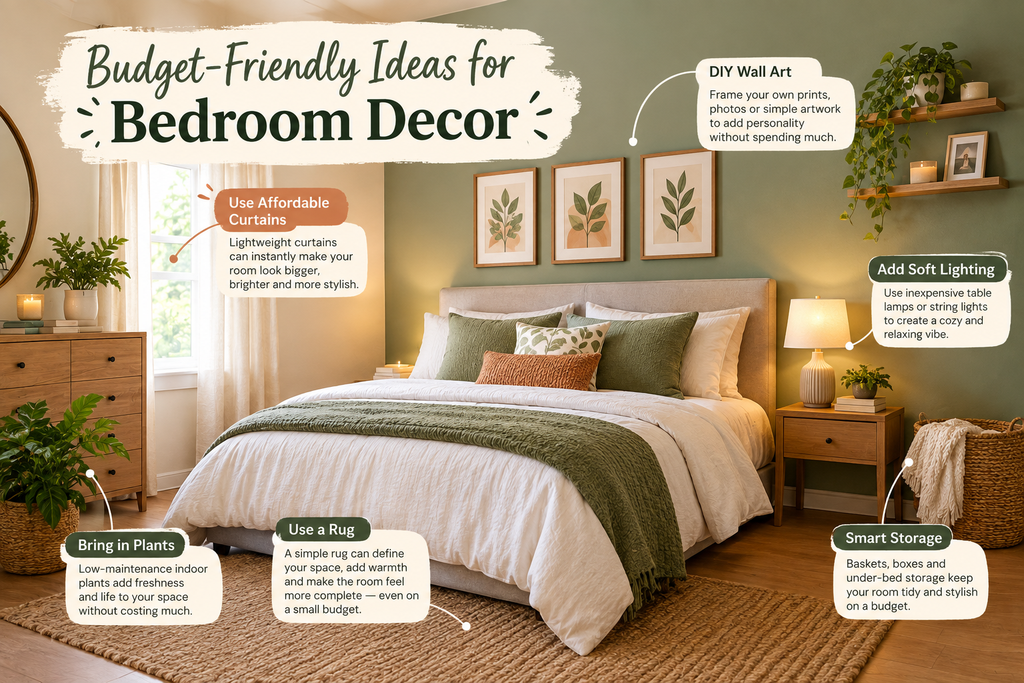
Refreshing Existing Furniture
Before replacing furniture, consider whether it can be improved. Painting a suitable bedside table, changing drawer handles, or refinishing a small piece can give it a new appearance.
Rearranging furniture is another completely free way to refresh bedroom decor. A different bed position or seating arrangement may improve both movement and visual balance.
Only replace furniture when it is damaged, unsuitable, or no longer meets your needs.
Adding Affordable Decorative Details
Small decorative changes can have a surprisingly large impact. New bedding, cushions, curtains, artwork, or a simple rug can introduce a new colour palette without changing the entire room.
Plants can also add natural colour and texture. Choose varieties that suit the available light and the amount of care you are comfortable providing.
Affordable bedroom decor updates in ideas for bedroom decor can include:
- New cushion covers
- A fresh duvet cover
- Simple wall artwork
- Affordable curtains
- Decorative baskets
- Indoor plants
- Updated lampshades
- Rearranged furniture
Choose a few changes that work together instead of purchasing many unrelated accessories.
Common Bedroom Decor Mistakes to Avoid
Good bedroom decorating ideas can still produce disappointing results when basic planning is ignored. A room may look attractive but remain uncomfortable if furniture placement, lighting, or storage has not been considered.
The best approach is to think about how the bedroom feels and functions throughout the entire day.

Avoiding Too Much Clutter
One of the most common bedroom decor mistakes is adding too many decorative objects. Excess accessories can make the room feel busy and create more surfaces that need regular cleaning.
Keep everyday essentials organized and display only items that genuinely contribute to the room.
If a surface is constantly covered with belongings, consider whether additional storage would solve the problem better than another decorative solution.
Choosing Style Over Comfort
A bedroom should be one of the most comfortable rooms in the home. Choosing furniture purely because it looks attractive can result in an uncomfortable bed, unsuitable seating, or poor-quality lighting.
Always consider comfort before appearance. Decorative choices should support the way you use the room rather than making everyday routines more difficult.
Using Poor Lighting or Too Many Colours
Inadequate lighting can make even a beautifully decorated bedroom feel uncomfortable. Similarly, too many strong colours can create a visually restless atmosphere.
Choose a main colour and a few supporting shades. Then use lighting at different levels to create a more flexible environment.
If you want a bold colour, consider using it on one wall, the bedding, artwork, or selected accessories instead of covering every surface.
How to Plan Your Bedroom Decor Successfully
A successful bedroom decorating project starts with a clear plan. Begin by measuring the room and identifying the furniture and features that need to remain.
Think about your daily routine before deciding what to add. The room may need to support sleeping, dressing, reading, relaxing, working, or storing personal belongings.
Create a simple plan that covers:
- Bed position and size.
- Storage requirements.
- Lighting needs.
- Main colour palette.
- Window treatments.
- Wall decor.
- Textiles and accessories.
- Available budget.
Make the largest decisions first. Once the bed, storage, and major furniture are positioned, smaller decorative choices become much easier.
Bedroom Decor Planning Checklist
Before considering the room finished, walk through your normal routine and see whether everything is easy to use.
Ask yourself:
- Is the bed comfortable and correctly positioned?
- Are walking paths clear?
- Is there enough clothing storage?
- Can everyday belongings be reached easily?
- Is the lighting suitable for different activities?
- Do the colours work well together?
- Are there enough soft textures?
- Does the wall decor suit the room?
- Is the bedroom free from unnecessary clutter?
- Does the space feel personal and comfortable?
If the room works well for everyday life, the decorative design is much more likely to remain successful over time.
Frequently Asked Questions
How can I decorate my bedroom without spending much money?
Start by decluttering and rearranging existing furniture. Then consider affordable updates such as new bedding, cushions, artwork, curtains, plants, or updated hardware.
What colours are best for bedroom decor?
Soft neutrals, warm beige, muted blue, gentle green, cream, and soft grey are versatile choices. The best colour depends on your lighting, room size, furniture, and personal preference.
How can I make a small bedroom look bigger?
Use appropriately sized furniture, keep walking paths clear, and make good use of vertical or under-bed storage. Light colours and carefully positioned mirrors can also help create a more open feeling.
How can I make my bedroom feel more cozy?
Layer soft textiles, use warm and adjustable lighting, add a comfortable rug, and introduce natural materials. Keeping clutter under control also helps create a calmer atmosphere.
How often should I change my bedroom decor?
There is no fixed schedule. Instead of completely redesigning the room whenever trends change, make small updates when your needs or preferences change.
Conclusion
The best ideas for bedroom decor combine comfort, personality, organization, and practical function. A bedroom should look appealing, but it should also support sleep, relaxation, storage, dressing, and everyday routines.
You do not need an expensive makeover to create a better bedroom. Thoughtful furniture placement, suitable lighting, coordinated colours, comfortable textiles, and smart storage can make a significant difference.
Start with the features that matter most, then add decorative details gradually. By creating a room around the way you actually live, you can achieve bedroom decor that feels personal, comfortable, and useful for years to come.
Bedroom Decor Ideas
Bedroom Inspiration: Practical Ideas to Create a Comfortable and Stylish Bedroom
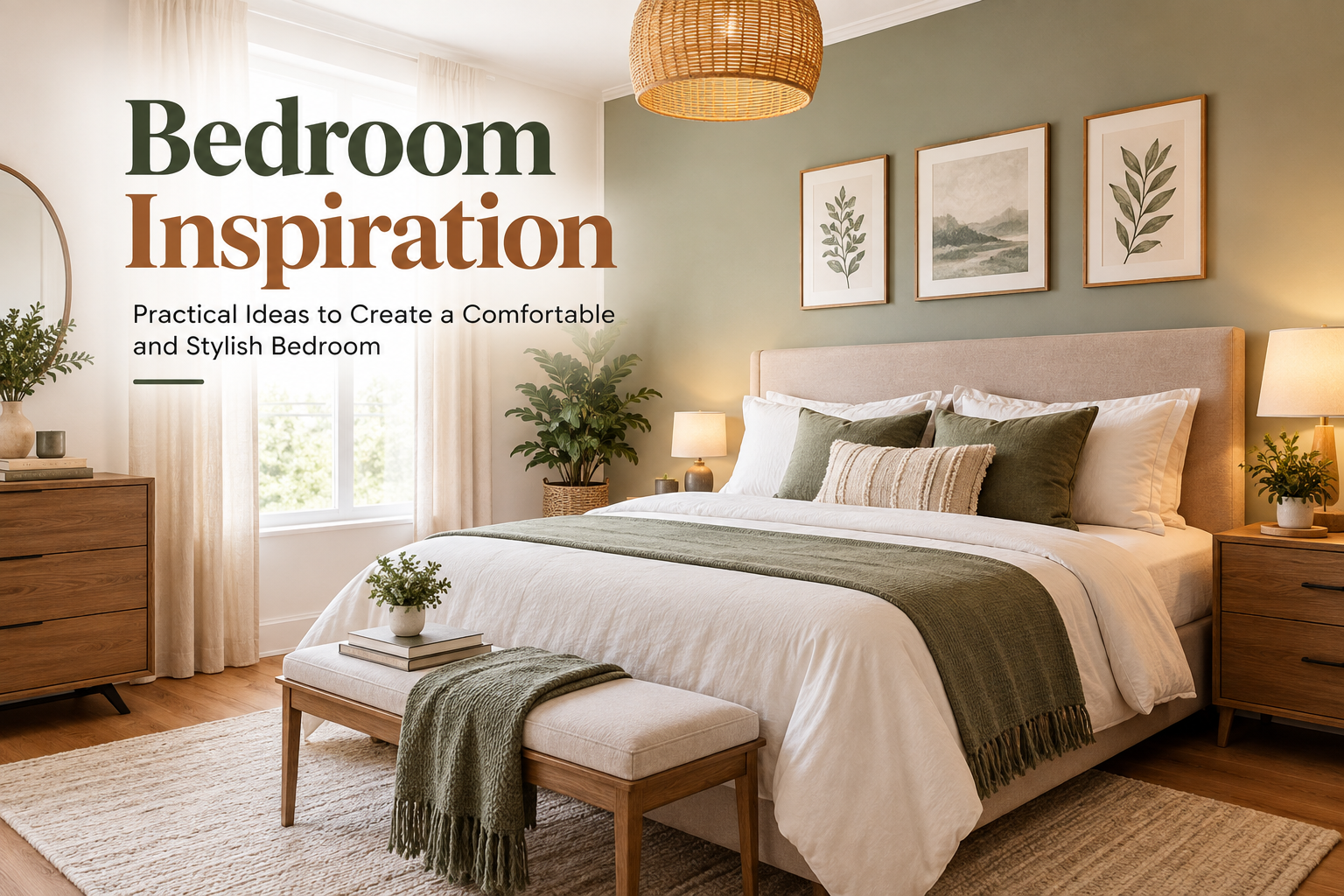
A bedroom should be comfortable, practical, and personal. Good bedroom inspiration helps you create a space that looks appealing while also supporting sleep, relaxation, storage, and everyday routines.
You do not need expensive furniture or a complete renovation to improve your bedroom. Simple changes to the layout, lighting, colours, bedding, or storage can make the room feel much more comfortable.
The best bedroom design starts with how you actually use the space. Once the practical needs are clear, you can choose bedroom decor ideas that add personality without creating unnecessary clutter.
Why Bedroom Inspiration Matters
Bedroom inspiration gives you a starting point when you are unsure how to organise or decorate your space. It can help you compare styles, layouts, colours, furniture, and storage solutions before making changes.
A bedroom needs to do more than look attractive. It should provide a comfortable place to sleep, enough storage for personal belongings, and enough open space for easy movement.

Start With How the Bedroom Is Actually Used
Before choosing furniture or decorative accessories, think about your normal bedroom routine. Consider whether you mainly sleep there or also read, work, get dressed, or relax during the day.
Think about these practical needs:
- Where you walk when entering and leaving the room.
- How much clothing and personal storage you need.
- Whether you need a desk or dressing table.
- Where natural light enters the room.
- Whether you need bedside tables or shelves.
- How much open floor space you want.
The bed should usually be planned first because it is the largest and most important piece. Its position affects the placement of wardrobes, tables, chairs, rugs, and other bedroom furniture.
You should also leave comfortable walking space around the main furniture. A bedroom may fit many pieces physically, but poor spacing can make everyday movement difficult.
Balance Comfort, Function, and Personal Style
Good bedroom inspiration combines comfort, function, and personal style. Focusing only on appearance can result in a room that looks good but does not work well.
For example, an oversized bed may look luxurious but leave very little floor space. Similarly, too much storage can make a bedroom feel crowded if the furniture is not properly scaled.
A balanced bedroom should include:
- Comfortable and appropriately sized furniture.
- Practical storage for everyday belongings.
- Suitable lighting for different activities.
- Colours that create the desired atmosphere.
- Soft and comfortable textiles.
- Personal decorative details.
You do not have to copy a bedroom from a magazine or social media post. Use inspiration as a guide, then adapt the ideas to your own room and lifestyle.
Bedroom Inspiration for Different Interior Styles
Bedroom inspiration can look completely different depending on your preferred interior style. Choosing a general direction makes it easier to select furniture, colours, materials, and accessories.
Your bedroom does not need to follow one style perfectly. Combining a few complementary elements can make the space feel more natural and personal.
Modern Bedroom Inspiration
Modern bedrooms usually focus on clean lines, simple furniture, and uncluttered surfaces. This approach can make the bedroom feel organised while still allowing comfortable and practical details.
A modern bedroom can include:
- A simple bed with a clean frame.
- Minimal bedside tables.
- Neutral walls with a subtle accent colour.
- Simple curtains or blinds.
- Streamlined storage.
- Layered lighting.
Wood, metal, glass, and textured fabrics can add visual interest without making the room feel busy. Choose only a few materials so the overall design remains connected.
Warm timber, soft bedding, rugs, and woven accessories can make a modern bedroom feel more inviting. This is especially useful if you want to avoid an overly cold or minimal appearance.
Modern bedroom ideas can also work well in smaller rooms. The focus on simple furniture and fewer unnecessary accessories helps preserve valuable floor space.
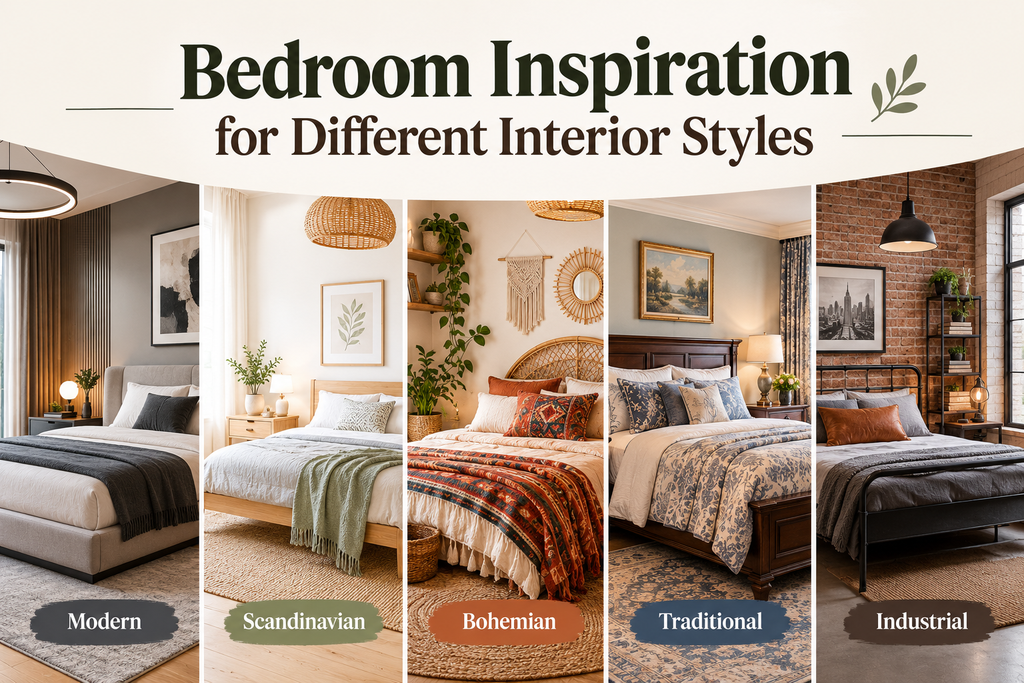
Scandinavian and Minimalist Bedroom Inspiration
Scandinavian and minimalist bedrooms focus on simplicity, comfort, natural materials, and practical furniture. They often use light colours and uncluttered surfaces.
White, cream, beige, soft grey, and muted earthy tones can create a calm background. You can then introduce warmth through wood, textiles, plants, and simple artwork.
Consider adding:
- Light wood furniture.
- Cotton or linen bedding.
- A soft rug.
- Woven storage baskets.
- Simple wall art.
- A small number of plants.
- Warm bedside lighting.
Minimalism does not mean removing everything from the bedroom. Instead, keep items that are useful, meaningful, or contribute positively to the room.
Storage is especially important in minimalist bedrooms. Closed wardrobes, under-bed storage, and baskets can keep everyday belongings organised and reduce visual clutter.
Traditional and Farmhouse Bedroom Inspiration
Traditional and farmhouse bedrooms can create a warm and relaxed atmosphere. Natural materials, classic furniture, comfortable textiles, and softer colours are common features of these styles.
Wooden furniture works particularly well in this type of bedroom. Painted finishes, natural timber, and slightly textured materials can give the room a welcoming character.
You could include:
- A wooden or painted bed frame.
- A patterned quilt or duvet.
- Woven storage baskets.
- Soft curtains.
- Classic bedside furniture.
- Framed artwork or photographs.
Traditional bedroom design does not have to look old-fashioned. Combine classic details with modern storage and lighting to create a practical bedroom that still feels warm.
Contemporary and Luxury Bedroom Inspiration
Contemporary bedrooms can feel sophisticated without being filled with expensive furniture. The overall effect usually comes from good proportions, quality-looking materials, coordinated colours, and carefully selected details.
An upholstered bed can become the main feature of the room. Pair it with comfortable bedding, suitable lighting, and a few well-chosen accessories.
For a refined bedroom, consider:
- An upholstered or simple statement bed.
- Large-scale artwork.
- Floor-length curtains.
- Layered bedside lighting.
- Textured cushions and throws.
- Wood, stone, glass, or metal accents.
Luxury does not require excessive decoration. Using fewer pieces and giving them enough space can create a more polished and comfortable result.
Bedroom Inspiration for Different Room Sizes and Layouts
The size and shape of your bedroom should influence your design choices. A layout that works in a large bedroom may make a small room feel crowded.
Start by measuring the room and noting important features. Doors, windows, radiators, wardrobes, and electrical outlets can all affect furniture placement.
Small Bedroom Inspiration
Small bedrooms need careful planning because every piece of furniture uses valuable floor space. The aim is to make the available area work efficiently rather than simply fitting in more items.
Start with essential furniture and avoid pieces that provide little practical value. Furniture should be comfortable but also appropriately sized for the room.
Useful small bedroom ideas include:
- Choose furniture that matches the room’s proportions.
- Use a bed with drawers or storage underneath.
- Install shelves instead of bulky cabinets.
- Use vertical storage where possible.
- Keep walking paths clear.
- Consider lighter colours for an open feeling.
- Use mirrors carefully to increase visual space.
A small bedside shelf may be more practical than a large bedside table. Similarly, a tall wardrobe can provide useful storage without using as much floor area as a wide cabinet.

Do not choose extremely small furniture simply because the bedroom is small. The goal is to maintain comfort while using the available space efficiently.
Large Bedroom Inspiration
Large bedrooms provide more flexibility, but they can also feel empty when furniture is placed randomly around the walls. Creating clear zones can make a large room feel more balanced.
You could divide the bedroom into several useful areas:
- A sleeping area around the bed.
- A reading corner near a window.
- A dressing area.
- A compact workspace.
- A separate storage area.
A larger rug can help connect the main furniture pieces. It can also make the bedroom feel warmer and more visually complete.
Furniture proportions matter in large rooms. A very small bedside table beside a large bed may look unbalanced, so consider how each piece relates to the others.
Awkward and Narrow Bedroom Inspiration
Awkward bedrooms may have narrow walls, sloped ceilings, unusual corners, or inconveniently positioned windows. Instead of treating these features only as problems, use them to guide the layout.
A narrow bedroom may work better when the bed is placed along the longest wall. This can create a clearer walking route and make better use of the available floor space.
Awkward corners can sometimes become useful areas for:
- A compact desk.
- Floating shelves.
- A dressing table.
- A reading chair.
- A small storage unit.
When planning an unusual room, measure every wall carefully. Mark doors, windows, and fixed features before deciding where larger furniture should go.
Try to keep the central walking area as open as possible. This can make an unusual bedroom easier to use without requiring expensive structural changes.
Essential Elements of an Effective Bedroom
A well-designed bedroom should support sleep, relaxation, storage, and everyday routines. Furniture, lighting, colours, textiles, and organisation all play an important role in creating a comfortable space.
Instead of adding decoration first, focus on the elements that affect how the room works. Once the basics are right, decorative details can be added more easily.
Choosing the Right Bedroom Furniture
Bedroom furniture should match the room’s size and your daily needs. The bed is usually the main feature, but wardrobes, bedside tables, dressers, desks, and chairs also need to work together.
Before buying furniture, consider:
- The overall size of the bedroom.
- Door and window positions.
- Available walking space.
- Your storage requirements.
- Whether you need a desk or dressing area.
- How drawers and wardrobe doors will open.
Avoid oversized furniture in a small bedroom. Large pieces can quickly reduce walking space and make the room feel uncomfortable.
Multi-purpose furniture can be particularly useful in smaller rooms. A storage bed, bedside cabinet, or compact desk can provide more functionality without taking up unnecessary space.

Creating Practical Bedroom Storage
Good storage helps keep a bedroom organised and easier to maintain. Without enough storage, clothes, accessories, books, and personal items can quickly make the room feel cluttered.
Useful bedroom storage ideas include:
- Built-in wardrobes.
- Under-bed storage.
- Bedside cabinets with drawers.
- Tall shelving units.
- Storage baskets.
- Hooks behind doors.
Keep frequently used items within easy reach. Seasonal clothing and rarely used belongings can be stored in less accessible areas.
Open shelves can add personality, but too many can create visual clutter. Combining open shelving with closed storage often provides a better balance.
Using Lighting for Comfort and Atmosphere
Bedroom lighting should support different activities rather than relying on one bright ceiling light. Soft, layered lighting can make the space feel more comfortable in the evening.
A practical lighting plan can include:
- General ceiling lighting.
- Bedside lamps.
- Wall lights.
- Accent lighting.
- Wardrobe lighting.
Warm lighting can create a relaxing atmosphere before bedtime. Brighter task lighting can be useful near wardrobes, dressing tables, or work areas.
Natural light should also be considered when planning bedroom design. Curtains or blinds can help control daylight while providing privacy when needed.
Choosing Bedroom Colours and Materials
Bedroom colours have a strong influence on the atmosphere of the room. Soft neutrals, warm beige, muted green, gentle blue, and earthy shades can all create a calm feeling.
There is no single colour palette that works for every bedroom. Consider the amount of natural light, furniture finishes, room size, and your personal preferences.
You could use:
- One main wall colour.
- A complementary shade for furniture.
- One or two accent colours.
- Natural wood or textured materials.
Materials also add visual interest. Wood, linen, cotton, wool, and woven textures can make a bedroom feel warmer without requiring many decorative accessories.
Adding Textiles and Decorative Details
Textiles can quickly change the appearance and comfort of a bedroom. Bedding, curtains, rugs, cushions, and throws add softness while introducing colour and texture.
Choose textiles based on comfort and maintenance as well as appearance. Materials that are easy to clean can make the bedroom easier to manage over time.
Useful additions can include:
- Comfortable seasonal bedding.
- Privacy curtains.
- A soft bedside rug.
- A lightweight throw.
- A few decorative cushions.
Personal details can make the bedroom feel more connected to you. Artwork, photographs, books, plants, and meaningful objects can all work well.
Avoid covering every surface with decorations. A few carefully chosen pieces usually create a calmer and more organised bedroom.
Budget-Friendly Bedroom Inspiration
A bedroom makeover does not always require a large budget. Rearranging existing furniture or changing a few important details can sometimes create a bigger difference than buying everything new.
Start by identifying what actually needs improvement. If your bed and wardrobe are still comfortable and functional, focus your budget on smaller updates.
Refresh Existing Furniture and Decor
Existing furniture can often be refreshed instead of replaced. A new finish, updated hardware, or a different arrangement may completely change how an old piece looks.
Try these affordable bedroom updates:
- Rearrange the furniture.
- Repaint tired furniture.
- Replace drawer handles.
- Update lampshades.
- Change the bedding.
- Add a new rug.
- Reframe existing artwork.
- Move accessories between rooms.
Bedding is particularly effective because the bed usually occupies a large visual area. A new duvet cover, blanket, or pillow arrangement can create an immediate change.
You can also repeat one or two accent colours throughout the room. Use them in bedding, curtains, artwork, or smaller accessories for a more coordinated appearance.
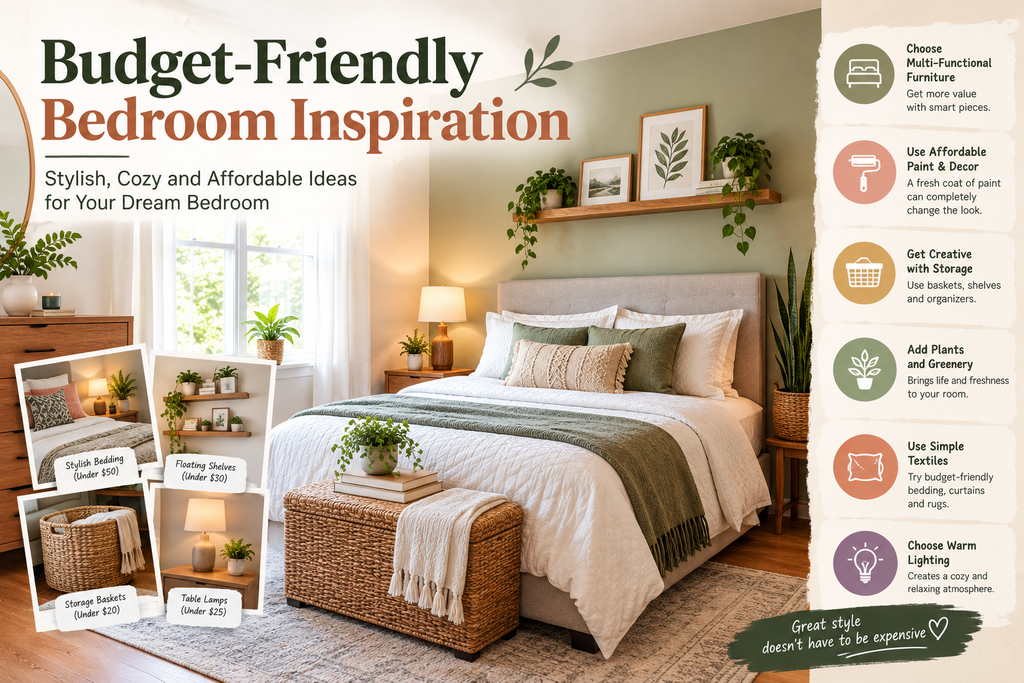
Use Affordable Bedroom Updates
Small additions can improve both the appearance and organisation of your bedroom. Focus on changes that provide a practical benefit instead of buying decoration simply to fill empty areas.
Affordable bedroom inspiration can include:
- Adding floating shelves.
- Using baskets for loose belongings.
- Installing simple wall hooks.
- Adding a useful mirror.
- Introducing low-maintenance plants.
- Painting one feature wall.
- Replacing worn curtains.
Prioritise improvements that make everyday life easier. Better storage, lighting, or furniture placement can often provide more value than purely decorative changes.
Common Bedroom Mistakes to Avoid
Bedroom mistakes often happen when appearance becomes more important than comfort and function. A bedroom should work well on an ordinary day, not only when everything has been carefully arranged.
Think about how each design decision will affect sleeping, cleaning, storage, movement, and relaxation before committing to it.
Don’t Prioritise Appearance Over Comfort
A bedroom is primarily a place for rest, so comfort should remain a major priority. Attractive furniture and accessories are useful only when they work well for everyday life.
Common problems include:
- Choosing a bed that is too large.
- Buying uncomfortable furniture.
- Selecting bedding only for appearance.
- Using overly bright lighting.
- Choosing difficult-to-maintain materials.
- Blocking useful walking routes.
Before following a bedroom trend, ask whether it improves the room or simply makes it look different. Practical design choices usually remain useful for much longer.

Avoid Clutter and Poor Furniture Placement
Too much furniture can make a bedroom feel crowded even when the room itself is reasonably large. Poor placement can also block windows, doors, wardrobes, and natural walking routes.
Avoid buying furniture just because there is an empty corner. Every piece should have a clear purpose and enough space around it to remain practical.
Try living with the main furniture arrangement before adding extra pieces. This can help you identify what the bedroom genuinely needs.
Keep decorative objects under control as well. A smaller collection of meaningful pieces can create a more relaxing environment than many unrelated accessories.
How to Plan Your Bedroom Inspiration Successfully
Bedroom inspiration becomes much more useful when it is turned into a clear plan. Instead of purchasing items randomly, decide what you want the room to achieve before making changes.
Start by measuring the space and identifying your main requirements. Then choose furniture, colours, lighting, storage, and accessories that support those priorities.
Bedroom Planning Checklist
Use this checklist before starting a bedroom update:
- Measure the bedroom carefully.
- Mark doors, windows, and fixed features.
- Decide where the bed should go.
- Check the available walking space.
- Identify your storage needs.
- Choose a colour direction.
- Plan different lighting needs.
- Select furniture that fits the room.
- Choose comfortable textiles.
- Add personal decorative details.
- Keep unnecessary clutter under control.
- Review the room after using it for several days.
Planning before shopping can prevent unnecessary purchases. It also makes it easier to create a bedroom where every major item has a practical purpose.
Frequently Asked Questions
What is the best way to find bedroom inspiration?
Start with your room size, layout, daily routine, and storage requirements. Then explore bedroom styles and choose ideas that can realistically work in your own space.
How can I make my bedroom more comfortable?
Focus on comfortable bedding, suitable lighting, good furniture placement, and soft textures. Keeping clutter under control can also make the room feel more relaxing.
What colours work well in a bedroom?
Soft neutrals, warm beige, earthy tones, muted greens, and gentle blues can all work well. The right choice depends on natural light, existing furniture, and personal preference.
How can I make a small bedroom feel bigger?
Use appropriately sized furniture and keep walking routes clear. Vertical storage, lighter colours, and carefully positioned mirrors can also help create a more open feeling.
How can I update my bedroom on a small budget?
Start with what you already own. Rearranging furniture, changing bedding, improving storage, updating lighting, or repainting furniture can create noticeable improvements without major spending.
Does bedroom furniture need to match?
No. Different furniture pieces can work together when they share complementary colours, materials, or shapes. A coordinated mix can often feel more personal than a completely matching set.
Conclusion
Good bedroom inspiration is about creating a space that looks appealing while supporting everyday comfort and function. The best results come from combining practical planning with your personal style.
Start with the essentials, including furniture placement, storage, lighting, and comfortable materials. Once these elements work properly, you can add colours, artwork, textiles, and decorative details.
Whether you prefer modern bedroom ideas, minimalist interiors, traditional spaces, or contemporary designs, choose ideas that suit your actual room. A well-planned bedroom can feel comfortable, organised, and inviting without being expensive or overcrowded.

A small bedroom can still feel comfortable, organized, and personal when the available space is planned carefully. The challenge is not simply fitting a bed into the room. A bedroom also needs enough space for movement, clothing, storage, lighting, and everyday routines. The most useful small bedroom ideas focus on these practical needs before decoration.
When a bedroom is compact, every piece of furniture has a noticeable effect on the room. An oversized bed frame, bulky wardrobe, or unnecessary chair can quickly make the space difficult to use. On the other hand, choosing furniture according to the room’s measurements can leave enough room for comfortable movement.
A small bedroom also does not have to rely entirely on light colours or minimalist decoration. The more important consideration is whether the furniture, storage, lighting, and layout work together.
The goal is to make the room feel comfortable without trying to fill every available corner. A well-planned compact bedroom can provide everything you need while remaining calm and easy to maintain.
Why Small Bedroom Ideas Matter
Limited floor space makes planning especially important. In a larger bedroom, an inefficient furniture arrangement may simply leave some unused space. In a small room, the same mistake can block a doorway, restrict wardrobe access, or make getting into bed difficult.
Thoughtful small bedroom ideas can help you:
- Make better use of limited floor space
- Create comfortable sleeping space
- Improve storage capacity
- Keep walking paths clear
- Reduce visual clutter
- Make better use of natural light
- Support everyday dressing and storage routines
- Create a relaxing atmosphere
The objective is not to make everything miniature. It is to choose pieces that provide the required function without using more space than necessary.

Start With How the Bedroom Is Used
Before changing the room, think about what you actually need from it.
Ask yourself:
- Is the room only used for sleeping?
- Do you get dressed here?
- Do you need a desk or study area?
- Do you read in bed?
- How much clothing needs to be stored?
- Is the room shared?
- Do you need space for hobbies or personal belongings?
These questions help determine which furniture deserves valuable floor space.
For example, if the room is only used for sleeping and dressing, a large desk may be unnecessary. If you regularly work or study there, however, a compact workspace may need to be included in the layout.
Balance Comfort, Function, and Available Space
A common mistake with compact bedrooms is trying to save space by choosing furniture that is too small to be comfortable.
Instead, focus on proportion and purpose.
Your bed should provide adequate sleeping space, while wardrobes and drawers should offer enough storage for everyday belongings.
Consider:
- Bed dimensions
- Furniture depth
- Door clearance
- Walking space
- Storage capacity
- Access to windows
- Access to drawers and wardrobes
Every item should have a clear reason for being in the room.
If a piece is rarely used and takes up valuable floor space, removing it may improve the bedroom more than adding another decorative feature.
Small Bedroom Ideas for Different Interior Styles
A small bedroom can suit many interior styles. The key is to adapt the style so that decorative details do not overwhelm the available space.
Modern Small Bedroom Ideas
Modern design can work well in compact bedrooms because it often uses simple forms and uncluttered surfaces.
Consider:
- A simple bed frame
- Built-in or streamlined storage
- Neutral walls
- Floating bedside tables
- Minimal artwork
- Layered lighting
- Simple bedding
Avoid adding too many decorative objects.
Warm wood, soft textiles, and comfortable bedding can prevent the room from feeling too stark.

Traditional and Farmhouse Small Bedroom Ideas
Traditional and farmhouse styles can add warmth to a compact bedroom without requiring large amounts of furniture.
Useful elements for small bedroom ideas include:
- Wooden furniture
- Soft bedding
- Woven baskets
- Warm neutral colours
- Simple artwork
- Textured curtains
- Traditional lighting
Choose a few characterful pieces rather than filling every surface with decorative objects.
For example, a wooden bedside table can provide both storage and visual warmth.
Scandinavian Small Bedroom Ideas
Scandinavian-inspired rooms often emphasize simplicity, natural materials, and practical organization.
Consider:
- Light wood
- Soft neutral colours
- Simple furniture
- Natural fabrics
- Functional storage
- Minimal accessories
Keeping the floor relatively open can make a compact room easier to move around.
Natural daylight can also become an important part of the design, so avoid unnecessarily blocking windows with large furniture.
Contemporary and Minimalist Small Bedroom Ideas
Contemporary and minimalist approaches can help reduce visual clutter in a small bedroom.
Consider:
- Multifunctional furniture
- Concealed storage
- Simple colour combinations
- Wall-mounted shelving
- Streamlined furniture
- Limited accessories
Minimalism should not mean removing everything that makes the bedroom comfortable.
Keep the items that genuinely improve the room, such as good bedding, useful lighting, and convenient storage.
Small Bedroom Ideas for Different Layouts
The shape of the bedroom can affect where the bed, wardrobe, desk, and other furniture should be positioned.
A narrow bedroom requires different solutions from a square room, while an awkward room may require more flexible furniture.
Small Bedroom Ideas for Narrow Rooms
Narrow bedrooms can become difficult to navigate when furniture extends too far into the central walkway.
Consider:
- Positioning the bed along the most practical wall
- Using slim bedside tables
- Choosing a shallow wardrobe where possible
- Using wall-mounted shelves
- Keeping the central path clear
Avoid placing unnecessary furniture across the narrowest part of the room.
If a desk is required, look for a compact design that can fit into an unused corner without obstructing the main route.

Small Bedroom Ideas for Square Rooms
Square bedrooms provide more balanced proportions but still require careful planning.
The bed can usually act as the main anchor, with storage and smaller furniture arranged around it.
Consider:
- Centering the bed where practical
- Using matching or balanced bedside storage
- Keeping wardrobe access clear
- Creating one dedicated storage zone
- Maintaining comfortable circulation
Do not assume that placing every item symmetrically is automatically the best solution. Function should determine the final arrangement.
Small Bedroom Ideas for Awkward Layouts
Some small bedrooms have sloped ceilings, unusual corners, multiple doors, recessed areas, or windows positioned where standard furniture would normally go.
Instead of fighting these features, use them to guide the layout.
Consider:
- Custom or modular storage
- Low furniture beneath sloped ceilings
- Floating shelves
- Corner desks
- Under-bed storage
- Compact bedside units
Measure unusual areas carefully before purchasing furniture.
A few centimetres can determine whether a wardrobe door opens properly or whether a walkway remains comfortable.
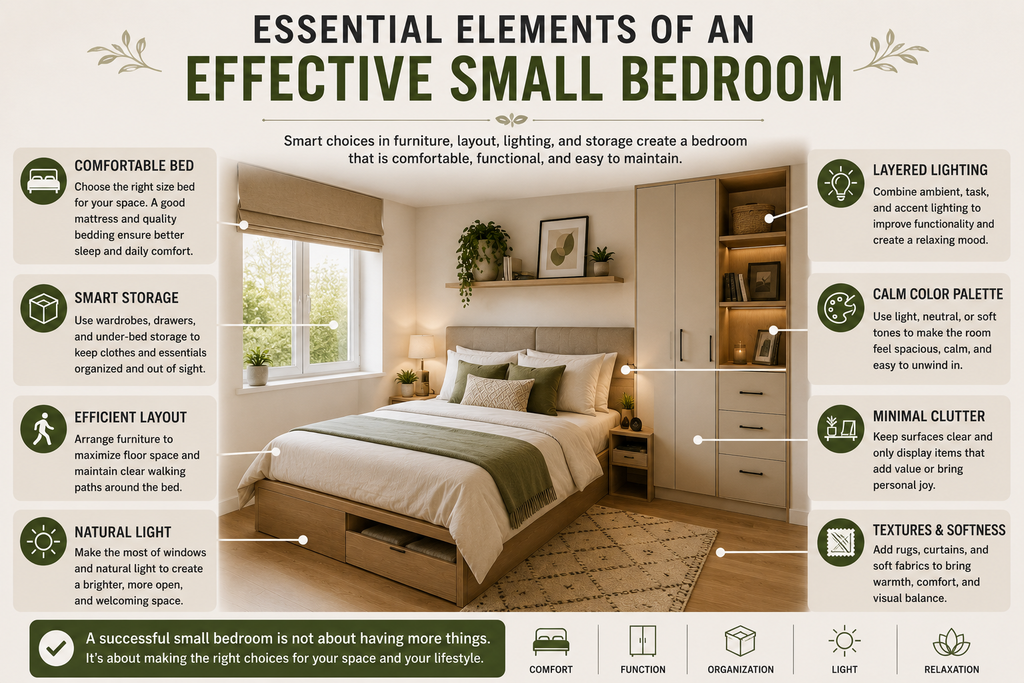
Essential Elements of an Effective Small Bedroom
A compact bedroom needs to provide comfort without wasting valuable space. The bed, storage, lighting, colours, textiles, and accessories should work together rather than compete for attention.
The most effective small bedroom ideas focus on creating a room that is easy to sleep in, easy to organize, and comfortable to use every day.
Choosing the Right Bed and Furniture
The bed usually occupies the largest amount of floor space, so its size and position should be considered carefully.
Before choosing furniture for small bedroom ideas, consider:
- Bed dimensions
- Room measurements
- Walking space
- Wardrobe clearance
- Door openings
- Window positions
- Storage requirements
A bed with built-in drawers or space underneath can provide useful storage without requiring another cabinet.
For bedside furniture, consider floating shelves or narrow tables if conventional nightstands make the room feel crowded.
Other furniture should have a clear purpose. If a chair, dresser, or table is rarely used, removing it may create more value than replacing it with a smaller version.
Maximizing Bedroom Storage
Storage is one of the biggest challenges in a compact bedroom.
Use space efficiently in small bedroom ideas with:
- Under-bed drawers
- Tall wardrobes
- Wall-mounted shelves
- Over-door organizers
- Bedside storage
- Storage benches
- Baskets
- Built-in cabinets
Vertical storage is particularly useful because it can increase capacity without taking additional floor space.
Keep frequently used clothing and belongings within easy reach. Less frequently used items can be stored in higher or less accessible areas.
Avoid turning every wall into open shelving. Too many visible items can make the bedroom feel cluttered even when everything is organized.
Using Lighting Effectively
Good lighting can make a small bedroom feel more comfortable and visually open.
Instead of relying on a single overhead light, consider layering:
- Ceiling lighting
- Bedside lamps
- Wall sconces
- Reading lights
- Accent lighting
Wall-mounted lighting can be useful when bedside tables are small or when you want to keep the surface clear.
Natural light is also valuable. Keep windows as unobstructed as practical and choose window treatments that allow you to control daylight and privacy.
Mirrors can reflect light and create a greater sense of openness, but they should be positioned intentionally.
Choosing Colours and Textures
Colour can influence how spacious and relaxing a bedroom feels.
Light and soft shades such as:
- Warm white
- Cream
- Beige
- Pale grey
- Soft blue
- Muted green
can create a calm foundation.
However, small bedrooms do not need to be completely white.
You can introduce deeper colours through bedding, artwork, cushions, curtains, or a feature wall.
Texture is another useful way to add personality without taking up floor space.
Consider:
- Soft bedding
- Curtains
- Rugs
- Throws
- Cushions
- Upholstered furniture
- Natural wood
A mixture of textures can make a simple colour palette feel warm and inviting.
Keeping the Bedroom Comfortable and Organized
Organization should be part of the design rather than something added later.
Give everyday belongings a designated location and avoid allowing surfaces to become permanent storage areas.
Keep:
- Bedside tables relatively clear
- Floors free from unnecessary objects
- Clothing inside suitable storage
- Frequently used items accessible
- Decorative objects limited to useful or meaningful pieces
A clear floor can make a compact bedroom easier to navigate and can also create a calmer visual impression.
Budget-Friendly Small Bedroom Ideas
You do not need to purchase new furniture to improve a small bedroom.
Some of the most effective changes involve rearranging what you already have and improving organization.
Rearrange and Repurpose Existing Furniture
Start by experimenting with the current layout.
Try:
- Moving the bed
- Removing unnecessary furniture
- Repositioning the dresser
- Moving storage vertically
- Changing the location of a desk
- Reorganizing bedside areas
Before moving everything, measure the furniture and available clearance.
You may find that changing the position of one large item creates significantly more usable space.
Furniture can also be repurposed. A small chest can serve as bedside storage, while a bench can provide both seating and hidden storage.
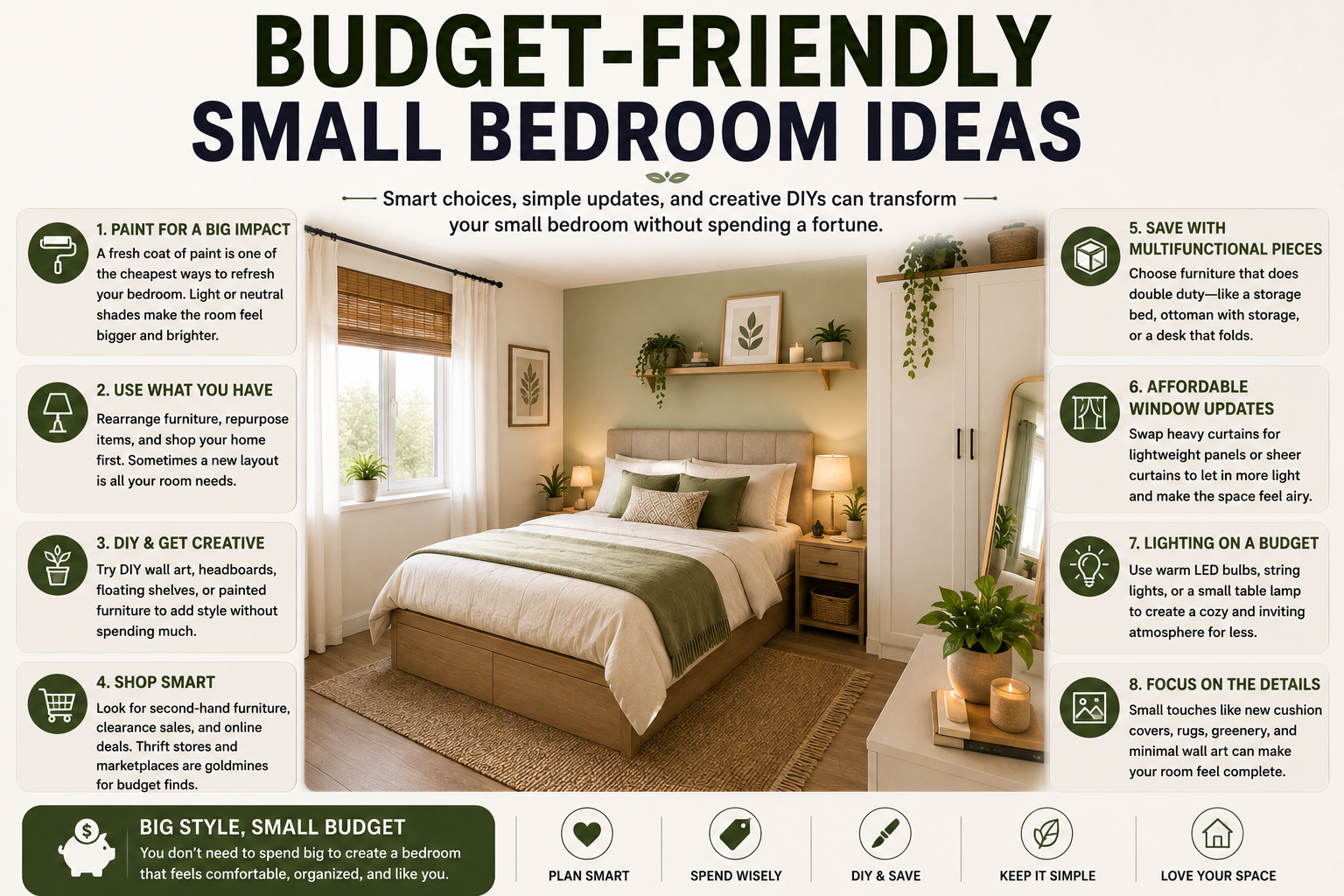
Add Affordable Storage and Decorative Updates
Small additions can refresh the bedroom without a major renovation.
Consider:
- Storage baskets
- New bedding
- Cushion covers
- Simple artwork
- Wall shelves
- A compact mirror
- New curtains
- Affordable lighting
Choose updates that solve a real problem whenever possible.
For example, a storage basket is more useful than another decorative object if blankets or clothing regularly end up on the floor.
Common Small Bedroom Mistakes to Avoid
Limited space makes poor decisions more noticeable, so careful planning is important.
Don’t Overcrowd the Bedroom
Trying to fit too much furniture into a small room can make it difficult to move around.
Avoid:
- Oversized wardrobes
- Bulky bedside tables
- Unnecessary chairs
- Large dressers
- Excessive decoration
Start with the essential furniture and add pieces only when there is enough room.
A clear walkway is often more valuable than an additional decorative item.

Avoid Ignoring Storage and Circulation
A bedroom may technically contain everything you need but still function poorly if storage and movement have not been planned.
Avoid blocking in small bedroom ideas:
- Doors
- Wardrobe openings
- Drawers
- Windows
- Main walking routes
- Heating or cooling vents
Also avoid buying furniture without measuring it first.
Other common mistakes include using too many competing colours, relying on a single light source, covering every wall with decorations, and choosing furniture that looks small online but is actually too deep for the room.
How to Plan Your Small Bedroom Ideas Successfully
A clear plan can help you use limited space efficiently while maintaining comfort.
Small Bedroom Planning Checklist
Before making changes, work through these steps:
- Measure the room. Record walls, doors, windows, and fixed features.
- Identify your priorities. Decide whether sleeping, dressing, storage, working, or another activity requires the most space.
- Choose the bed position. Make sure there is enough room to move around it.
- Measure furniture carefully. Check both dimensions and door or drawer clearance.
- Plan storage vertically. Use tall wardrobes, shelves, and wall-mounted solutions where appropriate.
- Keep circulation clear. Maintain practical paths between the bed, door, wardrobe, and other frequently used areas.
- Plan lighting. Include general lighting and focused bedside or reading light.
- Choose a simple colour palette. Use colour and texture to create warmth without visual overload.
- Reduce unnecessary items. Keep only furniture and accessories that serve a purpose or add meaningful character.
- Review the room as a whole. Make sure the final arrangement remains comfortable and easy to maintain.
Frequently Asked Questions
How can I make a small bedroom look bigger?
Keep the layout simple, choose appropriately sized furniture, maintain clear floor space, and use storage efficiently. Natural light, mirrors, and a controlled colour palette can also contribute to a more open appearance.
What type of bed is best for a small bedroom?
A bed that provides adequate sleeping space while fitting comfortably within the room is the best choice. Beds with built-in drawers or useful space underneath can provide additional storage.
How can I add storage to a very small bedroom?
Use vertical space with tall wardrobes and wall-mounted shelves. Under-bed storage, floating bedside units, storage benches, and organizers can also increase capacity without using much additional floor space.
What colours work well in small bedrooms?
Soft neutrals and lighter shades can create an open and calm atmosphere, but small bedrooms can also use deeper colours as accents. The amount of natural light should be considered when selecting colours.
How can I make a small bedroom cozy?
Layer comfortable bedding, rugs, curtains, cushions, and throws. Warm lighting and natural materials can also make the room feel inviting without requiring additional floor space.
Should I use a large mirror in a small bedroom?
A mirror can help reflect light and create a greater sense of openness. Choose a suitable size and position it where it contributes to the room rather than becoming an unnecessary focal point.
Conclusion
The best small bedroom ideas are based on thoughtful use of limited space rather than simply trying to make the room appear larger. A compact bedroom can be comfortable when the bed, storage, lighting, and furniture are selected according to the room’s actual dimensions.
Start with the layout and essential furniture. Make sure you can move comfortably, open wardrobes and drawers, and access the items you use every day.
Then use vertical storage, layered lighting, soft textiles, and a controlled colour palette to create a room that feels organized and relaxing.
You also do not need a large budget. Rearranging furniture, removing unnecessary pieces, improving storage, changing bedding, or adding a few carefully selected accessories can make a noticeable difference.
A successful small bedroom is not defined by how many things can fit inside it. It is defined by how comfortably and efficiently the available space supports everyday life.

White Living Room Ideas: Stylish and Practical Ways to Create a Bright Home

Living Room Inspo: Stylish and Practical Ideas for a Comfortable Home

Decorating Styles: A Practical Guide to Creating a Beautiful and Comfortable Home

Kitchen Style Ideas: Stylish and Practical Ways to Create Your Perfect Kitchen

Ideas for Bedroom Decor: Stylish and Practical Ways to Create a Comfortable Space

6 Creative Home Office Design Ideas for Remote Workers

Interior Design Ideas That Make Any Home Feel Better

Top Bathroom Mirror Ideas That Make Any Space Feel Luxurious

Kitchen Tiles Ideas: Practical Ways to Choose Tiles for a Stylish and Functional Kitchen

Best Modern Kitchen Ideas That Feel Warm, Stylish, and Actually Livable
-
 Living Room Decor Ideas4 months ago
6 Creative Home Office Design Ideas for Remote Workers
-
 Bedroom Decor Ideas4 months ago
Interior Design Ideas That Make Any Home Feel Better
-
 Bedroom Furniture Ideas4 months ago
Top Bathroom Mirror Ideas That Make Any Space Feel Luxurious
-
 Kitchen Decor Ideas2 months ago
Kitchen Tiles Ideas: Practical Ways to Choose Tiles for a Stylish and Functional Kitchen
-
 Kitchen Decor Ideas4 months ago
Best Modern Kitchen Ideas That Feel Warm, Stylish, and Actually Livable
-

 Bedroom Decor Ideas3 months ago
Wall Panelling Ideas: Stylish Ways to Add Character, Texture, and Elegance to Every Room
-
 Bedroom Decor Ideas2 months ago
Guest Bedroom Ideas: Practical Ways to Create a Comfortable and Welcoming Space
-

 Bedroom Decor Ideas2 months ago
Small Bedroom Ideas: Practical Ways to Make a Compact Bedroom Comfortable