
Kitchen Decor Ideas
Coffee Bar Ideas: Creative Ways to Design a Stylish and Functional Coffee Station at Home


Coffee bar ideas have become increasingly popular as more homeowners look for ways to make their daily routines more enjoyable while adding character to their living spaces. A home coffee bar is more than just a place to keep a coffee machine; it is a dedicated area where everything needed for preparing and serving coffee is organised, easily accessible, and beautifully displayed. Whether you enjoy a quick cup before work or a slow weekend coffee with family, a well-designed coffee station can make every coffee break feel more relaxing and convenient.
Many people believe creating a coffee bar requires a large kitchen or expensive furniture. In reality, even a small corner, unused countertop, cabinet, or dining room nook can become an attractive coffee station with thoughtful planning. The key is balancing functionality with style. Instead of filling the space with unnecessary decorations, focus on practical storage, quality accessories, and a layout that supports your everyday routine.
This guide explores practical coffee bar ideas for different home styles and room sizes. You’ll discover how to choose the right location, organise coffee essentials, and decorate your coffee station in a way that complements your home’s interior while making your morning routine more efficient and enjoyable.
Why a Home Coffee Bar Matters
A home coffee bar is more than a decorative feature in coffee bar ideas; it creates a dedicated space for one of the most enjoyable parts of the day. Instead of searching different cabinets for mugs, coffee beans, sugar, and accessories, everything is stored in one organised location. This not only saves time but also makes the kitchen or dining area feel cleaner and more functional.
Whether your home is large or small, a coffee station can improve organisation while adding warmth and personality to your décor.

Some of the biggest benefits of creating a home coffee bar include:
- Keeps coffee supplies organised
- Saves time during busy mornings
- Makes better use of unused space
- Adds style and personality to your home
- Creates a welcoming area for guests
- Reduces countertop clutter
- Makes everyday routines more enjoyable
A thoughtfully designed coffee bar combines convenience with attractive décor, making it one of the most practical additions to any home.
Create a Convenient Daily Routine
Most people begin their day with a cup of coffee or tea. Having a dedicated coffee station allows you to prepare your favourite drink quickly without having to move around the kitchen searching for supplies.
Store frequently used items together, including:
- Coffee machine
- Coffee beans or pods
- Sugar and sweeteners
- Tea bags
- Mugs
- Spoons
- Milk frother
Keeping everything within easy reach creates a smoother and more enjoyable morning routine.
Design Around Your Habits
Think about how you make coffee every day in the coffee bar.
For example:
- Place mugs beside the coffee machine.
- Store coffee beans in airtight containers.
- Keep teaspoons in a small holder.
- Position the kettle nearby if you regularly make tea.
Organising your coffee station around your daily habits improves efficiency while keeping the area tidy.
Keep Coffee Essentials Organised
A cluttered countertop can make even a beautiful kitchen feel untidy.
A dedicated coffee bar keeps related items together while reducing unnecessary clutter elsewhere in the room.
Useful storage solutions of coffee bar ideas include:
- Floating shelves
- Drawer organisers
- Glass storage jars
- Decorative baskets
- Mug hooks
- Small cabinets
Grouping similar items creates a cleaner and more organised appearance.
Add Personality to Your Home
A coffee station is an excellent opportunity to showcase your personal style.
Unlike large furniture pieces, coffee bars are easy to refresh with seasonal decorations or small accessories.
Consider decorating with:
- Framed coffee-themed artwork
- Indoor plants
- Ceramic canisters
- Wooden trays
- Decorative signs
- Candles
- Small vases
Choose accessories that complement your existing interior rather than competing with it.
Make Better Use of Unused Space
Many homes have empty corners or underused areas that can easily become attractive coffee stations.
Popular locations include:
- Kitchen countertops
- Dining room cabinets
- Pantry corners
- Breakfast nooks
- Sideboards
- Built-in cabinets
Repurposing existing furniture often costs far less than purchasing custom cabinetry while producing equally attractive results.
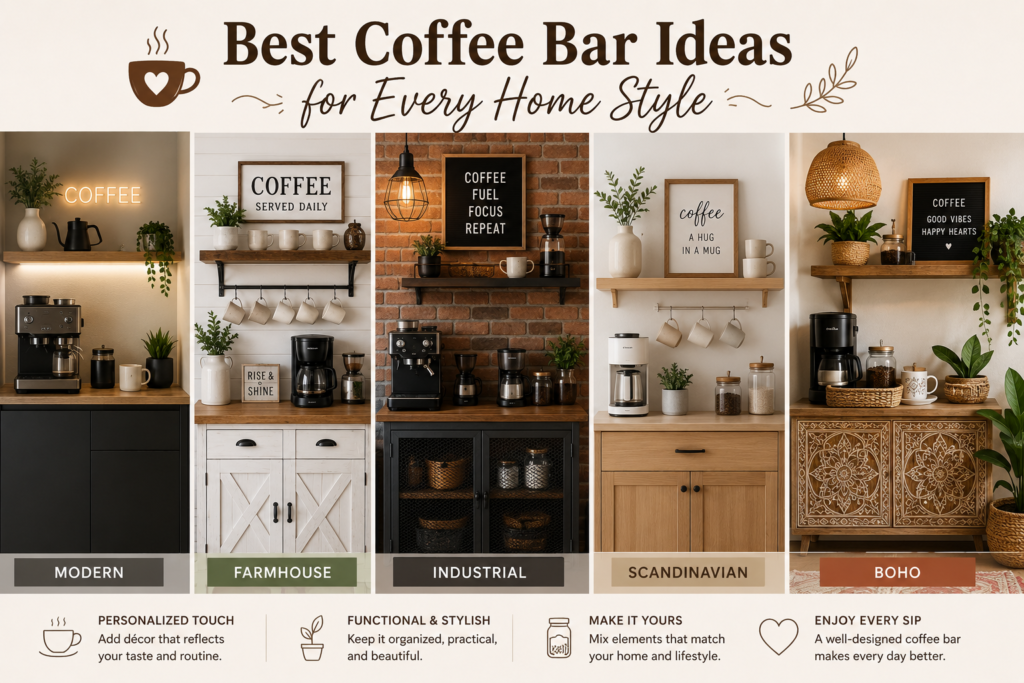
Best Coffee Bar Ideas for Every Home Style
Your coffee station should feel like a natural extension of your home’s interior. Choosing a design style that matches your existing décor creates a more cohesive and inviting space.
Modern Coffee Bar Ideas
Modern coffee bars focus on simplicity, clean lines, and practical organisation.
Common features in coffee bar ideas include:
- White or neutral cabinets
- Matte black hardware
- Minimal decorations
- Open shelving
- Hidden storage
- Integrated lighting
A modern coffee station should look organised without appearing empty.
Keep Accessories Minimal
Rather than displaying every coffee accessory, choose only a few decorative pieces, such as:
- Ceramic mugs
- Wooden serving tray
- Glass coffee containers
- Small indoor plant
Keeping surfaces uncluttered allows the design to feel calm and sophisticated.
Farmhouse Coffee Bar Ideas
Farmhouse coffee bars combine comfort, warmth, and rustic charm.
Popular elements include:
- Wooden floating shelves
- Shiplap backdrops
- Vintage coffee signs
- Woven baskets
- Rustic wooden trays
- Mason jars
Neutral colours, such as white, cream, beige, and natural wood, create a welcoming atmosphere.
Mix Rustic and Modern Elements
Avoid making the space feel overly themed.
Pair reclaimed wood with modern coffee machines or simple lighting to achieve a timeless farmhouse look.
Minimalist Coffee Bar Ideas
Minimalist coffee stations prioritise function over decoration in coffee bar ideas.
Focus on:
- Hidden storage
- Neutral colours
- High-quality coffee equipment
- Clean countertops
- Simple shelving
Every item should have a practical purpose.
Prioritise Organisation
Store unnecessary accessories inside cabinets and display only everyday essentials.
A minimalist coffee station should feel peaceful rather than empty.
Rustic Coffee Bar Ideas
Rustic coffee bars celebrate natural materials and handcrafted details.
Include:
- Solid wood shelving
- Metal brackets
- Stone accessories
- Vintage mugs
- Woven baskets
- Wooden coffee signs
These materials create warmth while adding texture to the space.
Industrial Coffee Bar Ideas
Industrial coffee stations feature raw materials and bold finishes.
Common characteristics include:
- Black metal shelves
- Exposed brick walls
- Concrete countertops
- Edison-style lighting
- Dark wood finishes
Balance darker materials with lighter accessories to keep the space inviting.
Luxury Coffee Bar Ideas
Luxury coffee bars combine elegant finishes with premium functionality.
Popular features in coffee bar ideas include:
- Marble countertops
- Built-in coffee machines
- Glass display cabinets
- Gold or brass hardware
- Under-cabinet lighting
- High-end coffee accessories
Focus on quality materials and thoughtful organisation rather than excessive decoration.
Coffee Bar Ideas for Different Spaces
Every home offers opportunities to create a functional coffee station. The best coffee bar ideas are those that work with your available space instead of forcing a design that doesn’t fit.
Small Coffee Bar Ideas
Limited space does not mean sacrificing style.
Helpful ideas include:
- Floating shelves
- Compact coffee carts
- Wall-mounted mug racks
- Narrow cabinets
- Foldable serving trays
- Vertical storage
Keep decorations minimal to prevent the area from feeling crowded.
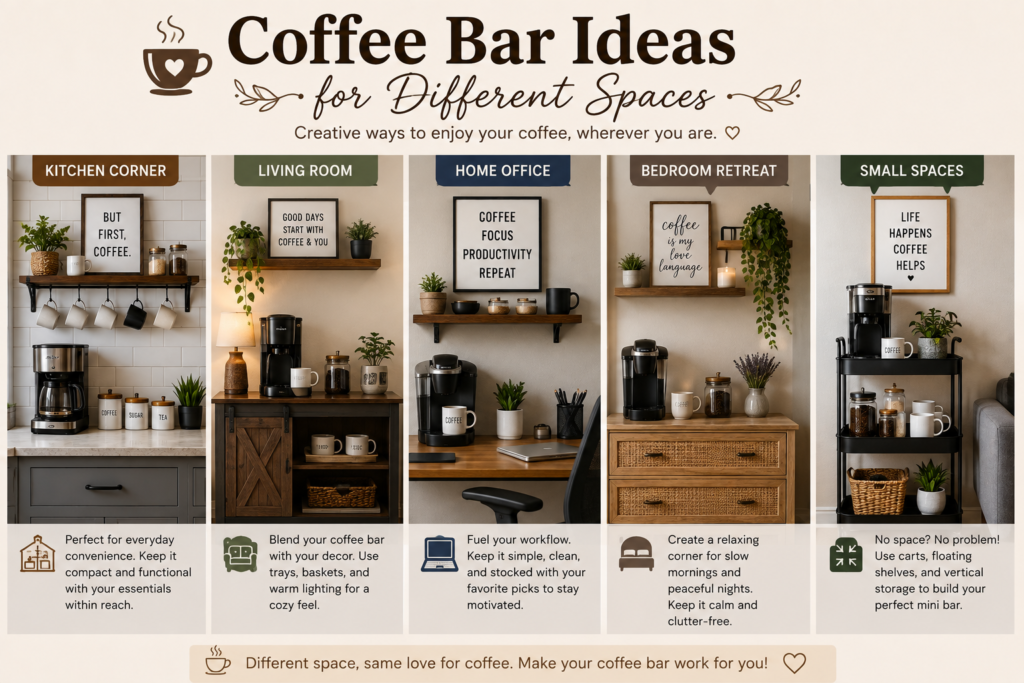
Make Small Coffee Stations Feel Larger
Simple design techniques for coffee bar ideas include:
- Using light-coloured shelves
- Choosing glass storage jars
- Keeping countertops clear
- Installing under-shelf lighting
- Using matching storage containers
These ideas help create an organised and spacious appearance.
Kitchen Coffee Station Ideas
The kitchen is one of the most practical locations for a coffee bar because it already contains water, electricity, and storage.
A kitchen coffee station can include:
- Coffee machine
- Grinder
- Mugs
- Coffee beans
- Sugar containers
- Syrup bottles
- Small decorative tray
Choose a location away from the main cooking zone to avoid congestion during busy meal preparation.
Dining Room Coffee Bar Ideas
A dining room sideboard or buffet cabinet can become an elegant coffee station.
Benefits include:
- Extra storage
- Dedicated serving area
- Space for entertaining guests
- Attractive display opportunities
This option works particularly well for homeowners who frequently host family and friends.
Coffee Bar Cabinet Ideas
A cabinet helps keep supplies organised while hiding less attractive items.
Inside the cabinet of coffee bar ideas, store:
- Coffee filters
- Extra mugs
- Tea supplies
- Cleaning products
- Seasonal accessories
Cabinets create a clean appearance while keeping everything easily accessible.
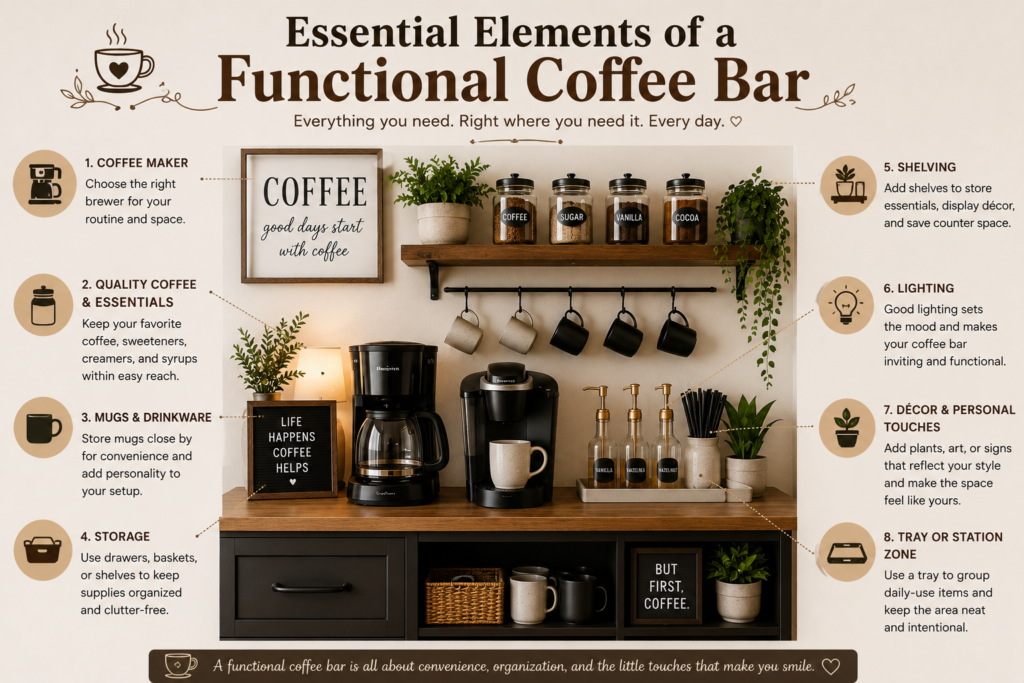
Essential Elements of a Functional Coffee Bar
A beautiful coffee station should do more than look attractive; it should make your daily routine easier and keep everything organised. Whether your coffee bar is in the kitchen, dining room, or a dedicated nook, thoughtful planning helps create a space that is practical, efficient, and enjoyable to use every day.
Instead of focusing only on decorative accessories, prioritise convenience, storage, and functionality while adding décor that complements the rest of your home.
Choose the Right Location
The location of your coffee bar plays a major role in how convenient it is to use.
The best location for a coffee bar should be:
- Easy to access
- Close to an electrical outlet
- Near water if possible
- Away from the main cooking area
- Large enough for everyday essentials
Popular locations include:
- Kitchen countertops
- Dining room sideboards
- Pantry corners
- Breakfast nooks
- Built-in cabinets
Choose a location that allows you to prepare coffee without interrupting the flow of the kitchen.
Create an Efficient Workflow
Arrange your coffee station in the order you naturally prepare drinks.
For example:
- Coffee machine
- Coffee beans or pods
- Grinder (if used)
- Sugar and syrups
- Mugs
- Spoons and stirrers
Keeping everything within easy reach makes your morning routine faster and more enjoyable.
Include Smart Storage
A good organisation keeps your coffee bar looking tidy while making everyday items easy to find.
Useful storage for a coffee bar ideas include:
- Floating shelves
- Drawer organisers
- Glass storage jars
- Mug racks
- Decorative baskets
- Pull-out cabinet organisers
- Wooden serving trays
Store similar items together to maintain a clean appearance.
For example:
- Coffee beans and pods together
- Tea supplies in one basket
- Syrups on a tray
- Extra mugs inside cabinets
Well-planned storage reduces clutter and improves efficiency.
Select the Right Coffee Machine
Your coffee machine is the centrepiece of the coffee bar.
Choose one that suits both your lifestyle and available space.
Popular options include:
- Espresso machines
- Pod coffee machines
- Drip coffee makers
- French press
- Pour-over coffee equipment
Instead of choosing the largest model, select a machine that matches how often you make coffee and the number of people using it.
Add Decorative Accessories
Accessories help transform a simple coffee station into an inviting feature within your home.
Popular décor includes:
- Wooden trays
- Ceramic canisters
- Decorative mugs
- Coffee-themed artwork
- Small indoor plants
- Candles
- Seasonal decorations
Choose accessories that complement your home’s overall interior style without overcrowding the space.
Maximise Natural Light
If possible, position your coffee bar near a window.
Natural daylight makes the space feel brighter and highlights decorative accessories without requiring additional lighting during the day.
Keep the Station Organised
Even the most beautifully decorated coffee bar loses its appeal if it becomes cluttered.
Develop simple habits such as:
- Refilling coffee supplies regularly
- Cleaning the coffee machine
- Wiping countertops daily
- Returning mugs after use
- Organising accessories weekly
Consistent organisation helps maintain both appearance and functionality.
Budget-Friendly Coffee Bar Ideas
Creating a stylish coffee station does not require expensive cabinetry or luxury appliances. Many attractive coffee bars are created using affordable furniture, DIY projects, and thoughtful organisation.
DIY Coffee Bar Projects
A personalised coffee bar often feels more unique than a store-bought design.
Affordable DIY coffee bar ideas include:
- Building floating shelves
- Painting an old cabinet
- Creating custom coffee signs
- Making mug holders
- Decorating storage jars
DIY projects allow you to match your coffee station perfectly with your home’s style.

Repurpose Existing Furniture
Before purchasing new furniture, look around your home.
Items that work well in coffee bar ideas include:
- Sideboards
- Console tables
- Buffet cabinets
- Bookshelves
- Bar carts
- Small dressers
Repurposing existing furniture reduces costs while giving unused pieces a new purpose.
Affordable Coffee Bar Décor
Small decorative updates can dramatically improve the appearance of your coffee station.
Budget-friendly accessories include:
- Ceramic mugs
- Woven baskets
- Wooden trays
- Artificial plants
- Decorative labels
- Glass jars
- Chalkboard signs
Choose decorations that are both attractive and practical.
Install Open Shelving
Floating shelves provide additional storage without taking up floor space.
Use them to display:
- Favourite mugs
- Coffee jars
- Small plants
- Cookbooks
- Decorative signs
Leave some space between decorations to prevent shelves from looking overcrowded.
Decorative Storage Solutions
Storage can become part of the décor.
Use:
- Matching glass containers
- Wooden crates
- Metal baskets
- Woven bins
- Labelled canisters
Consistent storage creates a cleaner, more professional appearance.
Common Coffee Bar Decorating Mistakes to Avoid
Even attractive coffee stations can become inconvenient if important design principles are ignored.
Choosing the Wrong Location
Avoid placing your coffee station:
- Inside busy cooking zones
- Far from electrical outlets
- In narrow walkways
- Where cabinet doors cannot fully open
Choose a location that supports your daily routine.

Overcrowding the Coffee Station
Displaying every mug, syrup, and decoration often creates visual clutter.
Instead:
- Display only favourite mugs.
- Store extras inside cabinets.
- Leave open countertop space.
- Rotate seasonal decorations.
Less clutter creates a more inviting coffee bar.
Ignoring Storage
Without proper storage, supplies quickly spread across the kitchen.
Plan storage for:
- Coffee beans
- Tea bags
- Filters
- Sugar
- Syrups
- Cleaning products
A good organisation keeps everything accessible while maintaining a tidy appearance.
Poor Lighting
Coffee stations placed in dark corners often feel less inviting.
Improve visibility by adding:
- Under-shelf lighting
- Wall lights
- Warm LED bulbs
- Small table lamps
Layered lighting creates both function and atmosphere.
Decorating Without Functionality
Beautiful decorations should never interfere with everyday use.
Before adding accessories, ask yourself:
- Does this reduce workspace?
- Is it easy to clean?
- Will it stay organised?
- Does it improve the space?
Always prioritise practicality before decoration.
Frequently Asked Questions
How do I make a coffee bar at home?
Choose a convenient location, add a coffee machine, organise mugs and supplies, include practical storage, and decorate with a few coordinated accessories that match your home’s style.
Where is the best place for a coffee station?
The best location is one that is easily accessible for coffee bar ideas, close to an electrical outlet, and away from busy cooking areas. Kitchen countertops, dining room sideboards, and breakfast nooks are all excellent choices.
What should be included in a coffee bar?
A functional coffee bar should include a coffee machine, mugs, coffee beans or pods, sugar, tea supplies, spoons, storage containers, and a few decorative accessories such as plants or artwork.
How can I decorate a coffee station on a budget?
Repurpose existing furniture, install floating shelves, use labelled glass jars, add woven baskets, display favourite mugs, and include inexpensive décor such as candles or small plants.
Are home coffee bars still popular?
Yes. Home coffee bars continue to be popular because they combine convenience, organisation, and attractive design. They also help homeowners make better use of unused spaces while creating a welcoming feature for family and guests.
Conclusion
The best coffee bar ideas combine practicality, organisation, and personal style to create a space that enhances your daily routine. Whether you have a spacious kitchen, a cosy dining room, or a small unused corner, a thoughtfully designed coffee station can make preparing your favourite drinks easier while adding warmth and character to your home.
Instead of copying every trend, focus on creating a coffee bar that suits your lifestyle. Smart storage, quality coffee equipment, coordinated décor, and efficient organisation will help you build a timeless coffee station that remains both beautiful and functional for years to come.
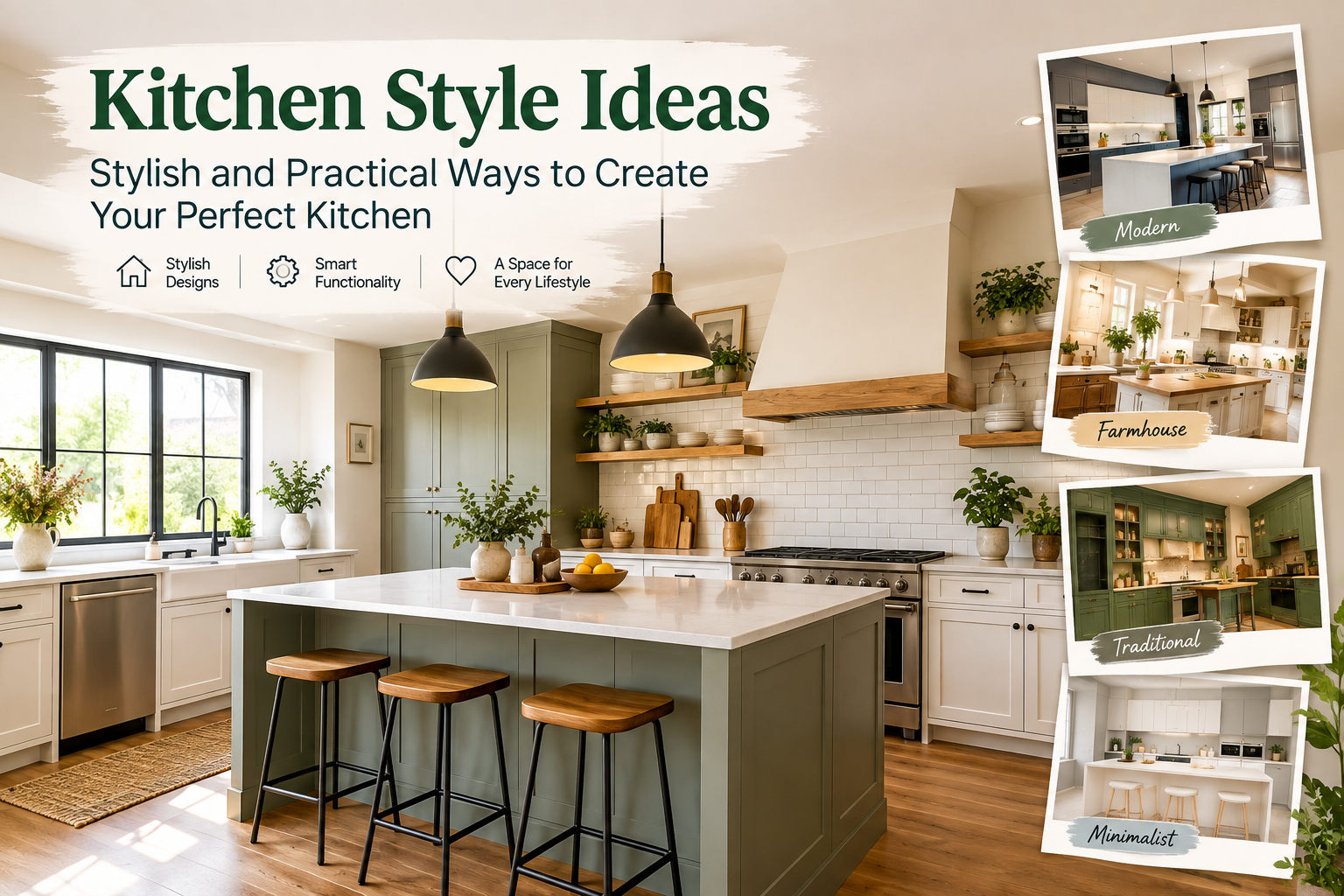
The kitchen is one of the most frequently used spaces in a home, so its design needs to work well for everyday life. The right kitchen style can make cooking, preparing meals, storing ingredients, and spending time with family feel easier and more enjoyable.
Many homeowners focus only on colours, cabinets, or decorative details when choosing a kitchen style. However, a successful design also depends on layout, storage, lighting, materials, and how comfortably everything works together.
The best kitchen style ideas combine visual appeal with practical features. Whether you prefer a modern, traditional, farmhouse, or minimalist kitchen, the goal should be to create a space that suits your home and your daily routine.
Why Kitchen Style Ideas Matter
Choosing a kitchen style gives your space a clear design direction. Instead of selecting individual cabinets, worktops, colours, and accessories randomly, you can create a more connected and balanced appearance.
A well-planned style also makes it easier to decide which materials and furniture pieces belong in the space. This can prevent the kitchen from feeling visually confusing or overcrowded.
Kitchen style is not simply about following the latest trends. A beautiful kitchen should still feel comfortable and practical several years after it has been completed.
When choosing between different kitchen design ideas, think about how you actually use the room. A kitchen for a large family may need different features from a compact kitchen used by one or two people.

Create a Consistent Look
A defined style helps different parts of the kitchen work together. Cabinets, worktops, flooring, splashbacks, lighting, and hardware should feel like parts of the same overall design.
For example, natural wood cabinets may work particularly well with warm flooring and simple hardware. In contrast, sleek cabinets can pair naturally with smooth surfaces and minimalist lighting.
Improve Everyday Function
Good style should never come at the expense of functionality. Your kitchen needs enough workspace, convenient storage, and comfortable movement between important areas.
Consider where you prepare food, where you wash dishes, and where frequently used appliances are positioned. These practical details can have a major effect on how the kitchen feels every day.
Reflect Your Personality
Your kitchen is part of your home, so its design should reflect your preferences. Some people prefer clean and understated spaces, while others enjoy warm colours, decorative details, and traditional materials.
You can personalise the kitchen style ideas room through:
- Cabinet finishes
- Wall colours
- Handles and hardware
- Lighting fixtures
- Open shelving
- Decorative accessories
- Natural materials
Personal touches can make even a simple kitchen feel distinctive without requiring an expensive renovation.
Make Future Decisions Easier
Once you have chosen a general kitchen style, later decorating decisions become simpler. You can use the chosen style as a guide when selecting furniture, lighting, artwork, and accessories.
This is particularly useful when renovating gradually. Instead of buying everything at once, you can make smaller improvements while keeping the overall appearance consistent.
Kitchen Style Ideas for Different Interior Styles
There is no single kitchen style that works for every home. The best choice depends on your property’s architecture, your personal taste, and the atmosphere you want to create.
Exploring different styles can help you understand which colours, materials, shapes, and finishes work well together.
Modern Kitchen Style
Modern kitchens usually focus on clean lines, simple shapes, and an uncluttered appearance. Cabinets often have flat or streamlined doors with minimal decorative detailing.
Neutral colours such as white, grey, beige, and soft black are common choices. However, warmer colours and natural wood can also be incorporated to prevent the kitchen from feeling too cold.
For a practical modern kitchen in kitchen style ideas, focus on keeping work surfaces clear and providing enough concealed storage. Integrated appliances can also create a cleaner visual appearance.

Contemporary Kitchen Style
Contemporary kitchens are flexible and can combine current design elements with practical features. They often use a mixture of textures, materials, and modern finishes.
You might combine smooth cabinets with natural timber, stone-effect worktops, or textured splashbacks. Lighting can then be used to highlight these different surfaces.
Unlike a strictly minimalist kitchen, contemporary designs can include more personality and decorative details.
Traditional Kitchen Style
Traditional kitchens are suited to homeowners who prefer warmth, detail, and a more established appearance. Shaker-style cabinetry, classic hardware, framed doors, and decorative features can work well in this style.
Cream, warm white, muted green, navy, and natural wood are useful colour choices. The aim is to create a comfortable kitchen without making the space feel overly formal.
Traditional kitchens can also benefit from open shelving or glass-front cabinets, particularly when attractive dishes or cookware are part of the room’s character.
Farmhouse and Country Kitchen Style
Farmhouse and country kitchens often focus on natural materials and a relaxed atmosphere. Timber, stone, ceramic surfaces, and traditional-looking hardware can contribute to this style.
The design does not need to look old-fashioned. Modern appliances can be combined with rustic materials to create a kitchen that feels both comfortable and practical.
Useful farmhouse features for kitchen style ideas include:
- Wooden shelving
- Apron-front sinks
- Natural timber details
- Simple pendant lighting
- Freestanding furniture
- Soft, earthy colours
The key is to balance rustic character with enough modern functionality for everyday use.
Minimalist Kitchen Style
Minimalist kitchens are based on simplicity and visual calm. They usually avoid unnecessary decoration and focus on clean surfaces and carefully selected materials.
Cabinet storage is particularly important because clutter can quickly undermine a minimalist appearance. Appliances and everyday items should have practical storage locations.
A limited colour palette can also help maintain a calm and organised look.
Kitchen Style Ideas for Different Layouts and Sizes
The size and shape of your kitchen should influence your design choices. A style that looks excellent in a large open-plan room may need to be adapted for a narrow or compact kitchen.
Instead of trying to copy a particular kitchen exactly, focus on how its design principles can work within your available space.
Small Kitchen Style Ideas
Small kitchens benefit from designs that make the room feel organised and open. Excessive decoration and bulky furniture can make the space feel even smaller.
Light colours, streamlined cabinets, reflective surfaces, and effective storage can help create a more spacious appearance.
Consider using:
- Wall-mounted storage
- Tall cabinets
- Open shelves in selected areas
- Compact appliances
- Light-coloured surfaces
- Under-cabinet lighting
The goal is not simply to make the kitchen look larger. Every part of the design should also help you use the available space more effectively.
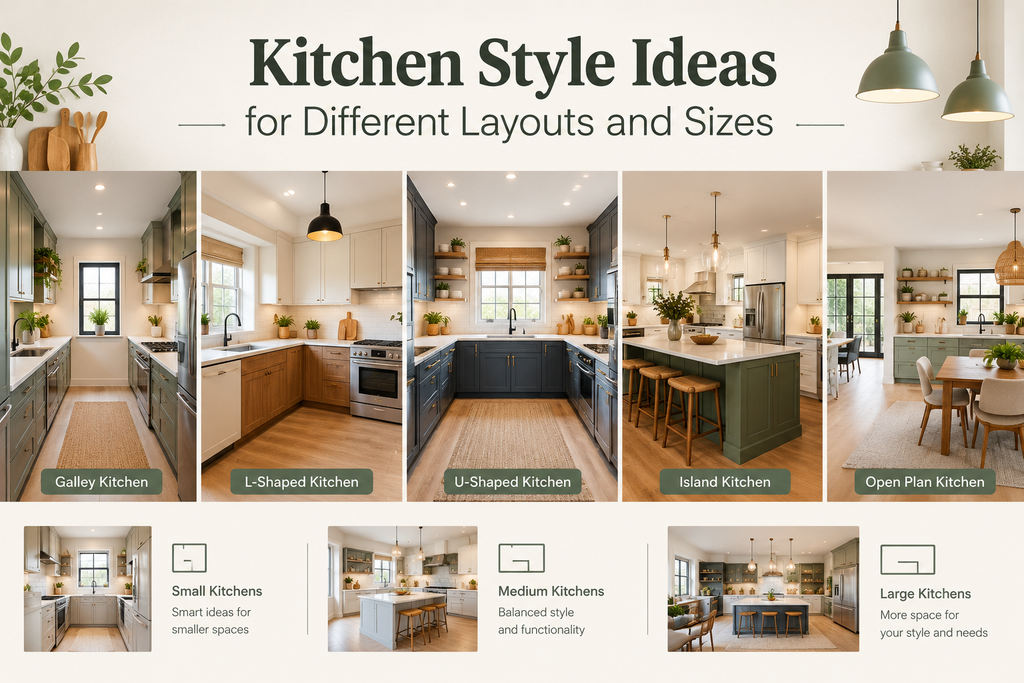
Galley Kitchen Style
Galley kitchens have two parallel runs of cabinets and are often found in narrow spaces. Their layout can be highly practical because important appliances and work areas can remain within easy reach.
Keep the visual design relatively simple to avoid making the room feel crowded. Consistent cabinetry and carefully planned lighting can help create a more balanced appearance.
Storage should be planned vertically where possible. Tall cabinets can provide valuable capacity without extending the kitchen further into the walkway.
Open-Plan Kitchen Style
Open-plan kitchens need to work visually with the adjoining dining or living area. The kitchen should feel connected to the rest of the room rather than looking like a separate zone.
A consistent colour palette can help create this connection. Flooring, lighting, furniture, and cabinet finishes should complement the surrounding space.
An island or peninsula can also provide a useful transition between the kitchen and living areas. Besides offering additional workspace, it can create a natural boundary without completely closing off the room.
Large Kitchen Style
Large kitchens offer more freedom, but extra space does not automatically create a better design. Oversized rooms can sometimes feel empty if furniture and functional zones are not planned carefully.
Use the available space to create clear areas for preparation, cooking, storage, dining, and socialising.
Large kitchens can accommodate features such as:
- Spacious kitchen islands
- Pantry storage
- Separate coffee stations
- Dining areas
- Statement lighting
- Freestanding furniture
- Additional work surfaces
The most effective large kitchen style ideas make the room feel purposeful rather than simply filling it with furniture.
A successful kitchen in kitchen style ideas should ultimately match both the home’s character and the people using it. Once the overall style and layout have been considered, the next step is to focus on the specific elements that make the design functional, comfortable, and visually balanced.
Essential Elements of an Effective Kitchen Style
A kitchen can have an attractive style and still be difficult to use. The most successful designs bring appearance and practicality together, making everyday activities feel natural and comfortable.
When developing your kitchen style, consider the main elements as a complete system rather than choosing each feature separately.
Functional Cabinetry
Cabinets have a major influence on both the appearance and usability of a kitchen. Their colour, material, door style, and hardware should support the overall design.
At the same time, cabinets need to provide enough storage for cookware, food, appliances, and everyday essentials.
Use a mixture of storage options where appropriate, including:
- Deep drawers for pots and pans
- Tall cabinets for larger storage needs
- Pull-out storage for narrow spaces
- Shelving for frequently used items
- Dedicated areas for small appliances
Keeping commonly used items within easy reach can make the kitchen much more convenient.

Practical Worktops
Worktops should suit the visual style of the kitchen while also handling everyday use. Cooking, food preparation, cleaning, and placing appliances can put considerable demands on these surfaces.
Choose a material based on your budget, maintenance preferences, and expected use.
A simple worktop can work beautifully when the surrounding cabinets and finishes are well coordinated. You do not always need an expensive material to achieve a polished result.
Suitable Kitchen Colours
Colour can completely change the atmosphere of a kitchen. Light colours can create an airy appearance, while deeper shades can introduce warmth and visual depth.
Your colour choices should also work with the amount of natural light available. A darker kitchen may require stronger artificial lighting to prevent it from feeling too enclosed.
A useful approach is to choose one main colour, one supporting tone, and a smaller accent colour rather than introducing too many competing shades.
Effective Lighting
Lighting is one of the most important elements in practical kitchen design. A single ceiling fixture may not provide enough illumination for food preparation and other detailed tasks.
A layered approach can work better, combining general lighting with task and accent lighting.
Useful options for kitchen style ideas include:
- Ceiling lights for general illumination
- Under-cabinet lighting for worktops
- Pendant lights above an island
- Wall lights for decorative areas
- Accent lighting for shelves or display cabinets
Good lighting can also make colours and materials appear more attractive.
Flooring
Kitchen flooring needs to cope with frequent movement, spills, cleaning, and everyday wear.
Choose flooring that suits the style of the room while also being practical for your household.
Tiles, engineered wood, vinyl, stone, and other suitable surfaces can all work depending on the design and maintenance requirements.
The floor should complement the cabinets and worktops rather than competing with them.
Budget-Friendly Kitchen Style Ideas
Creating a stylish kitchen does not always require a complete renovation. Small, carefully selected changes can have a noticeable effect on the appearance of the room.
Before spending money, decide which parts of the kitchen actually need changing. You may discover that the existing layout and cabinets are still useful.
Refresh Cabinet Doors
If your cabinets are structurally sound, replacing or refreshing the doors may be more affordable than installing a completely new kitchen.
Painting suitable cabinet surfaces can also create a significant visual change when done correctly.
Choose a colour that works with your existing worktops and flooring to avoid creating the need for additional expensive changes.
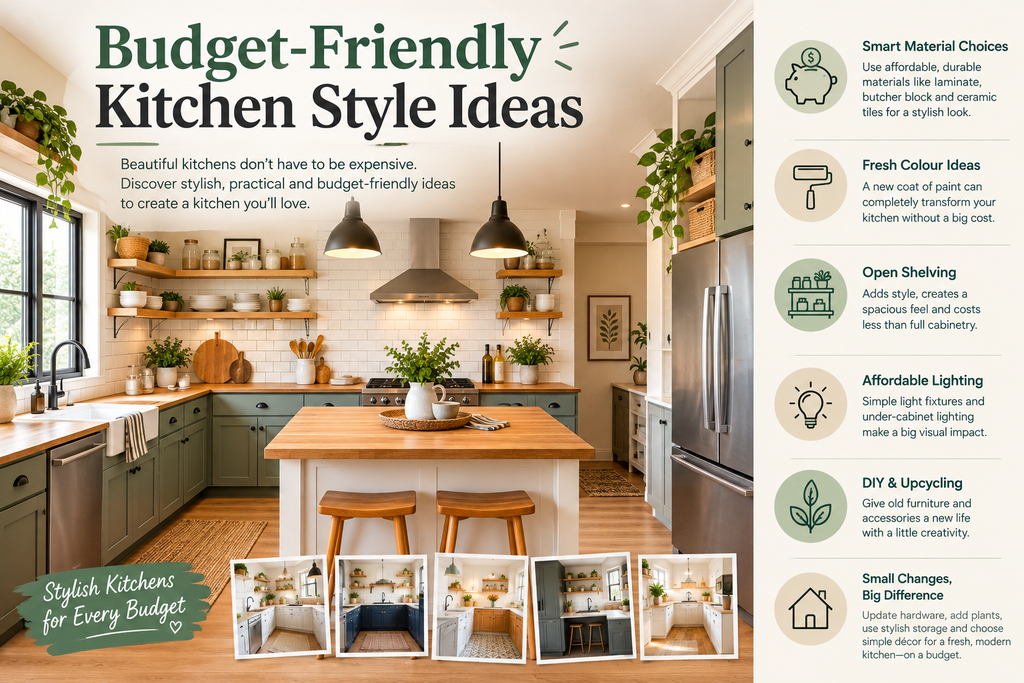
Change Cabinet Hardware
New handles and knobs are a simple way to update kitchen furniture.
This small change can help move a kitchen towards a different design direction without replacing the cabinets themselves.
Measure existing fittings carefully before purchasing replacements to ensure that new hardware will fit correctly.
Update the Walls
A new wall colour can make the kitchen feel noticeably different. Choose a shade that supports the cabinets, flooring, and natural lighting.
A small section of wall can also become a focal point through a suitable paint colour or simple decorative treatment.
Avoid choosing colours solely because they are currently popular. Consider whether you will still enjoy the shade over time.
Add Open Shelving
Open shelves can provide both storage and visual interest. They can be useful for frequently used dishes, glasses, cookbooks, or carefully selected decorative items.
However, avoid filling every shelf with objects. Leaving some open space helps the kitchen maintain a cleaner appearance.
Improve Lighting
Changing outdated light fixtures can make a kitchen feel more current without altering the main furniture.
Under-cabinet lights can also improve worktop visibility while creating a warmer atmosphere in the evening.
Lighting is particularly useful when you want a noticeable improvement without major construction.
Introduce Affordable Accessories
Simple accessories can add personality to a kitchen without overwhelming it.
Consider items such as:
- A small rug or runner
- Decorative containers
- A few framed prints
- Wooden cutting boards
- Indoor plants
- Coordinated kitchen textiles
The key is to select accessories that have a purpose or contribute to the overall design.
Upgrade One Feature at a Time
You do not need to complete every improvement simultaneously. A gradual approach can make kitchen decorating more manageable.
Start with the feature that has the greatest visual or practical impact. Once that change is complete, decide what the room genuinely needs next.
This approach also helps prevent unnecessary spending.
Common Kitchen Style Mistakes to Avoid
Even carefully planned kitchens can lose their impact when too many design decisions are made without considering the overall space.
Understanding common mistakes can help you create a kitchen that looks good while remaining practical.
Choosing Style Before Function
A kitchen should support cooking, cleaning, storage, and movement. Choosing a style without considering these needs can create a room that looks attractive but feels inconvenient.
Plan the working areas first and then apply your preferred visual style.
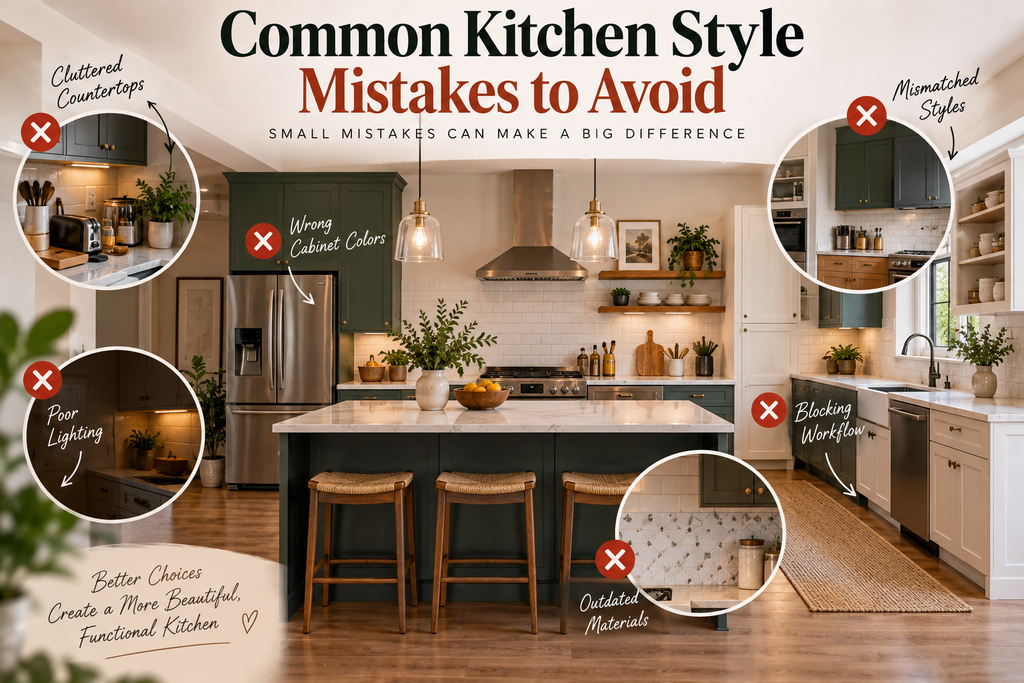
Using Too Many Colours
Too many colours can make a kitchen feel visually busy. This is especially noticeable in smaller spaces.
Choose a controlled palette and use accent colours selectively.
If you want more variety, introduce it through accessories that can easily be changed later.
Ignoring Storage
Insufficient storage can quickly lead to cluttered worktops and overflowing cabinets.
Before finalising your design, make a realistic list of what you need to store.
Remember that storage should be accessible as well as plentiful. A large cabinet that is difficult to reach may not be as useful as a smaller, well-organised storage area.
Poor Lighting
A beautiful kitchen can still be frustrating if important work areas are poorly illuminated.
Do not rely entirely on decorative lighting. Make sure food preparation areas, sinks, and other frequently used zones receive enough light.
How to Plan Your Kitchen Style Ideas Successfully
Once you understand different styles and practical design elements, you can begin creating a kitchen plan that fits your home.
The planning process does not need to be complicated. Start with the things that matter most to your everyday routine.
1. Assess Your Existing Kitchen
Look at the current layout and identify what works and what does not.
Ask yourself whether you need more storage, additional worktop space, better lighting, or a more suitable arrangement of appliances.
2. Choose Your Main Style
Select a broad design direction before making detailed purchases.
You might prefer modern, contemporary, traditional, farmhouse, Scandinavian, industrial, or another style that suits your home.
Having a clear direction helps prevent unrelated choices from accumulating.
3. Consider Your Kitchen Layout
Think about the shape and size of the room before deciding on furniture.
Measure the available space and consider doors, windows, appliances, walkways, and existing connections to other rooms.
A beautiful idea may not work if it prevents comfortable movement.
Frequently Asked Questions About Kitchen Style Ideas
What is the most important part of choosing a kitchen style?
The most important consideration is how the kitchen needs to function for your household. Style should support practical needs such as storage, preparation space, movement, lighting, and cleaning.
How do I choose a kitchen style?
Start by considering your home’s existing architecture and your personal preferences. Look at several styles and identify the colours, materials, cabinet shapes, and details you consistently like.
Can a small kitchen have a stylish design?
Yes. Small kitchens can look attractive when the design uses space efficiently. Simple cabinetry, appropriate lighting, useful storage, and a limited colour palette can help create a comfortable and organised room.
How can I update my kitchen without renovating it?
Consider painting suitable cabinets, changing hardware, updating lighting, refreshing wall colours, adding shelving, or introducing a few carefully selected accessories.
Should kitchen cabinets and worktops match?
They do not have to match exactly. In many successful kitchens, contrasting but complementary cabinets and worktops create more visual interest.
How can I make a kitchen feel less cluttered?
Prioritise practical storage and keep everyday surfaces as clear as possible. Store frequently used items within easy reach while placing less-used equipment in cabinets or dedicated storage areas.
Conclusion
The best kitchen style ideas are not simply about creating an attractive room. They are about combining a suitable visual style with practical storage, comfortable movement, effective lighting, durable materials, and features that support everyday life.
Whether you prefer a modern, traditional, farmhouse, minimalist, Scandinavian, or industrial kitchen, the same principle applies: the design should work for the people who use it.
Start with the layout and functional requirements, then build your colour palette, materials, lighting, storage, and decorative details around them.
With thoughtful planning, even a modest kitchen can become a welcoming and organised part of the home. The goal is not to create a kitchen that only looks impressive in photographs, but one that remains comfortable, useful, and enjoyable every day.

Country kitchens are known for their warmth, comfort, and relaxed character. They often combine natural materials, traditional details, practical storage, and welcoming colours to create spaces that feel lived-in rather than overly formal.
A successful country kitchen is about more than adding rustic decorations. The best designs balance traditional charm with modern functionality, making the kitchen comfortable for cooking, eating, entertaining, and everyday family life.
Whether you have a large farmhouse-style space or a compact kitchen in a modern home, thoughtful planning can help you bring country character into the room without making it feel outdated or cluttered.
Why Country Kitchens Matter
Country kitchens have remained popular because they create a sense of warmth that many contemporary spaces lack. Natural textures, comfortable colours, and practical furniture can make the kitchen feel inviting from the moment you enter.
The style can also be adapted to different homes and lifestyles. You do not need an old farmhouse or a large rural property to create a country-inspired kitchen.

Creating a Warm and Welcoming Kitchen
The atmosphere of a country kitchen often comes from the combination of materials rather than one particular feature. Wood, stone, painted cabinetry, ceramics, and natural fabrics can work together to create visual warmth.
Colour also plays an important role. Soft whites, creams, muted greens, warm blues, beige, and earthy shades can give the kitchen a relaxed appearance.
You can create a welcoming atmosphere with:
- Warm and natural colour combinations
- Wooden furniture or shelving
- Comfortable seating
- Open shelves for everyday items
- Soft and practical lighting
- Natural fabrics and simple accessories
The key is to create warmth without filling every surface with decorations. Country style works best when the room still feels open and usable.
Balancing Traditional Style With Everyday Function
Country kitchens can look beautiful, but appearance should never come before functionality. A kitchen still needs enough preparation space, practical storage, comfortable movement, and easy-to-clean surfaces.
Think about how you prepare meals, store food, use appliances, and move between different work areas. Traditional details should support these activities rather than getting in the way.
A functional country kitchen should provide:
- Enough countertop space for preparation.
- Storage for everyday cookware and ingredients.
- Easy access to frequently used items.
- Clear movement between key work areas.
- Comfortable lighting for cooking and cleaning.
This balance is what keeps country kitchen design practical rather than turning it into a purely decorative style.
Country Kitchens for Different Interior Styles
Country style can take many forms depending on the colours, materials, furniture, and decorative details you choose. You can make the look traditional, rustic, elegant, or surprisingly contemporary.
Understanding these variations helps you choose country kitchen ideas that suit your home instead of copying a style that does not fit your space.
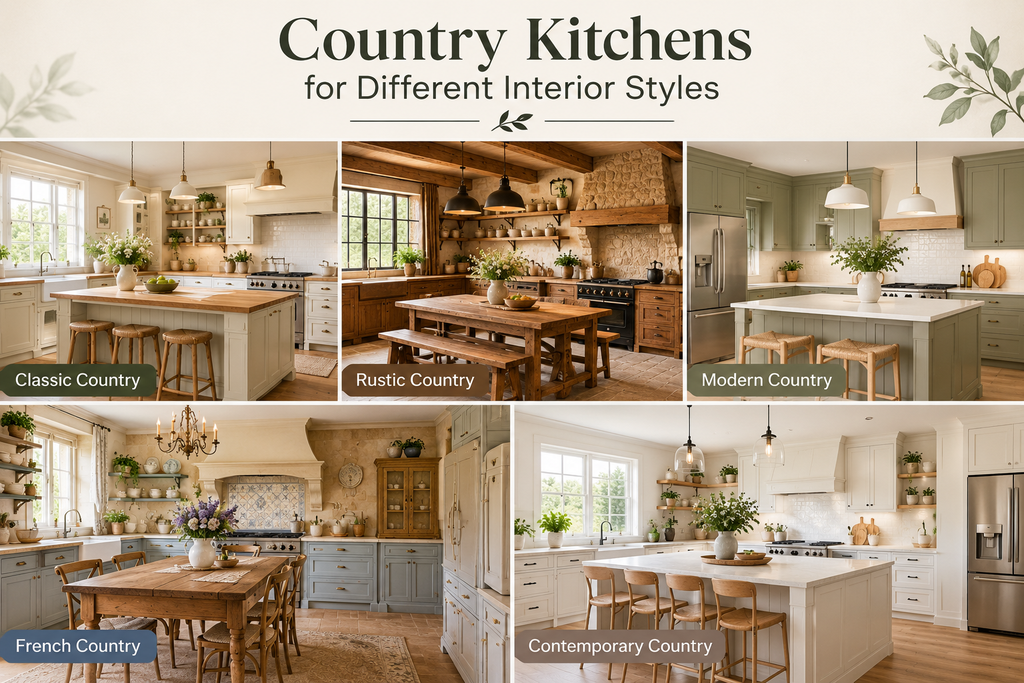
Classic Country Kitchen Ideas
Classic country kitchens often combine painted cabinets, natural wood, traditional hardware, and simple decorative details. Cream, white, sage green, and soft blue are common choices.
Open shelving can provide easy access to dishes while also adding character. Traditional-style taps, ceramic accessories, and simple pendant lights can reinforce the look.
A classic country kitchen does not need to look old-fashioned. Modern appliances can be incorporated into the design while the cabinetry and materials provide the traditional character.
Modern Country Kitchens
Modern country kitchens combine the warmth of traditional design with cleaner lines and simpler details. This approach is useful if you like country style but want your kitchen to feel fresh and contemporary.
Flat or simple shaker-style cabinets can work well with natural wood, stone-look surfaces, and modern lighting. Keeping decorative details controlled helps create a cleaner appearance.
Modern country kitchens can include:
- Simple painted cabinetry
- Natural wood accents
- Minimal open shelving
- Modern appliances
- Neutral colour palettes
- Contemporary pendant lighting
The result is a kitchen that feels comfortable and timeless without appearing overly rustic.
French Country Kitchen Ideas
French country kitchens often have an elegant but relaxed character. Soft colours, aged-looking materials, natural wood, and decorative details can create a comfortable European-inspired atmosphere.
Cream, pale blue, muted green, and warm beige can work particularly well. Textured fabrics and traditional lighting can add softness without making the room feel overly formal.
The style works best when elegance is balanced with practicality. A kitchen should still feel like a place for cooking and everyday use rather than a display room.
English Country Kitchen Ideas
English country kitchens often focus on comfort, traditional cabinetry, rich textures, and practical details. Deeper greens, warm creams, muted blues, and natural wood can create a cosy atmosphere.
A freestanding piece of furniture can add character and flexibility. Traditional dressers, wooden tables, or open shelving can provide both storage and visual interest.
Patterns can also be introduced through curtains, cushions, rugs, or wallpaper. Keep larger patterns balanced with simpler surfaces so the room does not become visually overwhelming.
Rustic Country Kitchens
Rustic country kitchens place greater emphasis on natural and imperfect materials. Exposed wood, stone, aged finishes, and simple furniture can create a relaxed and authentic appearance.
However, rustic does not have to mean dark or heavily decorated. Light walls, simple cabinetry, and carefully selected natural materials can keep the room feeling fresh.
Try combining rustic features with modern conveniences. A contemporary oven, efficient storage, or modern lighting can make the kitchen much easier to use without removing its country character.
Country Kitchens for Different Layouts and Sizes
The layout of your kitchen should influence how you approach country style. Decorative details that work beautifully in a large kitchen may make a smaller space feel crowded.
Country kitchen ideas should therefore be adapted to the available floor area, storage requirements, lighting, and movement patterns.

Small Country Kitchen Ideas
Small country kitchens can still feel warm and characterful. Light colours, simple cabinetry, and carefully selected natural materials can create the desired atmosphere without making the room feel smaller.
Use vertical areas where possible. Open shelves, wall-mounted rails, and tall cabinets can provide storage while preserving valuable floor space.
For a small country kitchen, consider:
- Light-coloured cabinets
- Compact wooden shelves
- Simple wall-mounted storage
- A narrow dining table
- Small pendant lights
- Limited but meaningful decorative details
Avoid filling every available surface with country-style accessories. A few well-chosen features will usually create more impact than a large collection of decorative objects.
Galley Country Kitchens
Galley kitchens have two parallel runs of cabinets and can work surprisingly well with country styling. The narrow layout naturally encourages practical organization and efficient movement.
Choose lighter cabinet colours if the room feels enclosed. Natural wood accents can add warmth without requiring large pieces of furniture.
Keep countertops reasonably clear and place frequently used items where they are easy to reach. This prevents the traditional styling from interfering with the efficient nature of the layout.
Open-Plan Country Kitchens
Open-plan kitchens need to connect visually with the adjoining dining and living areas. Country styling can work particularly well here because natural materials and comfortable furniture create a relaxed transition between spaces.
A kitchen island can act as a visual bridge between the kitchen and the rest of the room. Wooden stools, pendant lights, or a contrasting island colour can help define the kitchen without closing it off.
Keep the colour palette consistent across the connected spaces. Similar wood tones, fabrics, or accent colours can make the entire open-plan area feel more cohesive.
Large Country Kitchen Ideas
Large kitchens provide more space for substantial furniture and stronger design features. A generous island, farmhouse-style table, freestanding storage, or large pantry can become a practical focal point.
However, a large room can sometimes feel empty when every surface is kept extremely minimal. Use furniture, natural materials, and carefully planned zones to give the space structure.
You might create separate areas for:
- Food preparation
- Cooking
- Casual dining
- Food storage
- Cleaning
- Entertaining
This makes a large country kitchen feel comfortable while ensuring that every part of the room has a useful purpose.
Country Kitchens With Islands
A kitchen island can become one of the most useful features in a country-style kitchen. It can provide additional preparation space, storage, seating, and a natural gathering point.
For a traditional appearance, consider a painted island in a contrasting but complementary colour. A natural wood island can also introduce warmth against lighter cabinetry.
The island should not be so large that it restricts movement. Leave enough comfortable space around it for cabinet doors, appliances, and people to move freely.
When planning country kitchens, focus on creating a space that feels warm without becoming impractical. Natural materials, comfortable colours, traditional details, and modern functionality can work together to create a kitchen that feels timeless.
Essential Elements of an Effective Country Kitchen
The most successful country kitchens combine traditional character with practical features. Every material, storage solution, and decorative detail should contribute to a space that is comfortable and easy to use.
You do not need to include every traditional feature to achieve the look. A few carefully chosen elements can create country character while keeping the kitchen suitable for modern life.

Choosing Country-Style Cabinets
Cabinetry has a major influence on the appearance of a country kitchen. Shaker-style doors, painted finishes, natural wood, and simple traditional hardware can all create a warm and timeless foundation.
Soft white, cream, sage green, muted blue, and warm beige are versatile choices. Natural wood can also be used to introduce texture and warmth.
If you prefer more contrast, consider using one cabinet colour for the main units and a complementary shade for the island.
Useful cabinet features include:
- Shaker-style doors
- Cupboard handles with traditional finishes
- Glass-front cabinets
- Deep drawers for cookware
- Tall pantry storage
- Open shelving for frequently used items
Choose cabinetry based on how you use the kitchen rather than appearance alone. Good storage should make cooking and cleaning easier.
Using Natural Materials
Natural materials are an important part of country kitchen design. Wood, stone, ceramic, linen, and other textured materials can give the room a relaxed and authentic quality.
You do not have to use expensive natural materials everywhere. Even small additions, such as a wooden shelf or ceramic accessories, can introduce the right character.
Try combining different textures rather than using the same material throughout the room. A mix of painted cabinetry, wood, stone-look surfaces, and simple textiles can create depth.
Selecting Worktops and Backsplashes
Worktops should be durable enough for everyday food preparation while complementing the country aesthetic. Natural stone, wood, and stone-look surfaces can all work well.
A simple backsplash can provide a calm background for colourful cabinetry. Ceramic tiles, handmade-look tiles, and neutral stone patterns can reinforce the relaxed character of the space.
Avoid choosing a backsplash based only on its appearance. Consider cleaning, maintenance, and how the material will look alongside your cabinets and worktops.
Adding Practical Storage
Storage is particularly important in country kitchens because traditional styling can involve many visible accessories. Without enough storage, the room can quickly become cluttered.
Use a combination of closed cabinets, drawers, open shelving, and wall-mounted storage. Keep everyday items within easy reach and place less frequently used belongings in higher or less accessible areas.
Useful storage options include:
- Deep drawers for pots and pans
- Pull-out pantry storage
- Wall-mounted rails
- Open shelves
- Corner cabinets
- Built-in recycling areas
- Dedicated appliance storage
Good organization allows you to display a few attractive pieces without allowing the entire kitchen to become visually crowded.
Choosing Lighting and Hardware
Lighting can change the atmosphere of a country kitchen considerably. Combine general lighting with task lighting over countertops, sinks, and other work areas.
Pendant lights over an island or dining table can provide both useful illumination and a decorative focal point. Choose designs that complement the traditional or modern country style you have selected.
Hardware should also support the overall look. Brass, aged metal, black, and other finishes can work well when they are coordinated with taps and lighting.
Budget-Friendly Country Kitchen Ideas
Creating a country-style kitchen does not necessarily require expensive renovations. Small changes to colour, hardware, storage, and accessories can make an existing kitchen feel considerably warmer.
Start with the features that are already in good condition. There is often no reason to replace cabinets or countertops when a simple refresh can change their appearance.
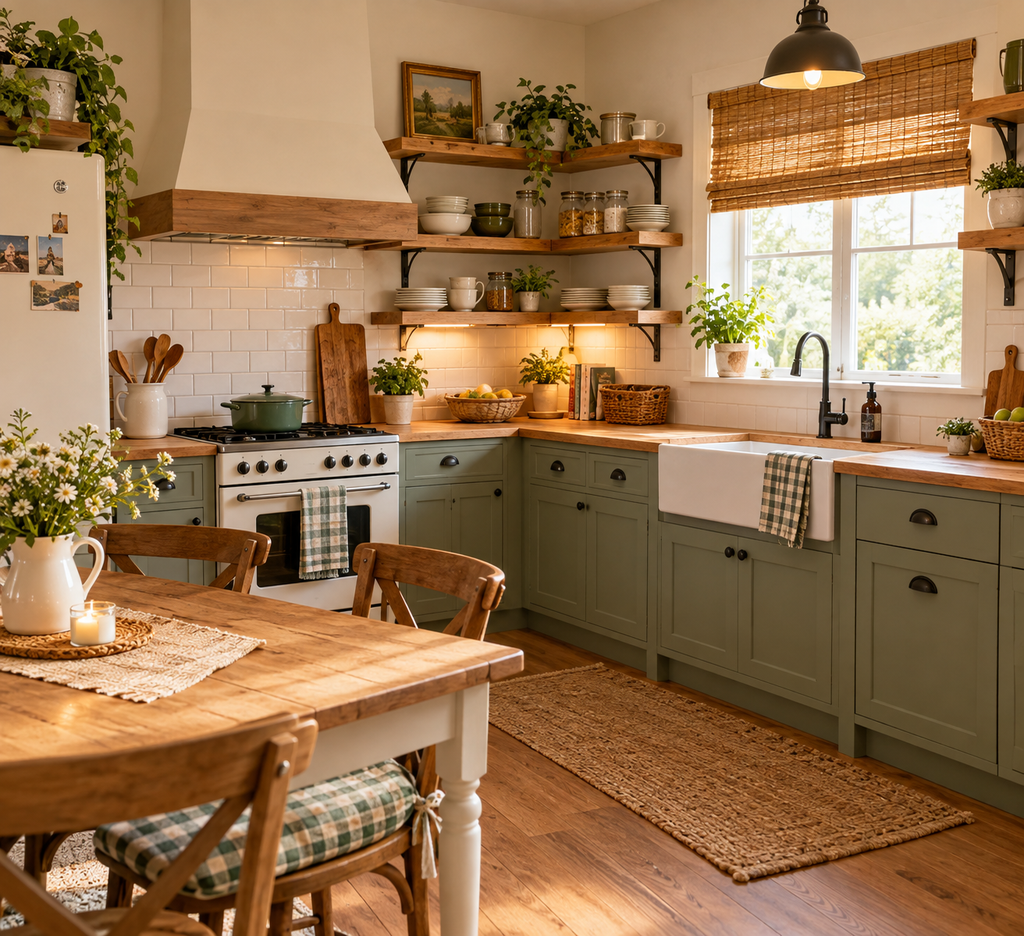
Refreshing Cabinets and Walls
Painting suitable cabinets can be one of the most effective budget-friendly changes. Soft cream, warm white, muted green, or pale blue can give existing cabinetry a completely different character.
Walls can also be refreshed with a new colour. Choose a shade that works with the existing flooring, countertops, and appliances.
Replacing cabinet handles can provide another inexpensive improvement. Traditional-style hardware can make simple cabinetry feel more connected to a country aesthetic.
Adding Affordable Country Details
Small decorative changes can introduce country character without requiring structural work. Wooden cutting boards, ceramic containers, woven baskets, textiles, and simple artwork can all contribute.
Open shelving can also be created in suitable areas using basic materials. Display only useful or attractive items to avoid creating unnecessary clutter.
Affordable country kitchen updates can include:
- Repainting walls
- Updating cabinet handles
- Adding wooden shelves
- Using woven storage baskets
- Introducing simple ceramic pieces
- Replacing kitchen textiles
- Adding plants or fresh flowers
Change one area at a time rather than attempting a complete makeover immediately. This makes it easier to see which improvements actually make a difference.
Common Country Kitchen Mistakes to Avoid
Country style can become overwhelming when too many traditional or rustic features are combined. The goal is to create warmth and character while maintaining a clean and functional kitchen.
Before adding another decorative element, consider whether it improves the room or simply adds more visual noise.
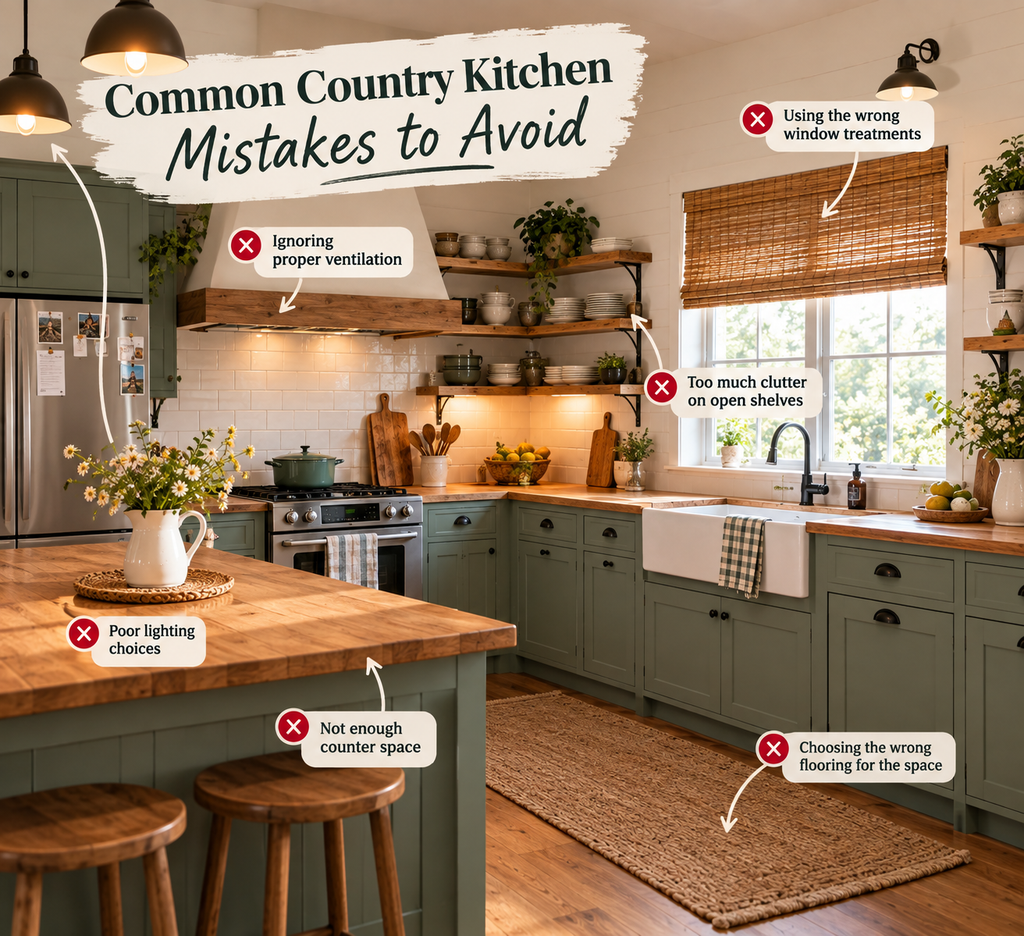
Using Too Many Rustic Elements
Exposed wood, vintage accessories, distressed finishes, baskets, signs, patterned fabrics, and rustic hardware can all work individually. Using too many of them together can make the kitchen feel dated or cluttered.
Choose a few key features and allow them to stand out. Balance rustic materials with simple surfaces and modern conveniences.
A country kitchen can feel authentic without looking like a themed room.
Sacrificing Function for Appearance
Traditional details should never make everyday cooking more difficult. An attractive shelf is not useful if it blocks access to a cabinet or collects excessive grease and dust.
Think carefully about where decorative items are placed. Keep busy preparation areas relatively clear and store frequently used equipment where it is easy to access.
Function should always come first when choosing country kitchen ideas.
Creating a Cluttered Kitchen
Open shelving and decorative displays are popular in country kitchens, but they can quickly become crowded. Displaying too many plates, containers, signs, and accessories can make the room feel smaller.
Use open shelves selectively and leave some empty space between displayed objects. This gives the room a calmer and more intentional appearance.
Regularly remove items that are rarely used or no longer suit the space.
How to Plan Your Country Kitchen Successfully
Planning a country kitchen starts with understanding how the room needs to function. Consider cooking habits, storage requirements, family routines, entertaining needs, and the amount of available space.
Then decide which country style suits your home. You may prefer classic, rustic, French, English, farmhouse, or modern country design.
Create a simple plan covering:
- Kitchen layout and movement.
- Cabinet style and colour.
- Worktop and backsplash materials.
- Storage requirements.
- Lighting locations.
- Hardware and fixtures.
- Decorative accessories.
- Budget and priorities.
If you are updating an existing kitchen, identify which features can stay. Keeping good-quality cabinets, appliances, or flooring can significantly reduce the cost of the project.
Country Kitchen Planning Checklist
Before completing your kitchen, review the entire space rather than focusing on individual features.
Ask yourself:
- Does the layout provide comfortable movement?
- Is there enough storage for everyday items?
- Are frequently used tools easy to reach?
- Do the cabinet colours suit the room?
- Do the worktops and backsplash complement each other?
- Is there enough task lighting?
- Are natural materials used in a balanced way?
- Have decorative details been kept under control?
- Can the surfaces be cleaned and maintained easily?
- Does the kitchen still feel practical for everyday cooking?
If the answer is yes to most of these questions, your country kitchen is likely to remain useful as well as attractive.
Frequently Asked Questions
What makes a kitchen a country kitchen?
Country kitchens typically combine warm colours, practical cabinetry, natural materials, traditional details, and a relaxed atmosphere. The exact appearance can vary from rustic and traditional to modern country.
What colours work best in country kitchens?
Warm white, cream, sage green, muted blue, beige, soft grey, and earthy tones are versatile choices. Natural wood can also add warmth and texture to the colour palette.
Can country kitchens look modern?
Yes. Modern country kitchens combine traditional materials and comfortable colours with simpler cabinetry, contemporary appliances, clean lines, and modern lighting.
Are country kitchens suitable for small spaces?
Yes. Small country kitchens can work particularly well when light colours, vertical storage, compact furniture, and limited decorative details are used carefully.
How can I make my kitchen look country without renovating it?
Focus on affordable changes such as painting cabinets or walls, replacing hardware, adding wooden accessories, introducing textiles, and improving open or wall-mounted storage.
Conclusion
Country kitchens offer a comfortable combination of traditional character and everyday practicality. Their appeal comes from natural materials, welcoming colours, useful storage, and details that make the room feel personal.
You do not need a large farmhouse or an expensive renovation to achieve the look. Even a modern or compact kitchen can incorporate country-inspired features through thoughtful colours, cabinetry, materials, lighting, and accessories.
The most successful country kitchen ideas are those that fit the way you actually live. By balancing warmth with functionality and keeping decorative elements under control, you can create a kitchen that feels timeless, welcoming, and practical for years to come.

Choosing the right kitchen colours can change how the entire room feels. The right combination can make a kitchen look brighter, more spacious, warmer, or more welcoming without requiring a complete renovation.
Good kitchen colour ideas should work with the size, lighting, cabinets, countertops, and overall style of the room. Instead of following a colour trend blindly, choose shades that will remain practical and comfortable over time.
Why Kitchen Colour Ideas Matter
Colour is one of the easiest ways to influence the appearance and atmosphere of a kitchen. A carefully selected palette can connect cabinets, walls, flooring, countertops, and accessories into one balanced design.
The right kitchen colour scheme can also help solve common design challenges. Lighter shades may make a compact kitchen feel more open, while deeper colours can add character and definition to a larger space.

How Colour Affects the Kitchen
Different colours create different visual effects. Soft whites, creams, and light greys can make the room feel fresh and spacious, while warmer shades can create a more comfortable and inviting atmosphere.
Darker colours can also work beautifully when used thoughtfully. Deep green, navy, charcoal, or rich brown can add depth without making the kitchen feel overwhelming.
Consider how different colour groups may affect your kitchen:
- Light colours: Create an airy and open feeling.
- Warm colours: Add comfort and visual warmth.
- Cool colours: Give the kitchen a calm and fresh appearance.
- Dark colours: Add depth, contrast, and sophistication.
- Natural colours: Create a relaxed and timeless atmosphere.
Colour does not have to come only from painted surfaces. Cabinets, tiles, countertops, curtains, stools, lighting, and kitchen accessories can all contribute to the overall palette.
Choosing Colours Based on Your Kitchen’s Needs
Before selecting a colour, consider how your kitchen is used every day. A busy family kitchen may benefit from practical mid-tones that are easier to live with than extremely light or delicate finishes.
Think about the amount of natural light entering the room as well. A kitchen with limited daylight may need brighter or warmer colours, while a naturally bright space can handle stronger shades.
It is also useful to consider the colours already present in the room. If you are keeping existing cabinets or countertops, choose new colours that complement them rather than competing with them.
A simple starting point is to choose:
- One main colour.
- One secondary colour.
- One accent colour.
- A neutral shade to balance the palette.
This approach makes it easier to create coordinated kitchen colour combinations without introducing too many competing shades.
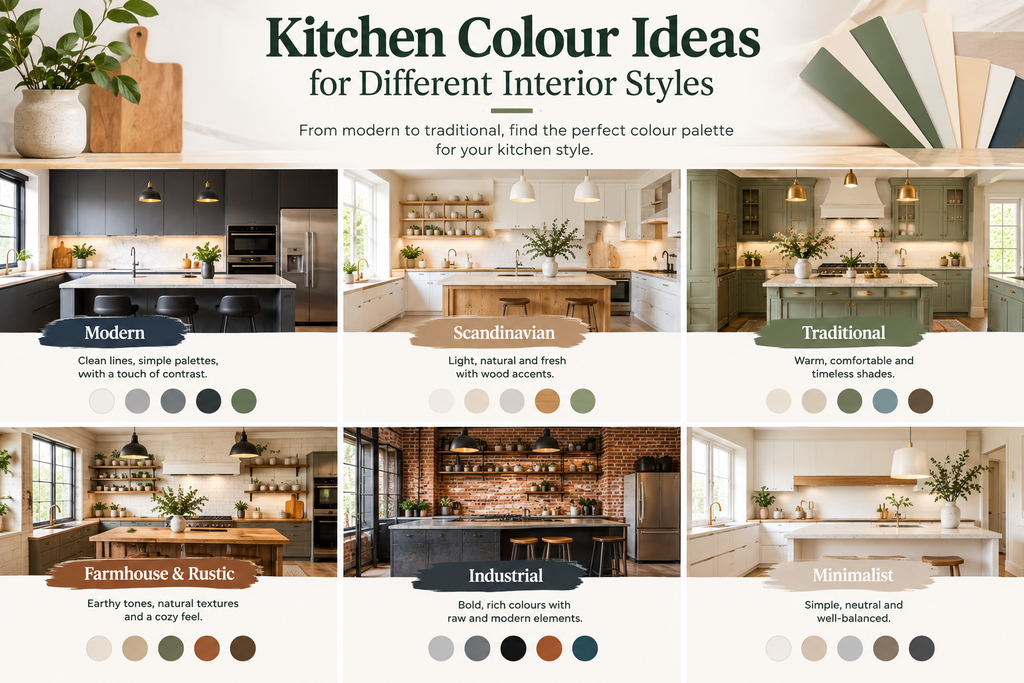
Kitchen Colour Ideas for Different Interior Styles
Every interior style has its own approach to colour. The same shade can feel completely different depending on the furniture, materials, lighting, and finishes surrounding it.
Choosing colours according to your kitchen’s design style helps create a more intentional appearance. It also makes it easier to decide which shades should dominate and which should remain accents.
Modern Kitchen Colour Ideas
Modern kitchens often look best with clean, controlled colour combinations. White, grey, black, beige, and muted earthy shades can create a simple foundation for contemporary spaces.
For more personality, introduce one stronger colour through cabinets, an island, backsplash tiles, or selected accessories. Deep green and navy can provide contrast without looking overly bright.
Modern kitchen colours can include:
- Soft white with charcoal
- Warm beige with dark brown
- Light grey with black accents
- Deep green with natural wood
- Navy with warm white
- Greige with brushed metal finishes
The goal is to create contrast while keeping the overall palette visually organized.
Minimalist and Scandinavian Kitchen Colours
Minimalist kitchens generally benefit from restrained colours and plenty of visual breathing room. White, soft grey, pale beige, and muted natural shades work especially well.
Scandinavian-inspired kitchens can combine light colours with natural wood. This creates warmth without making the room feel visually busy.
Instead of adding several bold colours, use texture to create interest. Wood grain, woven accessories, simple tiles, and matte finishes can give a neutral kitchen plenty of character.
Traditional Kitchen Colour Ideas
Traditional kitchens often suit warm and familiar colours. Cream, warm white, sage green, soft blue, beige, and muted earthy shades can create a comfortable and timeless appearance.
Cabinet colour can become an important feature in this style. Painted cabinets paired with natural-looking countertops and classic hardware can create a balanced kitchen colour scheme.
For a traditional kitchen in kitchen colour ideas, consider combinations such as:
- Cream cabinets with warm beige walls
- Soft blue cabinets with white countertops
- Sage green with natural wood
- Warm white with brass accents
- Taupe with cream and wooden details
These combinations can provide colour without making the kitchen feel dated too quickly.
Farmhouse and Rustic Kitchen Colours
Farmhouse and rustic kitchens often work well with natural and slightly muted colours. Warm whites, earthy greens, dusty blues, tan, brown, and natural wood tones can create a relaxed atmosphere.
You can keep the main surfaces neutral and introduce colour through cabinetry or smaller details. This gives you flexibility if you want to change the accent colours later.
Natural materials are particularly useful in rustic kitchens. Wood shelves, stone-look surfaces, woven accessories, and aged-looking hardware can complement the colour palette naturally.
Contemporary Kitchen Colour Ideas
Contemporary kitchens allow more flexibility with colour. You can combine neutral foundations with stronger shades to create a design that feels current without becoming too busy.
A two-tone kitchen can be particularly effective. For example, lighter upper cabinets can be paired with darker lower cabinets to create contrast while maintaining visual balance.
For a contemporary look, try:
- White and deep green
- Beige and walnut
- Grey and muted blue
- Cream and terracotta
- Black and warm white
Keep the strongest colour focused on one or two major areas. This helps the kitchen feel designed rather than visually crowded.
Kitchen Colour Ideas for Different Layouts
The layout and size of a kitchen should influence your colour choices. A colour combination that looks excellent in a spacious kitchen may feel too heavy in a narrow or compact room.
Think about where the eye naturally travels through the space. Strategic use of light and dark shades can help highlight useful features while making awkward areas less noticeable.

Small Kitchen Colour Ideas
Small kitchens often benefit from lighter colours because they reflect more light and create a sense of openness. Soft white, pale grey, light beige, and gentle pastel shades can work well.
However, this does not mean that small kitchens must be completely white. A darker island, backsplash, or lower cabinet colour can introduce contrast without overwhelming the room.
For small kitchen colour ideas, consider:
- Light cabinets with a slightly darker backsplash
- White walls with natural wood cabinets
- Pale green cabinets with warm white walls
- Cream cabinets with subtle beige flooring
- Light grey with natural wooden details
Keeping the overall palette simple can make a small kitchen feel more connected and spacious.
Open-Plan Kitchen Colours
Open-plan kitchens need to work with nearby living and dining areas. Choosing completely unrelated colours can make the connected spaces feel visually disconnected.
A shared neutral base can help create continuity. You can then introduce a stronger kitchen accent while repeating a similar tone elsewhere in the open-plan area.
For example, if the kitchen uses muted green cabinets, a similar green can appear subtly in cushions, artwork, or decorative objects in the adjoining living space.
Galley Kitchen Colour Ideas
Galley kitchens are narrow, so colour needs to be used carefully. Lighter walls and cabinets can help the space feel less enclosed, particularly when natural light is limited.
You can still add contrast by using darker flooring, hardware, or a carefully selected backsplash. Keeping the ceiling and upper areas lighter can help maintain a feeling of height.
Avoid introducing too many different colours along both sides of a galley kitchen. A consistent palette usually makes the narrow layout feel calmer and more organized.
Large Kitchen Colour Ideas
Large kitchens offer more freedom to experiment with deeper colours. Dark cabinets, colourful islands, statement backsplashes, and contrasting walls can all work when balanced with lighter elements.
An oversized kitchen can sometimes feel cold if every surface is pale and neutral. Adding warm wood, earthy colours, or a richer cabinet shade can give the room more personality.
Use larger spaces to create visual zones through colour. A different island colour, for example, can make the island feel like a central feature without separating it completely from the rest of the kitchen.
When choosing kitchen colour ideas, remember that the best palette is one that fits both your home and your everyday routine. A beautiful colour combination should also be easy to live with, coordinate with existing materials, and remain comfortable as your style changes.
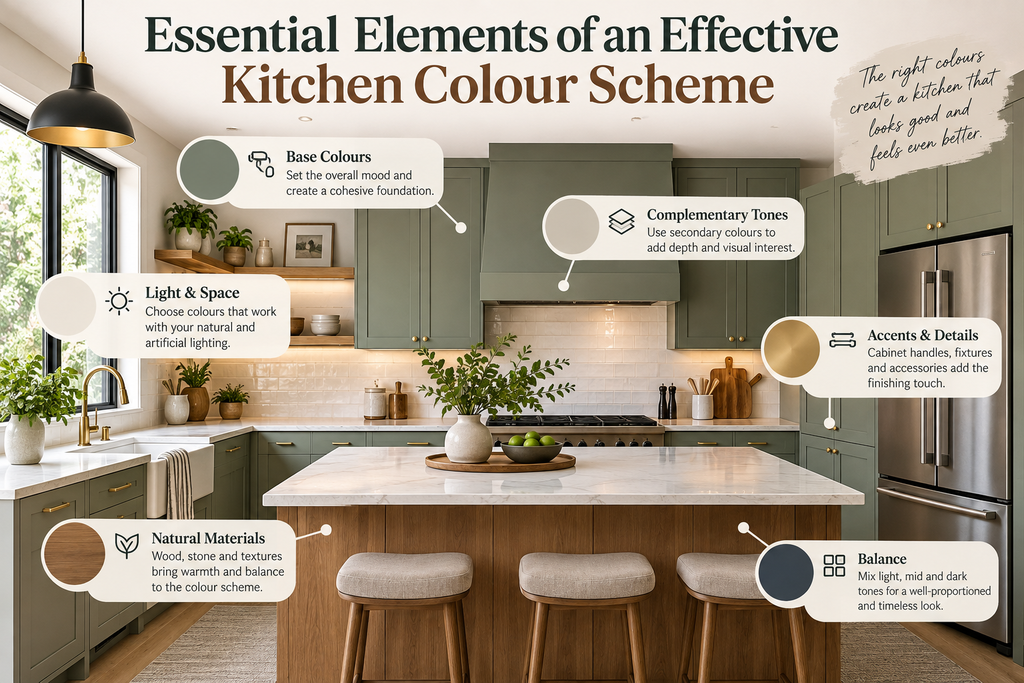
Essential Elements of an Effective Kitchen Colour Scheme
An effective kitchen colour scheme should feel balanced from one area to another. Cabinets, walls, countertops, backsplash, flooring, and smaller details should support the same overall palette.
You do not need to use identical colours everywhere. Combining related shades and materials can create depth while keeping the kitchen visually connected.
Choosing Cabinet Colours
Kitchen cabinets usually occupy a large part of the room, making their colour one of the most important decisions. Choose a shade that works with the size, lighting, and existing finishes.
White and cream cabinets can create a bright and timeless appearance, while green, blue, charcoal, and natural wood can bring more personality.
If you are unsure about bold cabinet colours, use them on a kitchen island instead. This creates a focal point while keeping the main cabinetry easier to coordinate.
Selecting Wall Colours
Walls provide an opportunity to support the main kitchen colours without competing with them. Neutral walls are particularly useful when cabinets or backsplashes already have strong colours.
Warm white, beige, soft grey, and muted earthy shades can work with many cabinet styles. For more colour, consider a subtle green, blue, or warm terracotta tone.
Always test paint samples in the actual kitchen. A colour can appear different depending on natural daylight, artificial lighting, and nearby surfaces.
Coordinating Countertops and Backsplash
Countertops and backsplash materials should complement the main kitchen colour scheme. If your cabinets are colourful, a simpler countertop can help maintain balance.
A neutral kitchen can handle more visual interest in the backsplash. Patterned tiles, subtle stone effects, or colourful ceramic tiles can become an attractive focal point.
When combining several materials, pay attention to their undertones. Warm beige cabinets may look better with warm whites and earthy surfaces than with very cool greys.
Adding Colour Through Accessories
Accessories are an easy way to experiment with kitchen colour ideas without making permanent changes. Curtains, rugs, stools, artwork, cookware, and small appliances can all introduce colour.
This approach is especially useful if you prefer a neutral kitchen but want to follow seasonal colour trends. Accessories can be replaced more easily than cabinets or tiles.
Consider adding colour through:
- Kitchen towels and textiles
- Countertop accessories
- Bar stools
- Artwork and wall decor
- Small appliances
- Indoor plants and planters
- Decorative storage containers
Use accessories to repeat colours already present in the room. This helps the accents feel intentional rather than randomly added.
Budget-Friendly Kitchen Colour Ideas
Changing the colour of a kitchen does not always require a complete renovation. Small updates can make a noticeable difference while keeping the project affordable.
Start with the surfaces that have the biggest visual impact. Depending on their condition, painting walls or suitable cabinets can completely change the character of the room.

Refreshing Walls and Cabinets
A fresh coat of paint can be one of the simplest ways to introduce a new colour. Choose a durable finish that is appropriate for kitchen walls and high-use areas.
If your cabinets are suitable for painting, updating their colour can create the feeling of a new kitchen without replacing the entire cabinetry.
Before painting cabinets, prepare the surfaces properly and use products designed for the material. Taking time with preparation can make an affordable update look much more polished.
Adding Affordable Colourful Details
You can also update the kitchen through inexpensive accessories. New textiles, artwork, containers, rugs, or stools can introduce a completely different accent colour.
Open shelves provide another opportunity to add colour without changing permanent finishes. A carefully arranged collection of dishes, bowls, cookbooks, or plants can add personality.
Affordable changes can include:
- Painting one feature wall
- Replacing kitchen textiles
- Adding colourful stools
- Updating cabinet handles
- Introducing plants
- Changing small countertop accessories
- Adding a simple backsplash accent
Focus your spending on changes that you will notice every day. There is no need to replace everything at once.
Common Kitchen Colour Mistakes to Avoid
Even attractive colours can create problems when they are used without considering the whole room. Looking at each colour separately can make it difficult to understand how the finished kitchen will actually feel.
Before committing to a palette, consider lighting, materials, room size, and nearby spaces. A little planning can prevent expensive changes later.
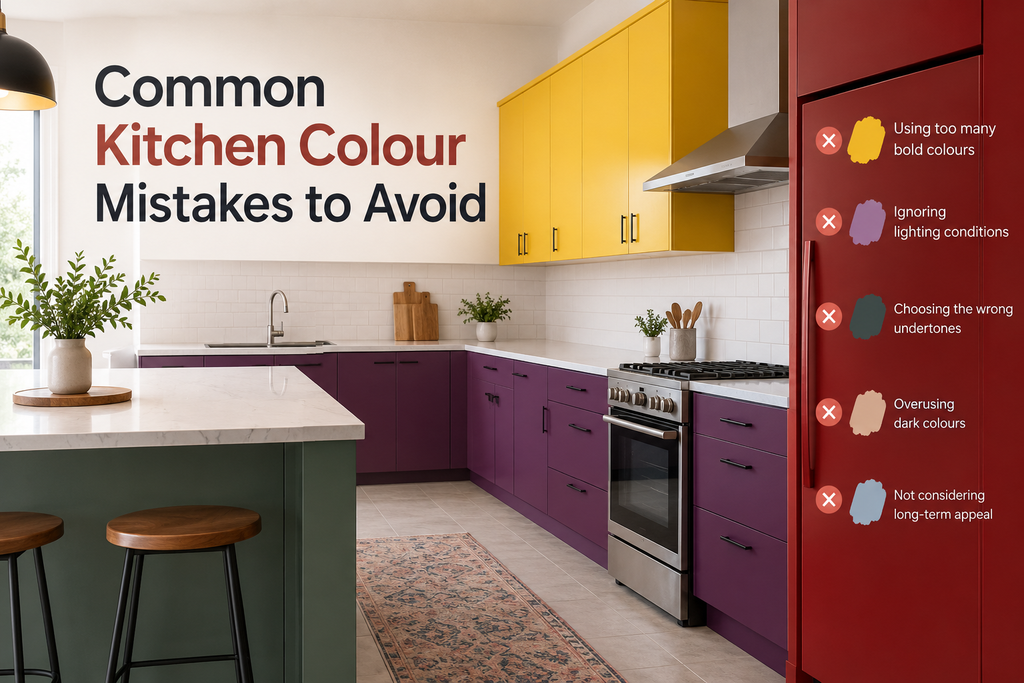
Using Too Many Colours
One common mistake is adding too many unrelated colours. Cabinets, walls, tiles, appliances, accessories, and furniture can quickly create a visually busy kitchen.
A simple three-colour approach can be easier to manage. Choose a dominant colour, a supporting shade, and a smaller accent colour.
This does not mean everything has to be plain. Patterns and textures can still provide interest while the main colour palette remains controlled.
Ignoring Natural and Artificial Lighting
Lighting can significantly change how kitchen colours appear. A shade that looks soft and warm during the day may appear completely different under artificial lighting.
Check paint and material samples at different times of the day before making a final decision. This is particularly important when choosing strong or dark colours.
If the kitchen receives little natural light, avoid automatically choosing very dark colours for every major surface. Balance deeper shades with lighter finishes and effective lighting.
Choosing Trends Without Considering the Space
Following a popular kitchen colour trend can be tempting, but not every colour works in every kitchen. A shade should suit your room rather than simply being fashionable.
Think about how the colour will work with your existing cabinets, floors, countertops, and adjoining rooms. Timeless combinations are often easier to live with for many years.
If you love a trendy shade, introduce it through accessories or smaller areas first. This allows you to enjoy the trend without making an expensive permanent commitment.
How to Plan Your Kitchen Colour Ideas Successfully
Planning your colour palette before buying paint or materials can save time and money. Start by photographing or listing the major elements that will remain in the kitchen.
Look at your cabinets, countertops, flooring, appliances, backsplash, and nearby rooms. These existing elements should guide the new colours rather than being treated as separate decisions.
Create a simple colour plan with:
- A main kitchen colour.
- A secondary supporting colour.
- An accent colour.
- A suitable neutral.
- Coordinating material finishes.
Collect physical samples whenever possible. Place them together in the kitchen and observe them under both daylight and artificial lighting.
Kitchen Colour Planning Checklist
Before finalizing your kitchen colour ideas, check how the complete palette works together. The goal is to create a kitchen that feels attractive but remains practical for everyday use.
Use this checklist:
- Does the main colour suit the kitchen size?
- Does the palette work with natural lighting?
- Do the cabinets and walls complement each other?
- Does the backsplash coordinate with the countertop?
- Are the flooring and hardware compatible?
- Is there enough contrast between major surfaces?
- Have you avoided unnecessary colours?
- Do accent colours appear in more than one place?
- Will the colour scheme work with nearby rooms?
- Can you live comfortably with the colours long term?
Testing the palette before making permanent changes is one of the easiest ways to avoid disappointment.
Frequently Asked Questions
What are the best colours for a kitchen?
There is no single best colour for every kitchen. White, cream, beige, grey, green, blue, and natural wood tones can all work well when matched with the room’s lighting, size, and existing finishes.
What colours make a small kitchen look bigger?
Light colours such as soft white, cream, pale grey, and light beige can make a small kitchen feel more open. Using similar light tones across cabinets and walls can also create visual continuity.
What kitchen colours are timeless?
Neutral shades such as warm white, cream, beige, soft grey, and natural wood tend to remain versatile. Muted green and blue can also provide colour while maintaining a relatively timeless appearance.
Should kitchen cabinets and walls be the same colour?
They do not need to be the same. Using related shades can create a calm look, while contrasting colours can add definition and make cabinets or architectural features stand out.
How many colours should a kitchen have?
A simple palette of around three main colours is often easier to balance. You can create additional interest through textures, patterns, metals, and natural materials rather than adding many unrelated colours.
Conclusion
The best kitchen colour ideas combine style with the practical needs of the room. Your colours should work with the kitchen’s size, lighting, materials, layout, and the way you use the space every day.
You do not need expensive changes to create a fresh look. A thoughtful combination of cabinet colours, wall shades, accessories, lighting, and materials can make the kitchen feel more welcoming and complete.
Start with the elements that already exist, build a simple colour palette, and test your choices before committing. With careful planning, your kitchen colour scheme can remain attractive, functional, and comfortable for years to come.

White Living Room Ideas: Stylish and Practical Ways to Create a Bright Home

Living Room Inspo: Stylish and Practical Ideas for a Comfortable Home

Decorating Styles: A Practical Guide to Creating a Beautiful and Comfortable Home

Kitchen Style Ideas: Stylish and Practical Ways to Create Your Perfect Kitchen

Ideas for Bedroom Decor: Stylish and Practical Ways to Create a Comfortable Space

6 Creative Home Office Design Ideas for Remote Workers

Interior Design Ideas That Make Any Home Feel Better

Top Bathroom Mirror Ideas That Make Any Space Feel Luxurious

Best Modern Kitchen Ideas That Feel Warm, Stylish, and Actually Livable

Kitchen Tiles Ideas: Practical Ways to Choose Tiles for a Stylish and Functional Kitchen
-
 Living Room Decor Ideas4 months ago
6 Creative Home Office Design Ideas for Remote Workers
-
 Bedroom Decor Ideas4 months ago
Interior Design Ideas That Make Any Home Feel Better
-
 Bedroom Furniture Ideas4 months ago
Top Bathroom Mirror Ideas That Make Any Space Feel Luxurious
-
 Kitchen Decor Ideas4 months ago
Best Modern Kitchen Ideas That Feel Warm, Stylish, and Actually Livable
-
 Kitchen Decor Ideas2 months ago
Kitchen Tiles Ideas: Practical Ways to Choose Tiles for a Stylish and Functional Kitchen
-

 Bedroom Decor Ideas3 months ago
Wall Panelling Ideas: Stylish Ways to Add Character, Texture, and Elegance to Every Room
-

 Bedroom Decor Ideas2 months ago
Small Bedroom Ideas: Practical Ways to Make a Compact Bedroom Comfortable
-
 Bedroom Decor Ideas2 months ago
Guest Bedroom Ideas: Practical Ways to Create a Comfortable and Welcoming Space